
Introduction
Christmas in Scotland has an atmosphere you will find nowhere else: it smells of the north wind, of blazing fires, of tartan, of waves breaking on high rocky cliffs and of ancient rites that still linger among the stone circles.
But there is one element that, more than any other, conjures up the magic of the Scottish winter: music.
Scotland’s Christmas songs are not simple carols: they are an extraordinary fusion of Gaelic tradition, Nordic melodies, Christian influences, folk ballads and ancient poetry.
In the Highlands and the Hebrides, many Christmas songs are still sung in Scottish Gaelic today and keep a charm suspended between the sacred and the secular.
The singing tradition in Scotland: between the sacred and folklore
Unlike other European cultures, in Scotland song is:
- oral storytelling
- the memory of rural communities
- household devotion
- a way of facing the long winters
In the Highlands, for centuries, churches favoured unaccompanied singing, a very powerful tradition that recalls the ocean, the mist and voices blending together like waves.
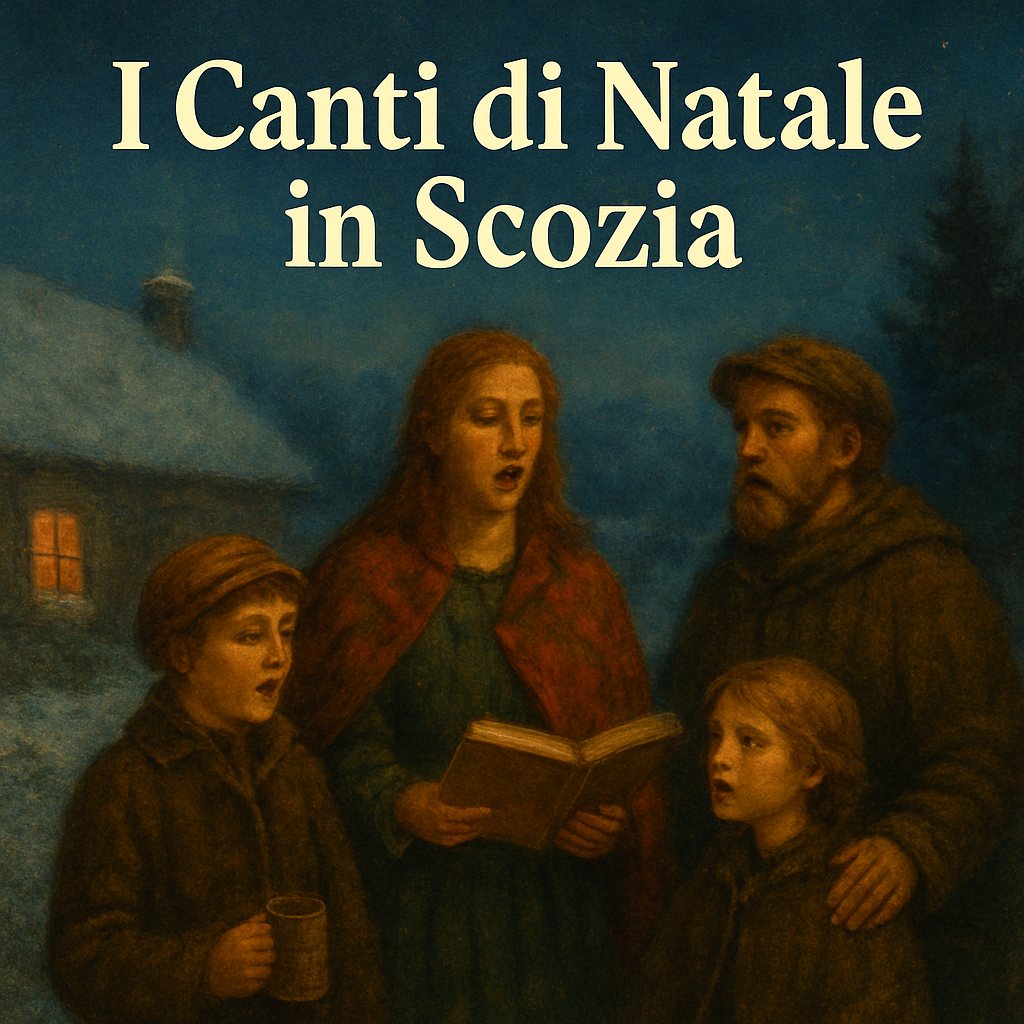
On the islands of Lewis, Harris and Skye, Christmas melodies were handed down orally, from mother to daughter, and often sung by candlelight on Christmas Eve.
The most famous song: “The Christ Child’s Lullaby” (Taladh Chrìosda)
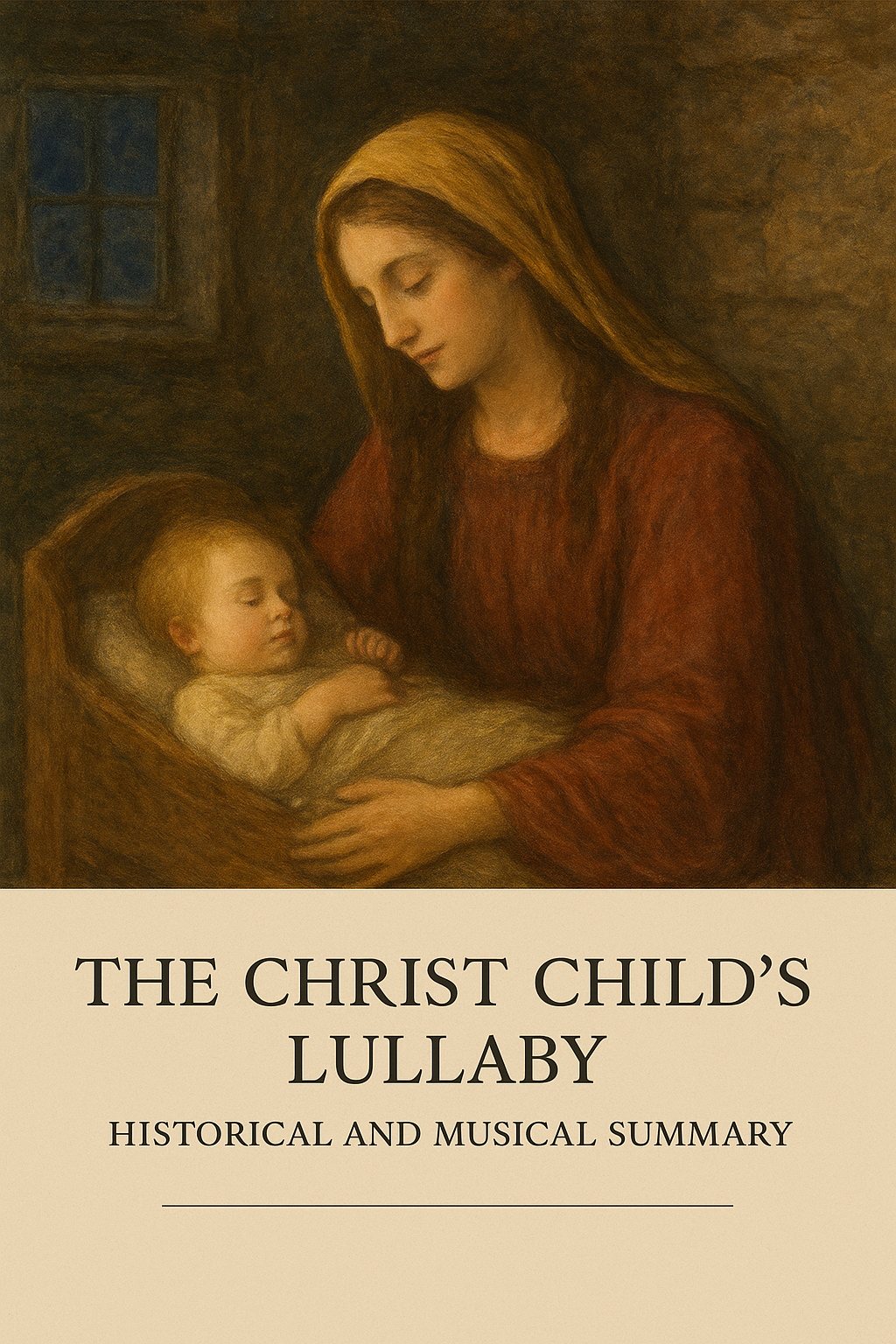
Among the best-loved Christmas songs, “The Christ Child’s Lullaby” stands out. It is the English version of one of the oldest and most moving Scottish Gaelic Christmas songs of the Outer Hebrides tradition. Its roots lie in the folklore of the island of Eriskay, in the Outer Hebrides, where Gaelic culture has preserved melodies, legends and sung prayers for centuries.
The original Gaelic song was written by the poet and Catholic priest Father Ranald Rankin in 1855, before he left for Australia, as a farewell gift to his parishioners. This version, which had 29 verses, was called “Tàladh ar Slànaigheir” (Lullaby of Our Saviour) and was based on the Hebridean folk melody “Cumha Mhic Arois” (Lament for Mac Arois), sung by women for the men who had gone to sea, as a kind of protective charm. The song was meant to “lull” the sea to sleep, so that it would stay calm and cause no harm to the boats. Father Rankin’s text was conceived as a lullaby sung by the Virgin Mary as she rocked the Baby Jesus.
The Christ Child’s Lullaby is still sung during Christmas celebrations, especially at Midnight Mass in Highland and island communities. It represents a unique fusion of Christian devotion and the “poetry of images” typical of the bardic tradition.
Musically, The Christ Child’s Lullaby is usually sung in a sweet, slightly melancholy tone and, in its traditional version, unaccompanied; in this way the voice becomes a narrative instrument with a deep, almost hypnotic effect, typical of Gaelic lullabies.
The melody has a slow rhythm reminiscent of the sound of the sea.
In the 20th century the song was rediscovered by groups specialising in traditional Scottish music, such as the Tannahill Weavers and Capercaillie, and by various contemporary Gaelic choirs. Today it is regarded as a song deeply tied to identity, a symbol of the linguistic and cultural resilience of Scottish Gaelic.
Auld Lang Syne: the song of the Scottish New Year
There is no Scottish winter without “Auld Lang Syne”, the famous traditional Scottish song made famous by the poet Robert Burns, who in 1788 transcribed and adapted an old folk song. The title means “days long past” and the song celebrates friendship, shared memories and the value of time spent together. The melody has spread around the world, becoming the anthem of New Year (Hogmanay) and of emotional farewells.
Other Scottish Christmas songs
The tradition is vast. Here are the best known:
“The Highland Christmas Carol”. Old and melodic, often accompanied by Celtic harp or fiddle.
“Leanabh an Àigh” (“Child in the Manger”). An old Gaelic hymn that has inspired more modern melodies.
The lyrics are poetic and celebrate the birth of Jesus in typically Highland settings.
“Oran na Nollaig” (“The Christmas Song”). Less known to the general public, it is a Gaelic song from the island of Barra, with a slow, solemn rhythm.
“Duan na Nollaig” (“Hymn for Christmas”). A traditional hymn used in family ceremonies.
The musical instruments of a Scottish Christmas
The instruments that usually accompany Christmas songs are:
- Celtic harp (Clàrsach)
The Scottish harp, smaller than others, used in ballads and sacred hymns.
- Fiddle
The emblematic instrument of the Highlands.
- Bodhrán
The Celtic frame drum, used above all on the islands. A clear legacy of Scotland’s ancient past.
- Bagpipes
Less associated with Christmas, they are mostly used at ceremonies and in marches, but they also feature in modern celebrations.
Christmas Eve songs and blessings
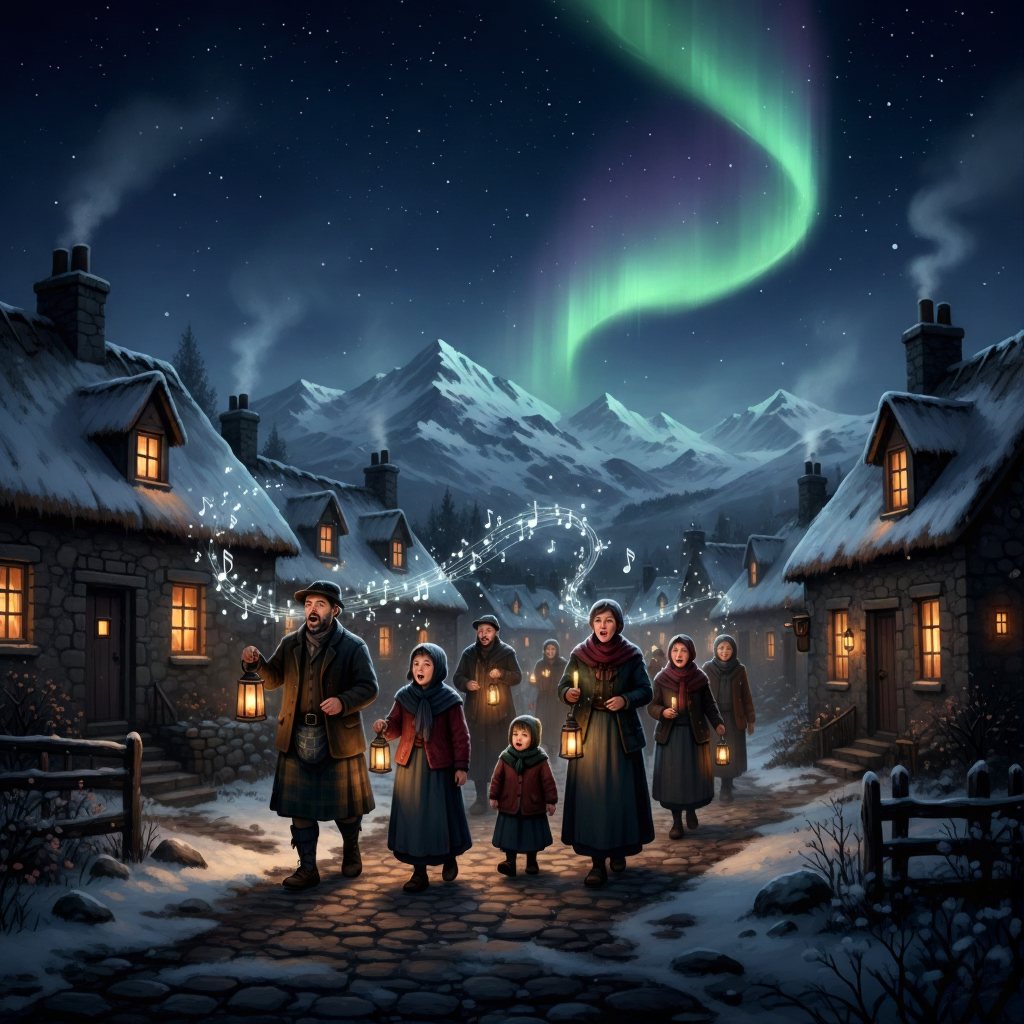
In many rural parts of the Highlands, the practice of “blessing singing” was widespread, that is, songs of:
- protezione
- blessing for the home
- invocation against storms
- protection for the animals in the byres
Singing was considered a form of benevolent magic, a way of welcoming the light of winter.
One of the oldest blessings is:
“Peace be here, and peace be with you,
from the hearthstone to the roofbeam.”
Conclusion
Scottish Christmas songs are a unique cultural treasure: a bridge between faith, folklore, poetry and nature.
Whether sung in church, at home, on the islands or at Christmas markets, they carry with them the strength of the Highlands and the gentleness of Gaelic.
Listening to them means immersing yourself in a slower, older, more spiritual Christmas — a Christmas that truly tells the soul of Scotland.
Silvia Miraglia