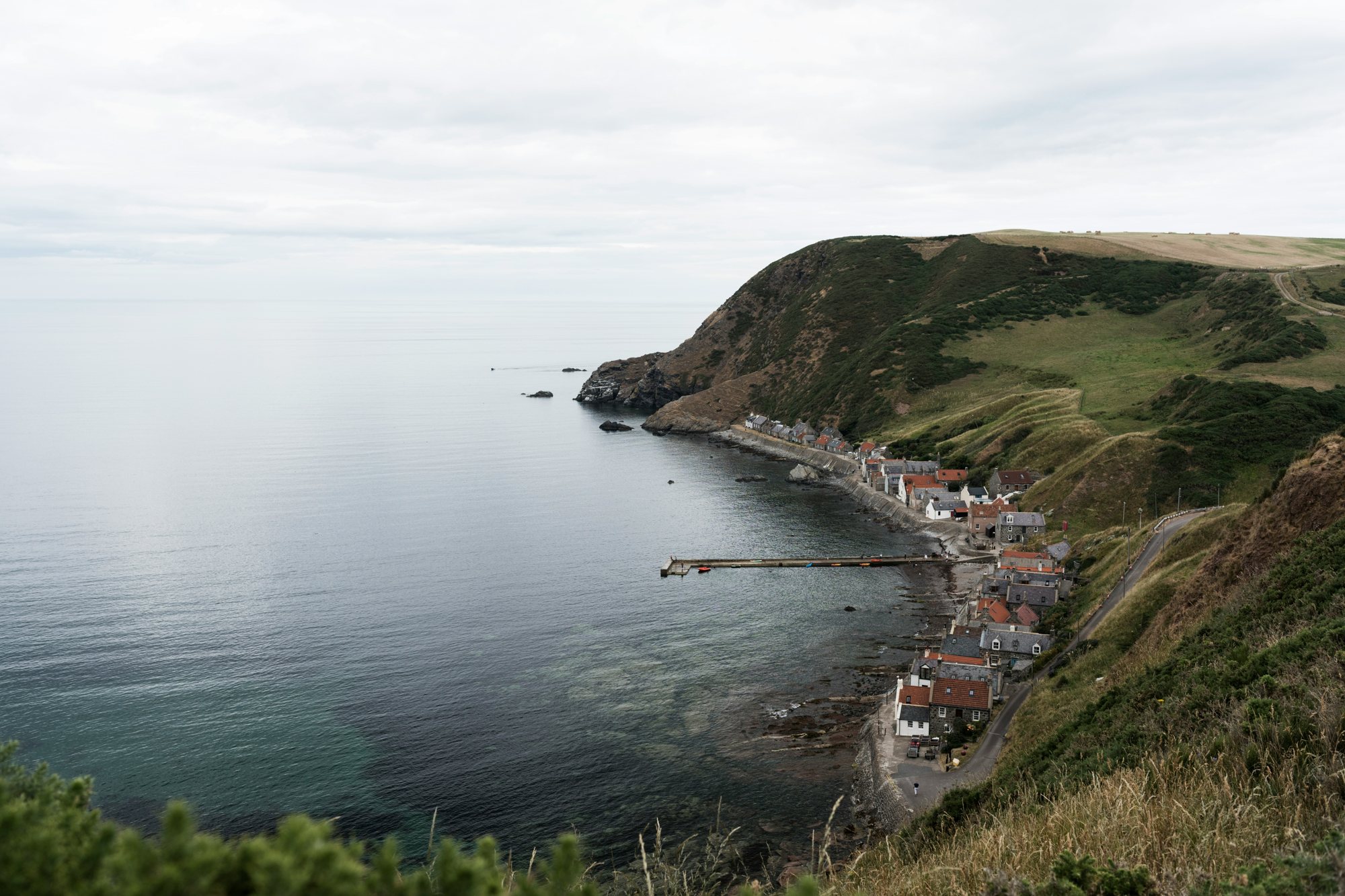
There are places in Scotland where progress decided to knock politely, then step back and leave room for nature. Crovie is exactly that: one of the most remote and best-preserved fishing villages in Europe. Clinging to a thin strip of land between the towering cliffs of Aberdeenshire and the icy waters of the North Sea, it consists of a single row of houses facing the water.
But its real peculiarity lies in one detail: Crovie has no roads, so cars cannot get in!
A single walkway to the world
To reach Crovie you can start from nearby Gardenstown and take the path that runs along the bay to the little village or, coming from the B9031, follow the signs for Crovie along a beautiful road that winds through fields and farms. Sheep and cows, grazing peacefully in a space that seems endless, will keep you company on the way to the car park where you leave your car. A sign at the top of the steep descent, which seems to plunge into the sea, reminds you that access is for residents and authorised people only.
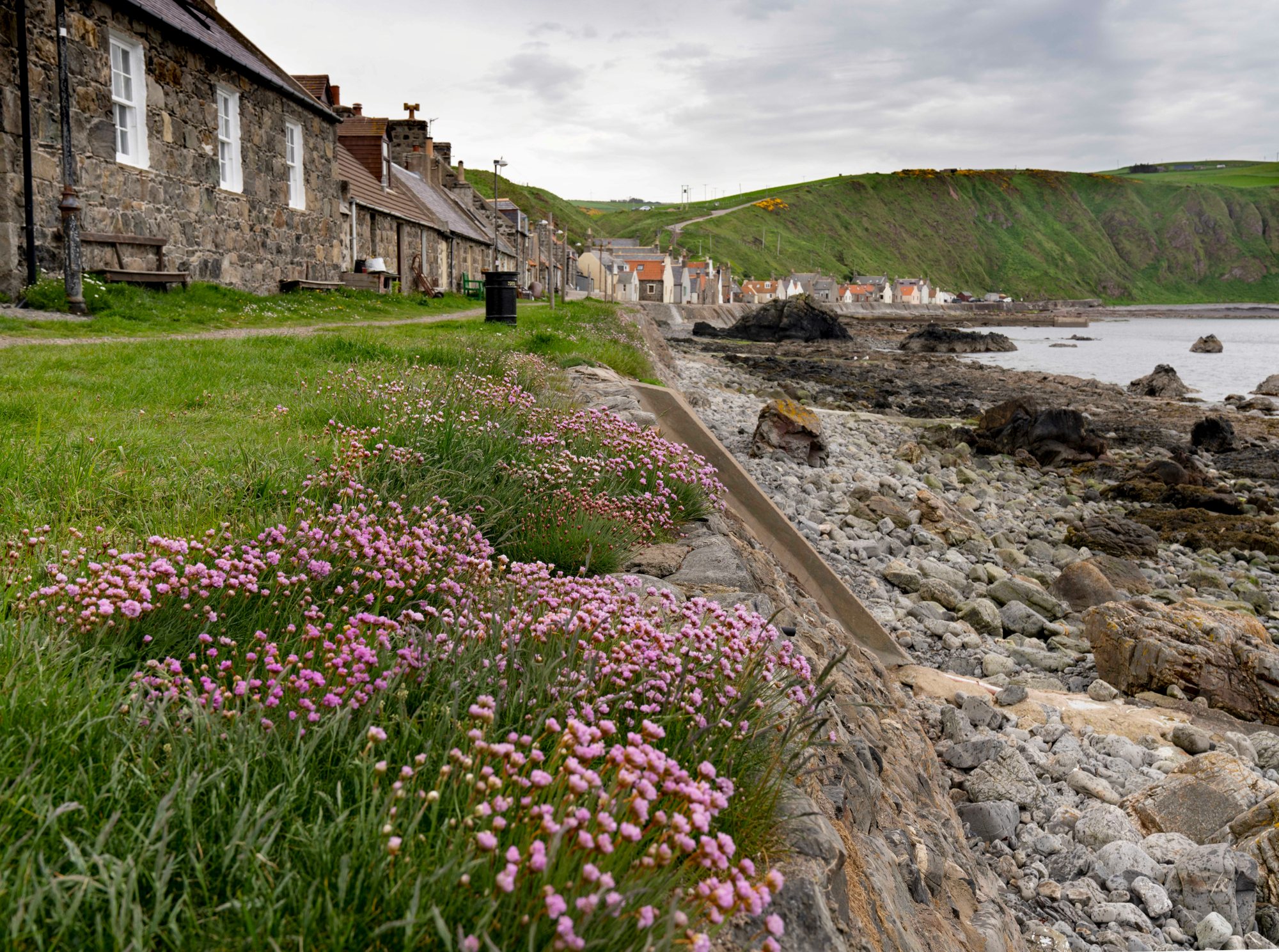
In Crovie even the residents walk down, since between the houses there is barely room for a footpath, and they use wheelbarrows to carry their shopping and firewood!
Once down, you will notice that the houses (60 in all) are built “end-on” to the sea, with their narrow gable ends facing the waves to minimise the impact of waves and wind.
Walking through the village is a unique experience: the waves lap at the narrow walkway, giving a real sense that Crovie is at one with the sea on which it was built. It is a great opportunity to take extraordinary photographs, not only of the coast but also of the many seabirds that nest in the area (nearby is the Troup Head nature reserve, famous for hosting the only mainland gannet colony in Scotland) and of the dolphins that can often be spotted.
A story of tenacity and adaptation
Crovie was founded in the 18th century by families of crofters, the small farmers who during the Highland Clearances, after the Battle of Culloden, were forced by the great landowners to leave their land (and pushed to emigrate abroad or move to the coast) to make way for sheep farming. These men and women had to reinvent themselves in order to survive. They built their houses with local stone and took up fishing; they soon became skilled herring fishermen, eventually boasting a fleet of as many as 50 boats.
Sadly, on 31 January 1953 a violent storm devastated the village, sweeping away most of the boats and damaging many houses. It was the end of commercial fishing; many residents moved to Gardenstown, and many buildings, once rebuilt, were turned into holiday homes.
The breath of the North Sea
Today, exploring this corner of Scotland clinging to the foot of the high Aberdeenshire cliffs slowly and respectfully, you have the impression that the breath of the North Sea becomes one with the footsteps of the visitor who, intoxicated by the scent of salt, seems to be thrown into a timeless world.
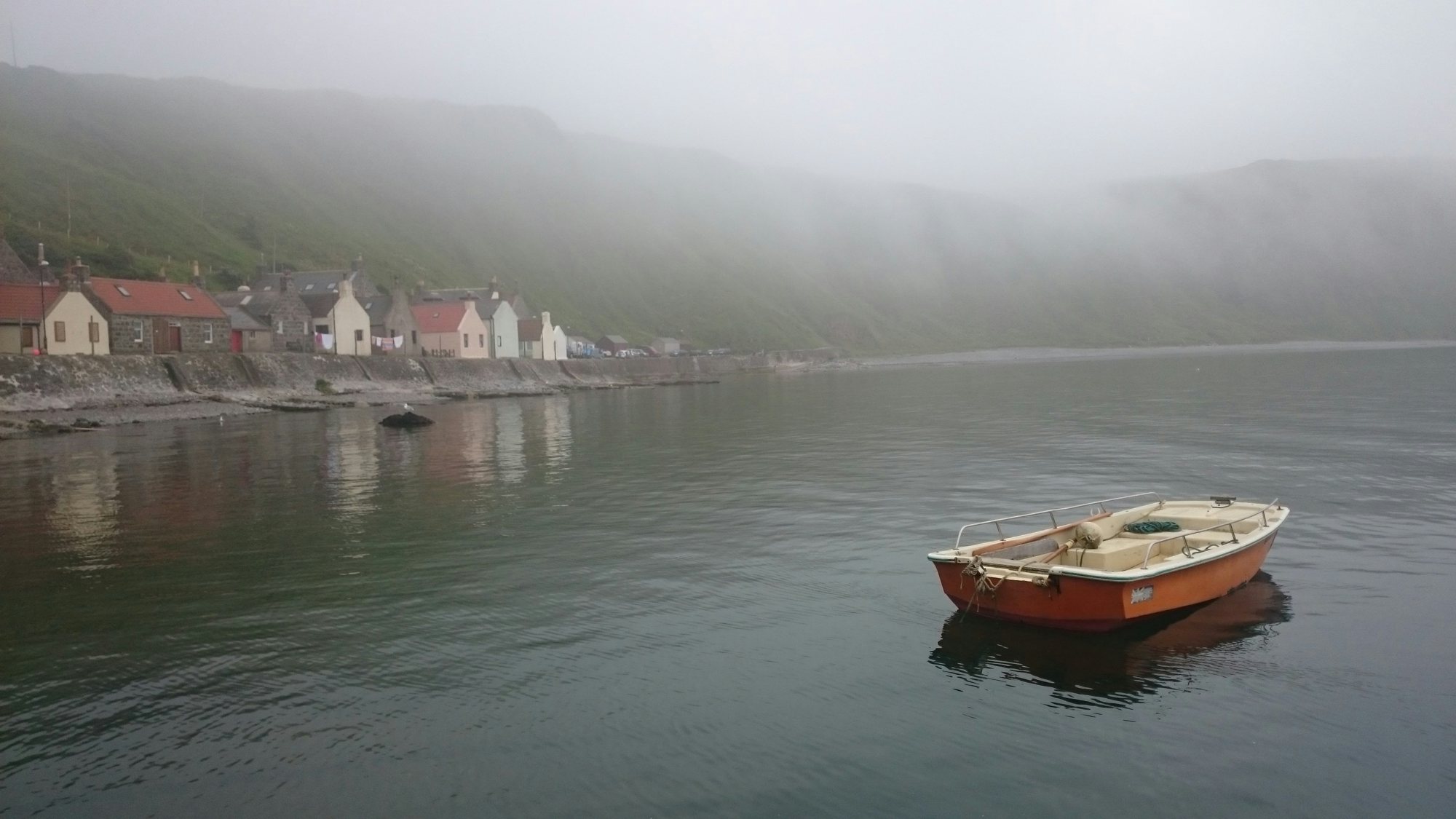
Living in Crovie or staying for a holiday means accepting a compromise with the forces of nature. During high tides or winter storms, water covers the walkway and spray from the waves reaches the first-floor windows. It is a place that demands respect for a nature that is still wild, that has not let itself be tamed by people and that remains the true, undisputed ruler.
If you are planning a trip along the north-east coast and are looking for “Hidden Scotland”, include the village of Crovie in your itinerary: walking down that narrow, steep ramp to the sea will take you through a real portal to infinity. You will find a world where the only traffic is the clouds over your head and the dreams that crowd your heart at the end of the day.
Before returning to everyday life, don’t forget to take one last look at this little Scottish gem from the top of the cliff: it will stay imprinted on your mind and soul forever.
Silvia Miraglia