
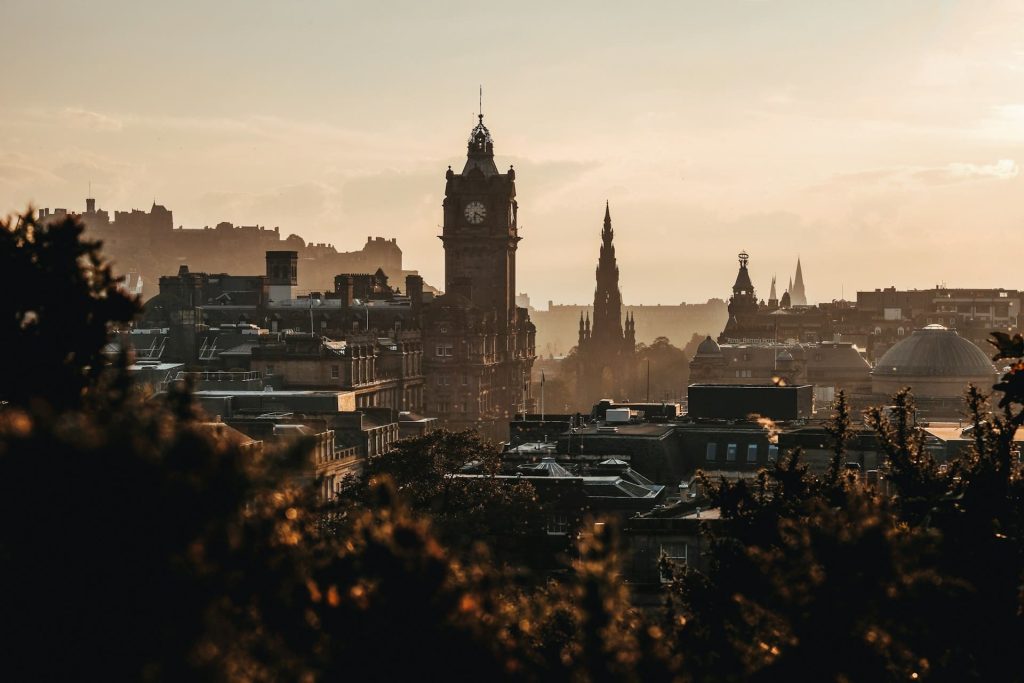
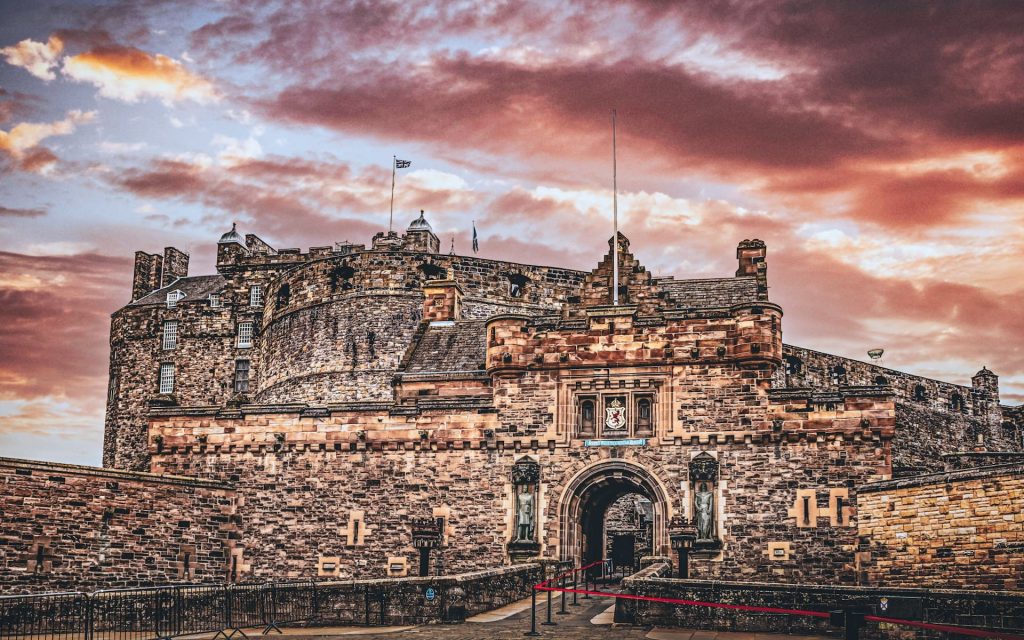
Edinburgh Castle, an impregnable stronghold and a symbol of Scottish tenacity, was for centuries the stage for countless conflicts, sieges and recaptures. It is one of the most besieged places in Great Britain, having suffered no fewer than 26 attacks, a testament to its strategic importance and symbolic value throughout history. Its walls have seen periods of royal splendour alternate with moments of dramatic destruction and brave rebirth, especially during the turbulent Scottish Wars of Independence.
The Wars of Independence
Between the end of the 13th century and the 14th century, Scotland and England fought fiercely for control of the land. In 1296 King Edward I of England, known as the “Hammer of the Scots”, invaded Scotland and occupied Edinburgh Castle. With its commanding position and natural defences, the fortress quickly became a key English stronghold, an essential tool for keeping the Scots in check and tightening their grip on the region.
The recapture of 1314
But Scottish resistance did not die out! A few years later, in 1314, in an action that would go down in history as a masterpiece of strategy and daring, Sir Thomas Randolph, nephew of the legendary Robert the Bruce, managed to retake the fortress. It was an unexpected coup: a handful of just 30 men, using a secret path known only to one of them, a certain William Francis – who had lived in the castle as a young man and used it to visit his sweetheart outside the walls – climbed the castle’s forbidding rock face, catching the English completely off guard… This feat allowed the Scots to force their way in and defeat the enemy, recapturing Castle Rock. It was not just a military victory but a real boost of confidence that helped the Scottish people regain their lost spirit, culminating in victory at the decisive Battle of Bannockburn, led by Robert the Bruce himself.
Despite the victory, Robert the Bruce was fully aware of the risk. So, to prevent the English from ever occupying the castle again and using it as a base against Scotland, he took a drastic and, in many ways, painful decision: he ordered its destruction. Bruce’s policy was to raze recaptured fortresses to the ground rather than leave them intact and available to a future invader.
The only building spared from this total demolition was St Margaret’s Chapel, a gesture of deep devotion to Queen Margaret, mother of David I.
Years later, in 1329, shortly before his death, the king showed his attachment to this sacred place once again, leaving 40 pounds Scots for the restoration of the chapel.
The return of the English and David’s Tower
With Bruce’s death in 1329, fortune smiled on the English once more, and they lost no time in reoccupying the site and rebuilding the castle. This occupation, however, was short-lived. Only in 1341 did Edinburgh’s emblematic fortress return to Scottish hands for good, when David II, son of Robert the Bruce and King of Scots since 1329, came back from exile in France. The king not only took the castle back but also undertook a vast rebuilding programme, making it one of the main royal residences. Among his most significant additions was a series of towers designed to house royal officials and their families. One of these towers, the one that took his name and became a royal residence, stood in a strategic position, controlling access to the castle from the town.
The imposing David’s Tower, about 30 metres high, held three floors of lodgings and was the ultimate expression of power within the fortress. It was originally L-shaped but was later turned into a square building. David II chose to build this mighty, fortified tower as a tangible sign of his power, after living for years, in both England and France, in similar stone towers.
The Stewart transformations
Almost a century later, in 1433, James I decided to add another tower, using it as a banqueting hall; it later became the base for the new royal palace.
Between 1488 and 1513 King James IV rebuilt most of the castle, in particular the Great Hall and the royal apartments, which included interconnecting rooms for the king and his consort Margaret Tudor and separate areas for visitors according to their rank: the more important they were, the closer they were allowed to come, or even to enter the king’s lodgings. A similar layout of royal residence can be seen at Linlithgow and Stirling. James IV’s renewal of Edinburgh Castle was never completed: he died at the Battle of Flodden in 1513.
King James V, unlike his predecessor, preferred to develop the palace of Holyrood, beside the abbey, which he found more comfortable and, above all, better supplied with water.
The Lang Siege and the Half Moon Battery
During the famous Lang Siege, a dramatic event that pitted supporters of Mary Stuart, Queen of Scots, against those of her son James VI, the fortress was bombarded for 12 long days, from 17 to 28 May 1573, with almost 3,000 cannon shots. The imposing and seemingly indestructible David’s Tower almost completely collapsed on 22 May. Its fall not only destroyed a key part of the castle but also blocked the Fore Well, the castle’s main well, depriving the defenders of their vital water supply. It was this event that forced the defenders to surrender and abandon the fortress.
Right after the Lang Siege, the Half Moon Battery was built around the ruins of David’s Tower. This new structure completely hid the tower, burying its remains for centuries.
From the Union of the Crowns to Queen Victoria
After the Union of the Crowns in 1603, King James VI of Scotland also became James I of England and moved with his whole court to London. It was not until 1822, with the visit of King George IV, that a monarch returned to the castle.
Queen Victoria visited the fortress many times between 1842 and 1886 and championed various restoration works.
The walls of Edinburgh Castle are silent keepers of ancient tales of heroic defence and recapture, of legendary figures and of a history that, centuries later, keeps revealing its secrets.
Silvia Miraglia