
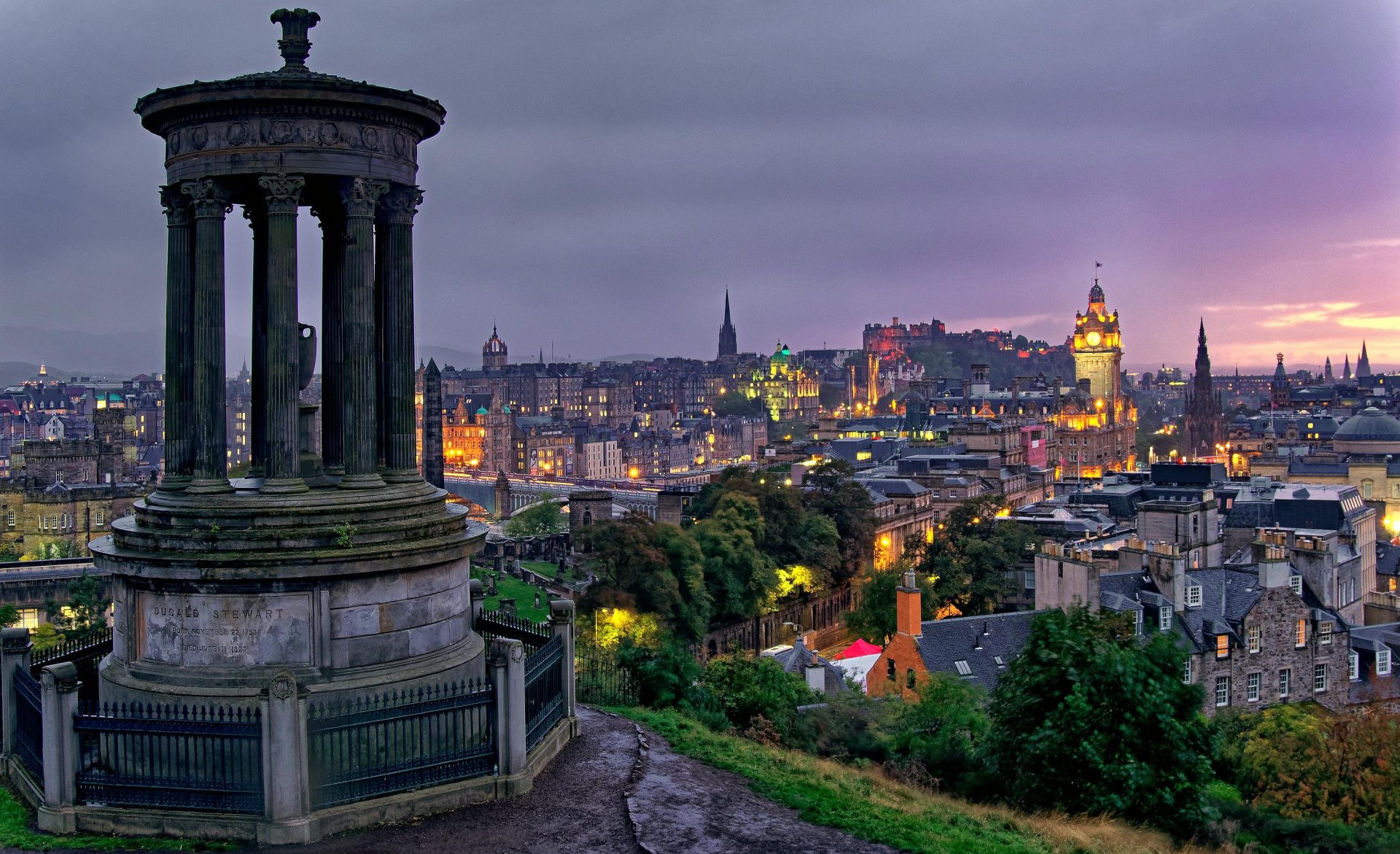
Welcome to the beating heart of Scotland, a place where history and legend merge into a thousand-year-old tale: Edinburgh Castle. Its imposing silhouette, towering over the Scottish capital, is not only a symbol of power but also a living witness to the ages that shaped this indomitable nation. Its story begins long before the castle itself was built, with roots reaching deep into an ancient geological past.
Castle Rock, the ancient volcano
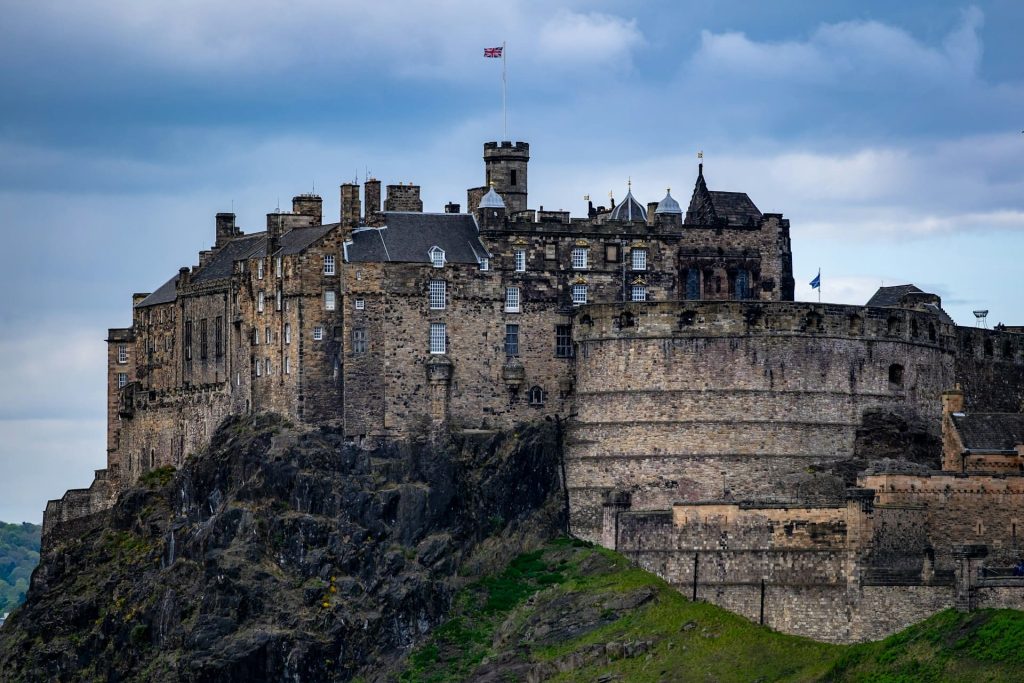
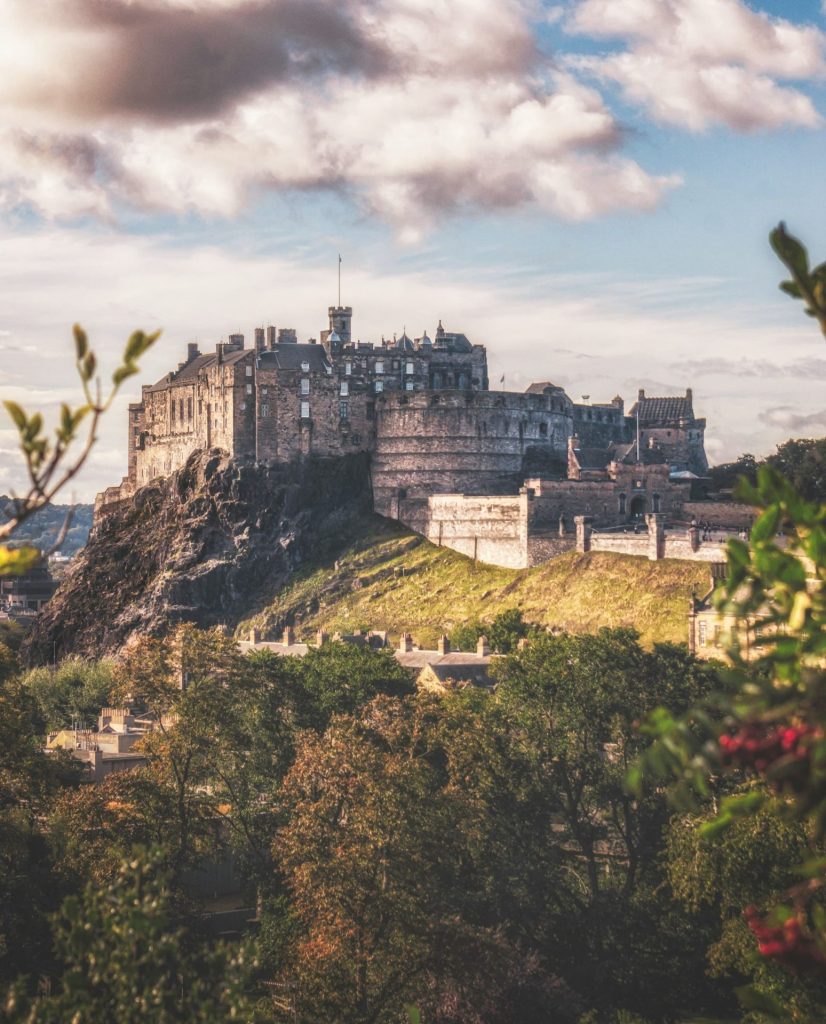
Edinburgh is built on seven hills, and among them, majestic and unmistakable, stands Castle Rock, a rocky crag that was an active volcano some 350 million years ago. The legacy of that ancient volcanic activity is plain in its shape: a height of about 130 metres and slopes of volcanic stone that act as natural obstacles, especially hard for any would-be invader to climb. These features – the impressive height and the almost impregnable rocky flanks – made it an ideal site for human settlement from the earliest times.
Millennia of history beneath our feet
Archaeological excavations on the site have revealed a history of occupation stretching back thousands of years. Finds of Roman-made objects – bowls, earthenware vessels, bronzes and amphorae – have shown historians that about 1,800 years ago, at the beginning of the 3rd century AD, there was a settlement that was certainly in contact with the Romans; some scholars identify it with the “Alauna” mentioned by the geographer Ptolemy, a name often interpreted as “rocky place”. The tribe living on Castle Rock at that time was known as the Votadini or Gododdin. The collection of epic verse known as Y Gododdin tells how, around AD 600, this people feasted for a whole year in a great hall at Din Eidyn before setting out to fight the Angles. This epic is considered one of the earliest documented references to the fort at Edinburgh, attesting to its importance as a centre of power and community as early as the early Middle Ages. Gododdin supremacy did not last forever, however: around AD 640, Din Eidyn and the Gododdin were subjugated by the Angles, and it was after this conquest that the name of the fortress changed into the one we know today: Edinburgh.
But occupation of this strategic site goes back even further. The first inhabitants are thought to date all the way back to the Bronze Age. This long, unbroken human presence makes it one of the oldest fortified places in Great Britain and, even more remarkably, a place that has been continuously inhabited for millennia. Clearly the settlements that grew up over the centuries favoured Castle Rock precisely because it was so easy to defend and almost invulnerable. The only relatively easy approach lies to the east, where a gentler slope, formed by a tongue of lava that solidified millions of years ago, allowed passage. It is fascinating to think that even today the most direct way to the top of the hill follows the same path used since prehistoric times, a route that later became the famous Royal Mile, Edinburgh’s main artery.
The first written records
The first written document to refer explicitly to a royal castle-fortress in Edinburgh is the Chronica Gentis Scotorum, or Chronicles of the Scottish People, written by John of Fordun towards the end of the 14th century. In these chronicles, divided into five books that tell the story of the Scottish people from its origins to the reign of David I, Fordun mentions a crucial episode involving King Malcolm III (c. 1031–1093). He reports that Malcolm’s queen, the future Saint Margaret, was in the “Maidens’ Castle” when she received the tragic news of her husband’s death. Overwhelmed by grief, the queen died a few days later, and Malcolm’s brother, Donald Bane, laid siege to the castle in an attempt to claim the throne.
Another important historical source that mentions Edinburgh Castle is the Orygynale Cronykil of Scotland (“Original Chronicle of Scotland”), written by Andrew of Wyntoun, a scholar contemporary with Fordun. Wyntoun looks more closely at the castle’s original name, stating that in some royal documents from the reign of David I the fortress was called “Maidens Castle”. The name has aroused curiosity, and it is thought to derive from two main facts.
The first, historical in nature, concerns a group of nuns (hence the word “maidens”) who lived on Castle Rock and who, for reasons never specified but surely significant, were driven out.
The second links the name to an older and more fascinating legend, that of King Arthur, and specifically to the Cult of the Nine Maidens. It is said that there was a sacred building presided over by Morgan le Fay, the powerful sorceress gifted with supernatural powers, who led a group of virgin priestesses.
These two interpretations, one historical and one legendary, have been handed down over time, adding to the mystique and charm of the castle’s ancient name.
The residence of kings: Malcolm III and David I
What is certain is that during the reign of King Malcolm III and his sons Edgar, Alexander I and David I, Edinburgh Castle became one of the most important royal centres in Scotland. King David I in particular was a figure of fundamental importance for the whole country. He made a decisive contribution to the development of the town and of the castle, which under his reign definitively took on the role of a royal fortress. David I’s reforms were so innovative and far-sighted that they are regarded as a true revolution – to this day people speak of the “Davidian Revolution”, referring to the changes the king introduced to support and promote Scotland’s development. Among his most significant initiatives, between 1139 and 1150 David I summoned to the castle the first assembly of nobles and clergy. This was no ordinary meeting: it gave rise to the earliest embryonic form of what would become the Scottish Parliament, a crucial step in the nation’s political history.
As for the buildings inside the castle, most of them in the 12th century are thought to have been made of wood, since no significant remains of stone structures from that period have been found. Only two are known for certain to have existed: St Margaret’s Chapel and a church dedicated to St Mary. While the former, a gem of Romanesque architecture, still crowns the summit of Castle Rock today, no trace remains of St Mary’s church. It is thought to have stood where the Scottish National War Memorial now stands, an area of great historical and symbolic significance.
St Margaret’s Chapel, of immense historical and architectural value, probably originally formed part of a square Norman-style keep, about 17 metres per side, that occupied the whole northern part of the rock. This theory is supported by its similarity to the keep built by David I himself at Carlisle Castle, suggesting a recurring architectural and defensive model in his works.
From this first overview of the origins of Edinburgh Castle, it is clear that the ancient history of this place is an intricate mosaic of geology, archaeology, legend and historical record, telling of a site destined from the very beginning to be a bulwark and a beating heart of Scotland.
Silvia Miraglia