
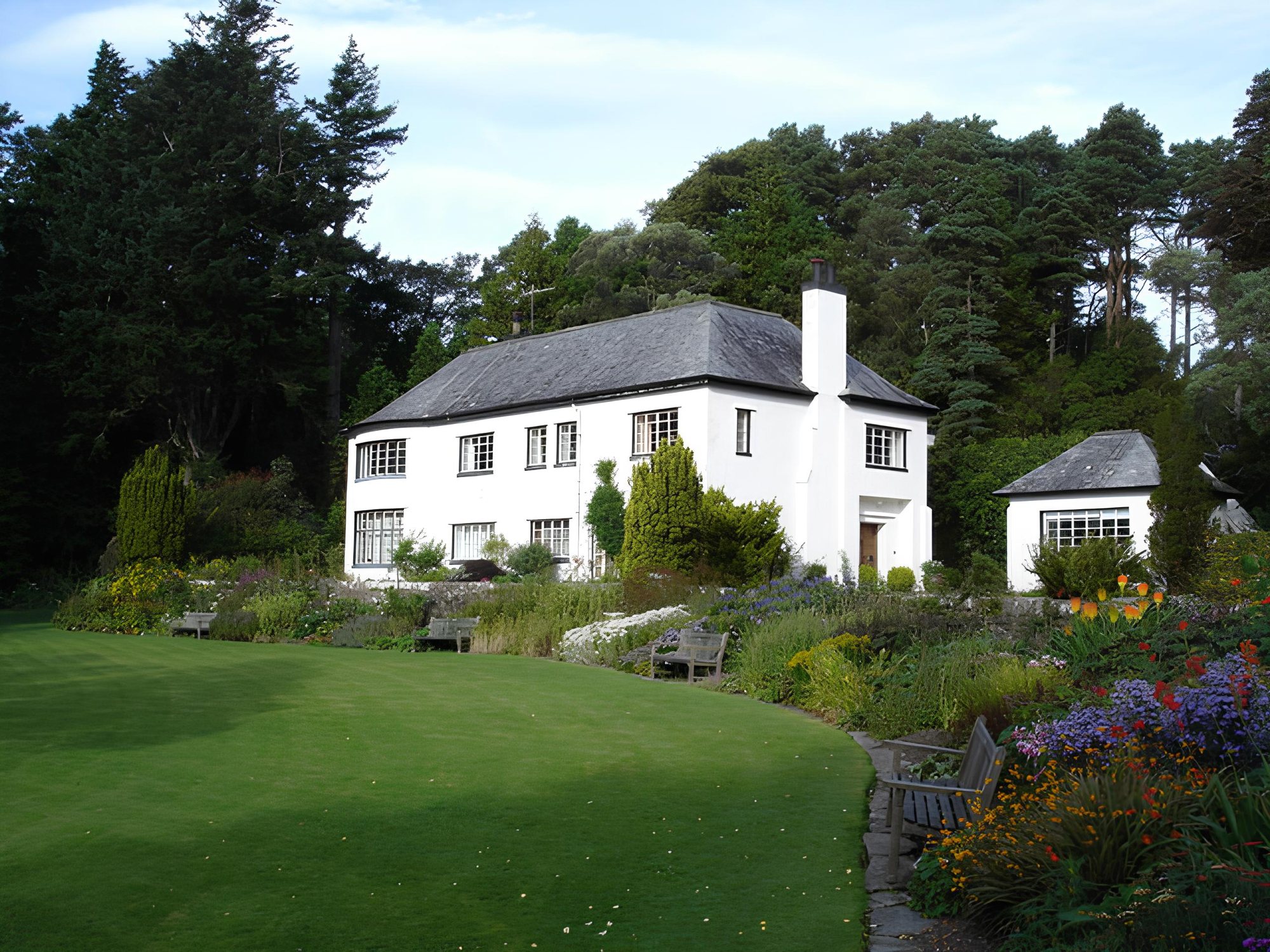
In the far north-west of Scotland, where windswept moors meet the stormy waters of the Atlantic, lies a place that defies every law of nature. Inverewe Garden is a mirage of colours and scents set in the rugged landscape of Ross-shire. Here, at a latitude similar to that of St Petersburg and Alaska, lush subtropical vegetation flourishes with astonishing vitality.
The magic of Inverewe lies not only in the extraordinary variety of exotic plants from every corner of the globe, but also in the deep harmony between the garden and the native wildlife. If you love exploring places that make you dream, we invite you to read our travel stories on AlbaUnicorn to discover how to make the most of the magic of the far North.
Picture a bare headland battered by salty winds. Now picture, in the same spot, Californian redwoods, flowering rhododendrons, Himalayan blue poppies and New Zealand tree ferns. Between those two images lies a whole lifetime: that of a stubborn, visionary man.
The story of Osgood Mackenzie: a sixty-year dream
In 1862 Osgood Mackenzie and his mother bought an estate on the shores of Loch Ewe, near the village of Poolewe. Osgood was twenty and had an idea that everyone thought mad: to create a garden on Am Ploc Ard, “the high lump”, a bare headland exposed to salt-laden winds, with soil made almost entirely of rock and acid peat.
He knew that no delicate plant would survive without proper shelter. So for years he planted Scots pines, Corsican pines and other hardy trees, creating a windbreak around the headland. He then brought in hundreds of tons of fertile soil, and only when the trees had grown did he begin planting rare species from all over the world.
Osgood devoted himself to his garden until his death in 1922. Shortly before, he had published a memoir, A Hundred Years in the Highlands.
His ambitious project passed to his daughter, Mairi Sawyer, who expanded it with the same passion. In 1952 Mairi gave the garden and estate to the National Trust for Scotland, together with an endowment for its care.
Inverewe Garden: a mosaic of landscapes and habitats
Walking through Inverewe Garden means travelling across several continents in a few hectares; it is divided into themed areas, each with its own fairytale, evocative atmosphere.
The secret of Inverewe is the North Atlantic Current, the extension of the Gulf Stream. Its warm waters wash the coast of Wester Ross and keep the winters mild, with rare, brief frosts. Combined with Osgood’s belt of trees, which stops the wind, this current creates a remarkable microclimate.
The result is that today the garden covers about 20 hectares and holds more than 2,500 exotic species from faraway places: the Himalayas, China, Chile, Tasmania, New Zealand, South Africa. Around it, the estate stretches for another 800 hectares of moorland, woods and lochs managed for nature conservation.
What to see at Inverewe
The Walled Garden by the sea. One of the most striking spots is the Walled Garden, right on the shore of the loch. Once the family’s kitchen garden, today it is a riot of colour, with flower borders, vegetables and fruit trees. In summer it is at its finest, with the blue of the loch behind and the majestic surrounding mountains reflected in the calm waters of the bay.
Rhododendrons all year round. Inverewe has an extraordinary rhododendron collection, so varied that something is in flower in almost every season. The most spectacular time is still spring, when the paths light up in red, pink, white and purple.
Erythroniums, blue poppies and giant trees. Among the most precious collections are the erythroniums, delicate spring woodland flowers to which the garden devotes a festival every year. Look out too for the famous Himalayan blue poppy (Meconopsis), the towering Californian redwoods and the rare Wollemi pines, Australian trees considered “living fossils” and discovered in the wild only in 1994.
Inverewe House and the Sawyer Gallery. The original family home was destroyed by fire in 1914; the current one was built in 1937. Today Inverewe House is a small museum telling the story of the Mackenzies, while the Sawyer Gallery hosts temporary exhibitions.
Inverewe’s wildlife: wild encounters between sea and forest
What makes Inverewe truly unique is the meeting between a man-made garden and the wild nature around it. Here the boundary between what is cultivated and what is wild hardly exists. An ecosystem has formed in which Scottish wildlife finds a safe refuge, out of reach of hunters.
Marine life and the cliffs of the headland
The white-tailed eagle. The king of the Wester Ross skies is the white-tailed sea eagle, the largest bird of prey in the British Isles, with a wingspan that can exceed two metres. Extinct in Scotland in the early twentieth century, it was reintroduced from the 1970s and today soars again over the west coast and the islands. To recognise it, just look at the silhouette: very broad, rectangular wings and a short, wedge-shaped white tail. Inland, in the mountains, lives the golden eagle, slimmer and darker.
Otters. With a little patience and quiet, especially early in the morning, you may spot an otter, which in Scotland also lives in salt water. Far more often you will see its signs: footprints in the sand, crab remains, a wake on the water.
Grey and common seals. They often rest on the rocks of the bay exposed at low tide.
Red squirrels and deer
In the woods Osgood created lives the red squirrel, the native species that across much of the UK has been replaced by the grey. Among the garden’s pinewoods it finds plenty of seeds and cones. On the estate, meanwhile, graze red deer, Scotland’s largest land mammal: in autumn, during the rut, their roaring echoes across the hills.
Beneath the surface: Scotland’s “coral reef”
The bay also holds beds of maerl, red calcareous seaweeds that grow extremely slowly and form a habitat so rich in life that they are called Scotland’s coral reef. They shelter small fish, crustaceans and molluscs, and are one of the reasons Loch Ewe is so important for nature.
Visiting Inverewe: practical information
Getting there
Inverewe Garden lies just north of Poolewe on the A832, in an area also crossed by the famous North Coast 500 route. From Inverness it is about a two-hour drive through spectacular scenery. Public transport is very limited: a car is definitely the best option. Remember that many Highland roads are single-track, with passing places to let oncoming traffic by.
When to go
The garden is run by the National Trust for Scotland and there is an admission charge. Opening hours change with the seasons and are shorter in winter. Here are a few things to consider before you go, to make the most of the atmosphere of this corner of Scotland.
Seasons: between May and June the garden bursts into colour with rhododendrons and azaleas in bloom. In autumn the maple leaves give unforgettable golden glints.
Wildlife photography: bring binoculars and a zoom lens to capture the beauty of seabirds and small mammals without disturbing them.
Guided tours: join the walks organised by the National Trust for Scotland to discover the garden’s most hidden botanical curiosities from its own gardeners.
Garden Lodge. If you want to enjoy the garden in the quiet of dawn or evening, you can stay at the Garden Lodge, whose guests have access to the garden outside opening hours.
An oasis at the edge of the world
What Osgood Mackenzie created on this rocky headland more than a century ago is not just a magnificent collection of exotic plants or a safe haven for Highland wildlife; it is tangible proof that beauty sometimes needs, above all, time and dedication. Osgood Mackenzie planted trees knowing he would enjoy their shade only many years later; he believed in a garden where everyone else saw only rock. Passion, patience and respect gave life to Inverewe Garden: an oasis in perfect harmony with the wild nature around it.
If you feel the call of these legendary lands and want to discover more places that blend history, nature and mystery, keep following our blog.
Silvia Miraglia