Invisible paths linking the sacred sites of the Highlands and Lowlands
There are invisible paths that you won’t find on road maps, but which our ancestors seem to have known very well. Ley lines, synchronic lines, energy lines: these are terms you have probably heard before, and they take us back to a distant past when people lived far more in tune with the world around them. In Scotland, this invisible network pulses with a particular strength that we cannot ignore.
What are ley lines?
The term was coined by the Englishman Alfred Watkins, a retired businessman with a thousand interests. On 30 June 1921, Watkins, driving his brand-new Wolseley Stellite, stopped to check his road map: it is said he was literally overwhelmed by a kind of “epiphany”. He couldn’t stop looking from the map in his hands to the landscape around him and back again! A few months later he wrote a paper that he shared with his local antiquarian society, putting forward the idea that many ancient sites in Britain — stone circles, burial mounds, old churches — had been built along straight tracks dating back as far as the Neolithic.
He devoted the rest of his life to developing his ideas, publishing several books such as Early British Trackways, The Old Straight Track and The Ley Hunter’s Manual. Watkins believed these alignments were the remains of pre-Roman tracks laid out to make travel easier for trade or ceremony. He started a real craze: the countryside filled with new explorers who, armed with compass, map and copies of his books, walked up and down the United Kingdom trying to verify what he had claimed and documented.
The scientific and archaeological community has never accepted Watkins’s theory, arguing instead that, given the enormous number of ancient sites in Scotland, it is statistically inevitable that some of them will fall in straight lines… purely by chance, and certainly not by any deliberate plan of our ancestors.
Planet Earth as a living organism: the soul of Scotland
To understand the idea of a “place of power”, we need to consider that our planet is far more than a mere mass of rock, water and vegetation. We must, then, return to our ancestors’ way of seeing and perceiving things. They believed that the Earth was a living being like all the creatures that inhabit it and, as such, had characteristics very similar to ours. Indeed, for most of the civilisations that came before us, the planet that hosts us was the Great Mother, the one from whom everything came.
The Great Mother was respected, venerated, sometimes even feared. Some cultures compared Her body to ours: rivers, streams and brooks were the arteries, veins and finest capillaries, the flowing waters were the blood, the plants covering Her were the hair… But above all, the men and women of the past believed in a true network of energy flowing deep within the Earth and running right through it. Over time, these “energy lines” have been compared to the meridians of acupuncture; like these, where they intertwine, concentrations of energy would form and, from time to time, rise to the surface.
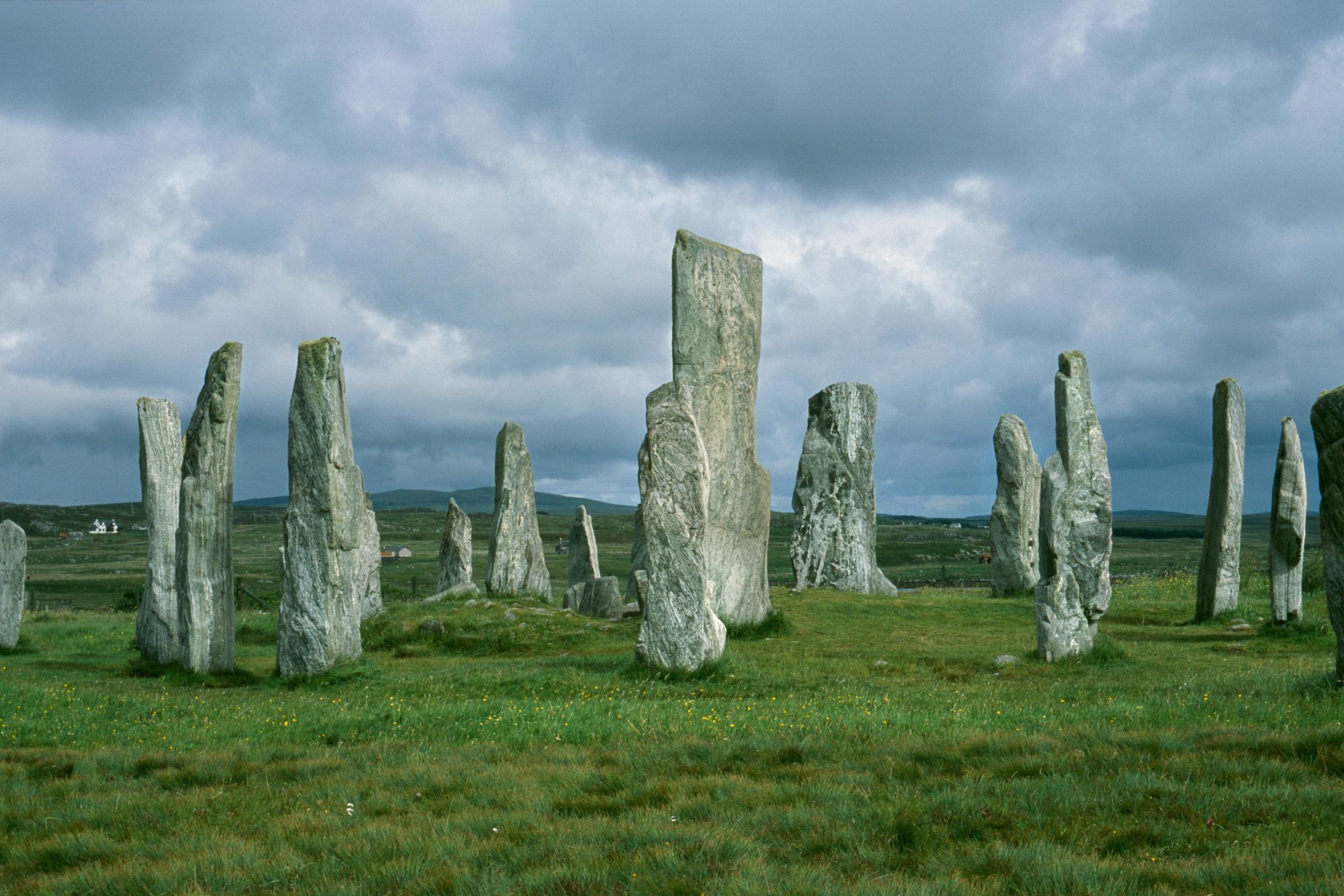
And here, in my view, a rather interesting chapter opens up that deserves at least a mention. We know that since ancient times human settlements were not random: they were chosen according to the resources available and the features of the land… but also, and perhaps above all, according to the level of energy they gave off! Stone circles, standing stones, ancient places of worship, sacred hills, clearings where the druids met for their rites: all had in common the fact that they stood exactly where, as they felt it, the energy surfaced most strongly. These sites, boosted by the build-up of energy along what have also been called “synchronic lines”, were seen by our ancestors as “places of power” because, compared with others, they offered “different” possibilities.
There is no doubt that Scotland is home to a great many places like this and therefore lends itself to being explored in an unconventional way too, combining history, legend, nature and an ancient spirituality which, although not yet fully accepted by science, continues to fascinate scholars and travellers.
The Line of Monks and Kings: from Iona to Melrose
One of the most fascinating alignments is the one linking the far west with the east of the Lowlands.
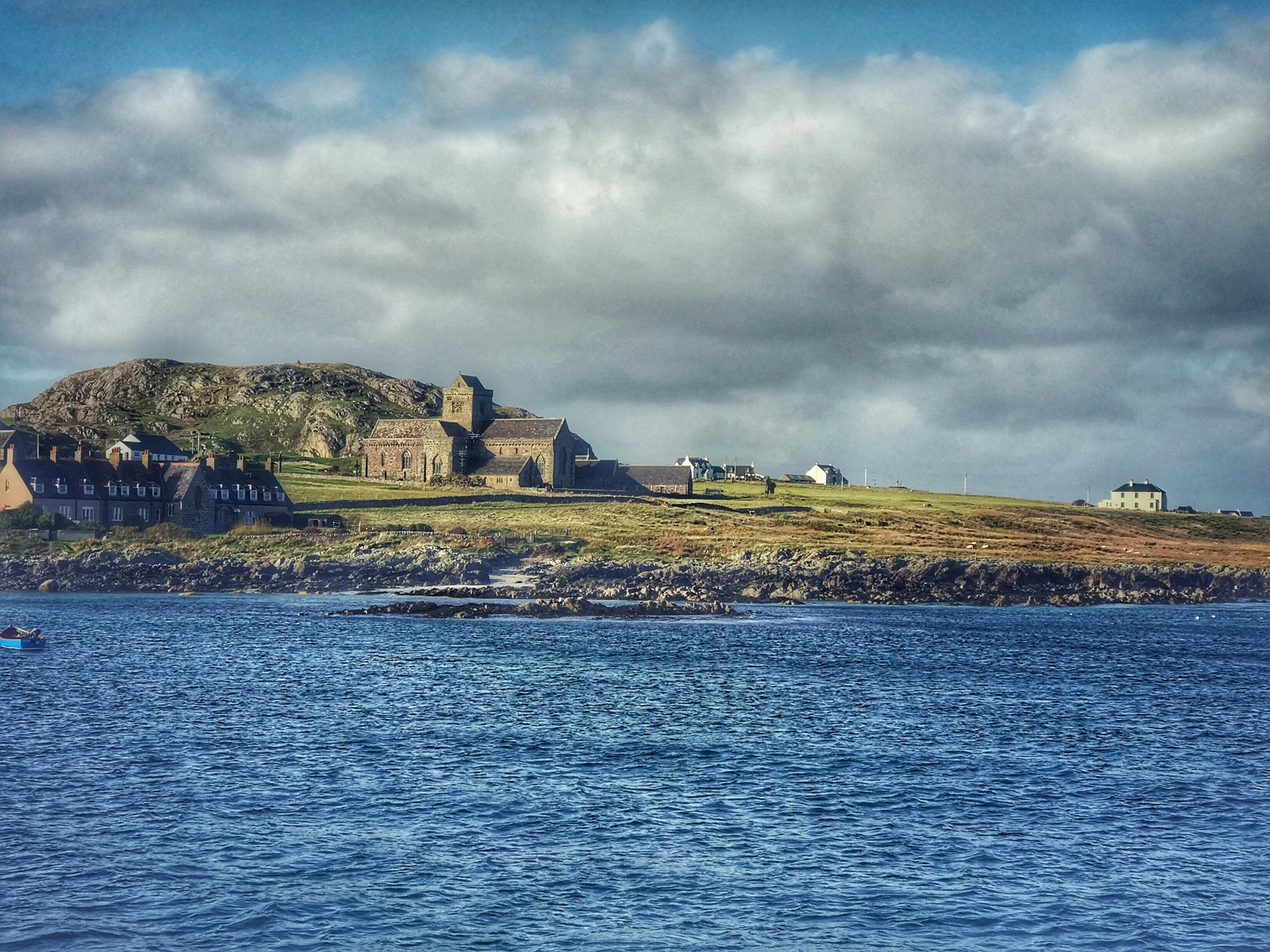
Iona, the sacred island, regarded in Scotland as the “cradle of Christianity”, rests on a bed of Precambrian gneiss, one of the oldest rocks in the world. It is a point of the purest energy.
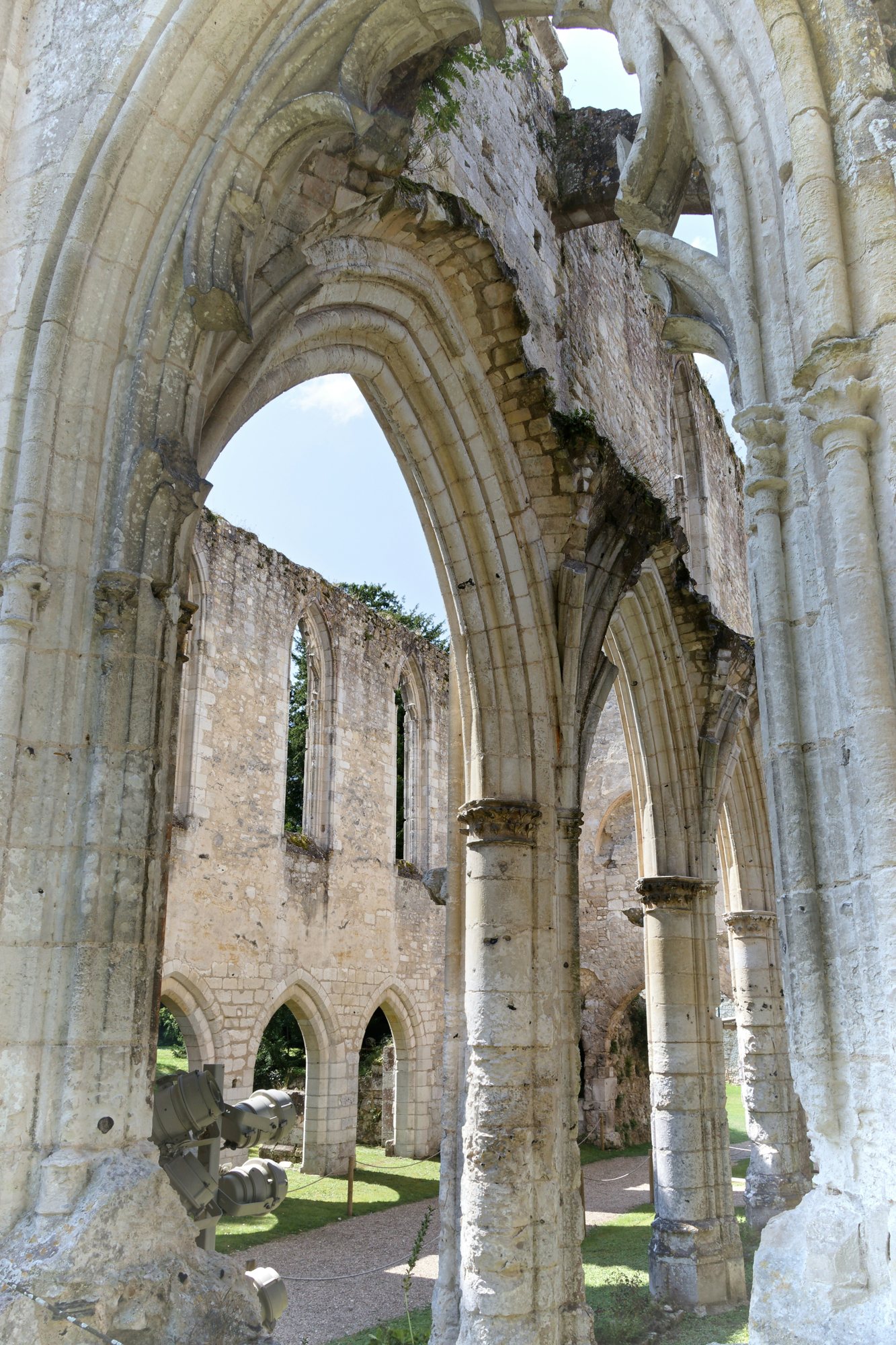
Melrose Abbey: following the line east, we reach the ruins of Melrose. Here, geomancy tells us, the abbey was not built in a random spot, but to “seal” a flow of telluric energy that would favour meditation and contact with the divine.
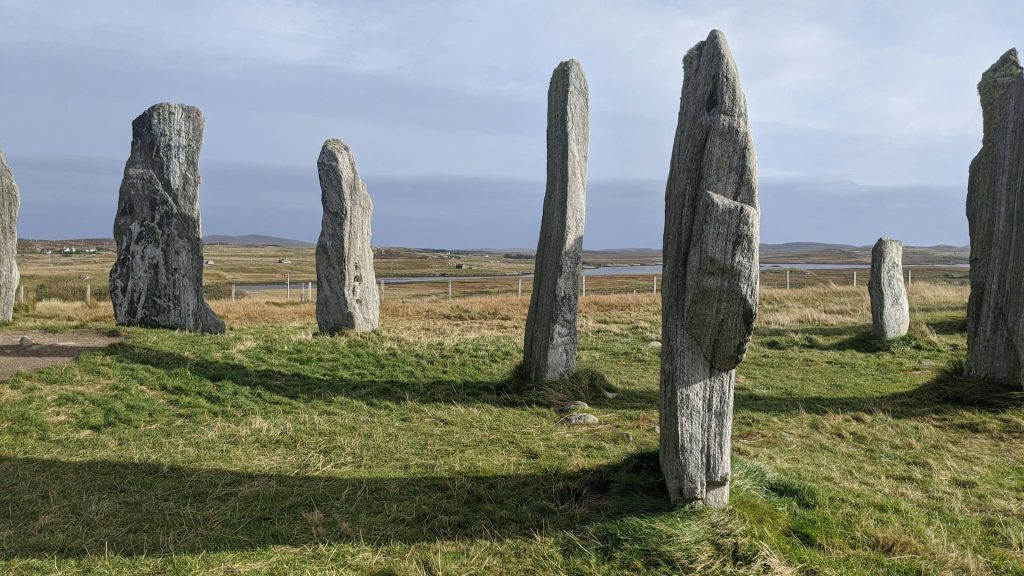
Kilmartin Glen: the valley of giants and of time
Moving towards Argyll, we come to Kilmartin Glen. With more than 800 ancient monuments within a six-mile radius, this is perhaps Scotland’s biggest ley line “hub”. Here standing stones, cairns and stone circles act as true amplifiers.
age-old places of worship
In Scotland, the idea of ley lines (or synchronic lines) weaves archaeology together with mysticism, suggesting that ancient monuments are aligned along invisible paths of earth energy.
Silvia Miraglia