
In the cold waters of the North Atlantic, where the mists drifting down from Iceland reach as far as the Scottish cliffs, lives one of the most fascinating and melancholy legends of Celtic folklore: the myth of the Selkies. It is said that there is a precise moment, between the ebb of the tide and the rising of the moon, when the boundary between worlds becomes as thin as a light silk veil. The figure of the Selkie is deeply rooted in the folklore of the northern lands, especially Orkney and Shetland, but it is in fact found across Scotland, Ireland, Iceland and the Faroe Islands.
Going far beyond the stereotype of Disney’s “Little Mermaid”, these mysterious creatures are not simple animals or predatory hybrid beings like mermaids, but true shapeshifters, seen as halfway between the human and the divine, and known as the “seal women”.
Origins and symbolism
Beyond the fairytale side, the Selkie myth has roots that blend nature and history. Some scholars suggest that the myth arose from encounters with indigenous peoples (such as the Sámi or the Inuit) who came from the sea in their kayaks wearing sealskin clothing, and so seemed “alien” to the locals. The interpretations have certainly been many and varied: from the idea that Selkies were humans stained by grave sins and therefore forced to live as seals, to the version describing them as the children of exiled kings or sea creatures with magical powers.
In the past, stories of seal women served to explain rationally the chronic melancholy of some women and, above all, sudden disappearances at sea or the birth of children with physical anomalies (such as webbed fingers) attributed to the features of these creatures. This bond between body and spirit often recalls the idea of a mysticism tied to the natural elements, in which water represents the deep unconscious.
Some tales tell us that male Selkies exist too, described as irresistible seducers who appear to women unhappy or dissatisfied in their marriage, to offer them comfort or an escape from daily routine.
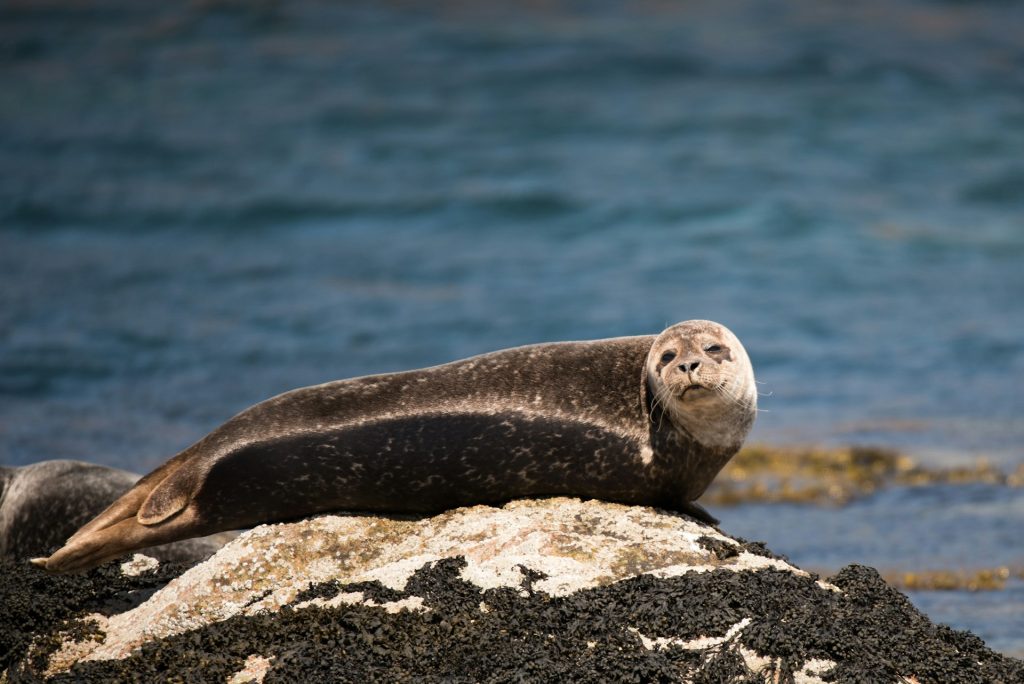
Who are the Selkies? The seal women of northern folklore, between magic and melancholy
Legend has it that Selkies look like ordinary seals in the depths of the ocean but that, once they reach the shore, they can shed their skin and take on human forms of extraordinary beauty. These transformations are often said to happen on full-moon nights or on special occasions, when the Selkies gather on the beach.
Unlike other magical creatures, however, Selkies are described as gentle, innocent beings deeply bound to nature. Yet they can become vengeful if their kin (seals) are wounded or mistreated by humans.
The myth of the “Selkie bride”
The recurring element in these legends is the marriage between a Selkie and a human being, and it clearly explains their bond with the “sealskin”. According to tradition, if a man manages to steal and hide the skin of one of these creatures while she is in human form, the Selkie can no longer return to the sea. Trapped in this new condition, she often has to marry the man who tricked her and live on land, since she can no longer transform.
If children are born of their union, the Selkie will care for them with love and devotion, but her heart will forever be full of longing for her true home.
The legends tell that it is often one of the children who accidentally finds the skin taken years before. The moment the “Selkie bride” recovers it and puts it on, she flees at once towards the waves, leaving her earthly life without regret, because the call of the sea is stronger than any other bond.
It is clear, then, that the “sealskin” is not a mere covering but the very essence of their magic and their freedom. Without it, a Selkie loses her identity.
Selkies in popular culture
The Selkie myth remains popular in both film and literature. If you want to explore the theme further, I recommend Tomm Moore’s animated film Song of the Sea, which presents the figure of the Selkie and her magical bond with the ocean through the character of Saoirse, a six-year-old girl. It is the second film in a trilogy devoted to Irish mythology.
The Secret of Roan Inish, on the other hand, is a film about the bond between an Irish family and its Selkie ancestors. As for music, I suggest listening to the melancholy Scottish ballad The Great Selkie of Sule Skerry. It tells the story of a woman who has had a child with a selkie living on a lonely skerry; years later he appears to her to foretell their tragic fate: both he and the child will be killed by a hunter, the woman’s future husband.
Conclusion: the call of the deep
Ultimately, the Selkie myth speaks of a universal truth: the unquenchable longing to return to our true nature. We are suspended between the earth we walk on and the boundless ocean of our emotions. Listening to the song of the Selkies therefore means lending an ear to the most authentic part of ourselves, the part that can never be tamed and that, sooner or later, will always find its way home.
Silvia Miraglia