Welcome to this very unusual section, which we wanted to include on the site to pay tribute to Scotland in all its aspects and facets. Yes, Scotland is home to one of the first esoteric circles of “modern times” but, like the history of humankind, this knowledge and the practices connected to it are lost Between the Pages of Time, and can be understood as a journey in depth towards greater self-awareness, through knowledge handed down “from mouth to ear” over the centuries within a small circle of initiates. Much has changed today and, although esoteric practices are still the preserve of circles that require initiation, the free seeker is not denied the rudiments with which to approach knowledge and teachings that can enrich the daily life of each of us.
A land of mysteries
Scotland is a land steeped in a deep sense of mystery, where native esoteric traditions and outside influences have merged, shaping the country’s spiritual identity and, in particular, Scottish Freemasonry. Druidism and its integration, however complex, with Christianity played a key role in this process.
Druids and Celtic culture
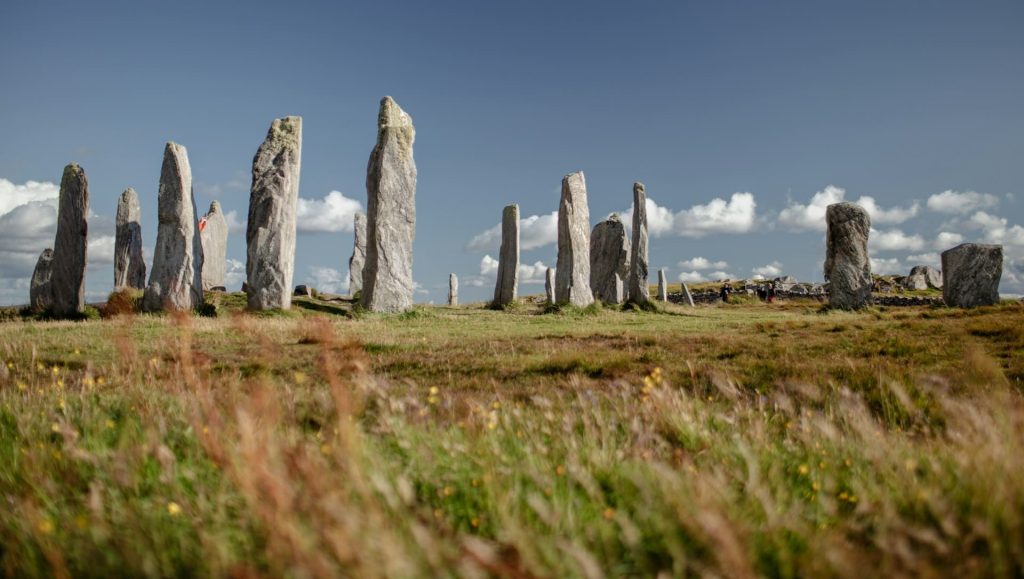
Druidism and Celtic culture are fundamental elements of the Scottish context. Druids were central figures in Celtic society in Scotland, acting as priests, teachers and judges. They were seen as the guardians of an ancient wisdom based on natural magic, which included knowledge of astrology, philosophy and divination.
Like Freemasonry, Druidism was based on passing on esoteric knowledge to a small group of initiates, which in later centuries fuelled a fascination with Druidism as an ancient source of wisdom reserved for the few. The druids were deeply bound to nature, especially to oaks, the sacred tree of Celtic tradition. Scottish Masonic symbolism, although not directly descended from Celtic culture, absorbed a deep sense of connection with the land and the past. Although historical Druidism lost influence as Christianity advanced, the 18th-century Druid “revival”, linked to Romanticism, took up and brought back to the surface these ancient traditions, never truly lost and always kept quietly alive among small circles of people and woven into symbols and allegories tied to tradition.
Celtic Christianity
Druidism gave way to Christianity in a complex process of syncretism that led to the birth of Celtic Christianity.
Instead of destroying pagan sites, Christian missionaries such as Saint Columba (Colum Cille) founded abbeys (like the one on the island of Iona) in places once sacred to the druids, reclaiming them to make conversion easier. Another reading, however, can be put this way: Druidism, aware of the overwhelming power of Christianity, backed by the military might that always accompanied it in its various incarnations (first the Roman Empire, then the first Christianised Anglo-Saxon kingdoms), went into hiding and wove its tradition into the practices of the newcomers.
Two main phenomena therefore took place:
• Symbolic assimilation: Pre-existing Celtic symbols, such as the Celtic cross (which joins a Christian cross with a pagan solar circle), were absorbed and reinterpreted by the new religion, allowing local beliefs to be gradually integrated.
• Mystical spirituality: The Celtic Christian tradition stood apart from the Roman one for its strong bond with the spirituality of nature and a more mystical, animistic vision of the divine. This syncretism helped esoteric traditions survive and is reflected in Scottish Freemasonry.
Magical places and witch hunts
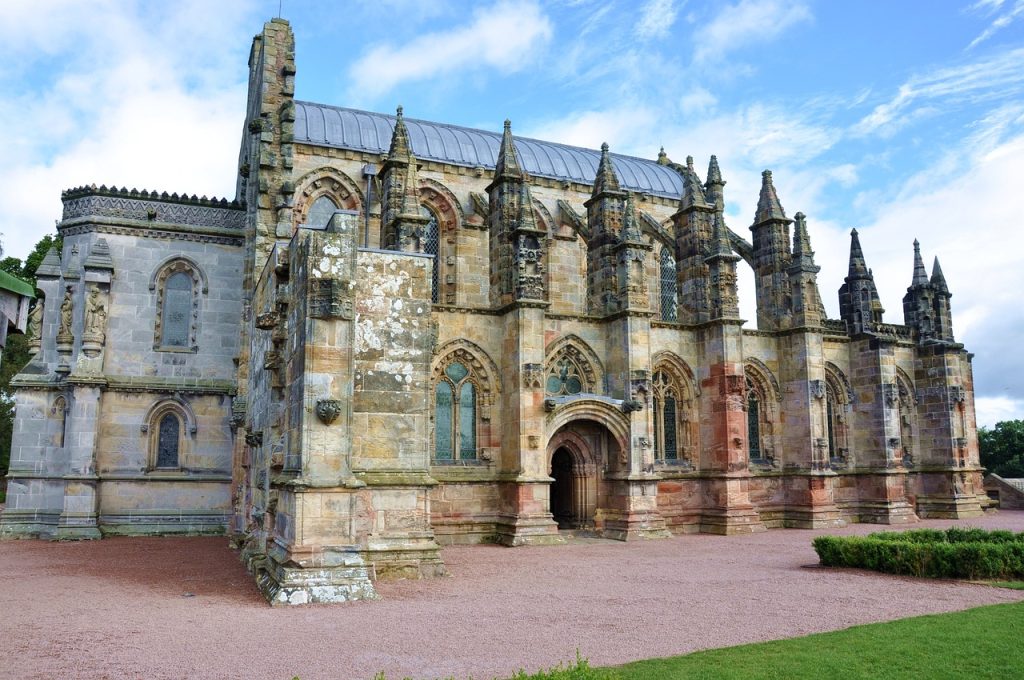
Places such as Dunino Den are considered strongholds of fairies and druids. Rosslyn Chapel is also an emblematic site, associated with Templar mysteries and esoteric symbolism that have fuelled the popular imagination, thanks in part to the novels of various modern authors. Rosslyn Chapel is a wonderful example of symbols and archetypes that, once understood, can guide the seeker towards higher levels of awareness of the world around us.
Scotland also has a tragic history of witch hunts, particularly intense between the 16th and 17th centuries (such as the North Berwick trials), which revealed a widespread popular and institutional belief in the existence and power of witchcraft.
From the masons’ lodges to Freemasonry
The Scottish context, steeped in mystery, in age-old syncretic traditions full of archetypes, in ethnic cross-currents and initiatory guilds, is an ideal and preparatory ground for what would later lead to the founding and development of speculative Freemasonry.
The first and longest-lasting organisations with a secretive character were the Operative Masons’ Lodges. Lodges such as the Lodge of Edinburgh (Mary’s Chapel) No. 1 and Lodge Mother Kilwinning No. 0 are among the oldest known, with documents attesting to their existence as early as the end of the 16th century. These lodges acted as a bridge between medieval craft practices and speculative Freemasonry, beginning in the 17th century to admit non-operative members interested in the symbolic and philosophical side of the craft.
The Ancient and Accepted Scottish Rite
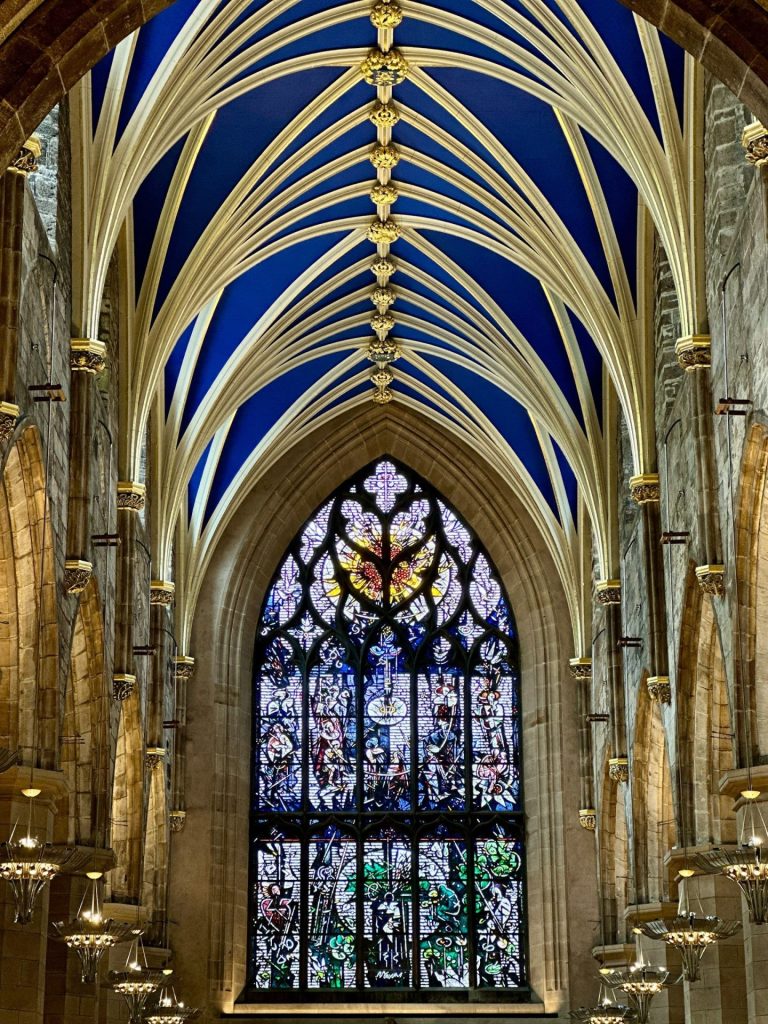
The legacy of tradition in the Ancient and Accepted Scottish Rite (AASR): although developed mainly in France and the United States, the Ancient and Accepted Scottish Rite draws heavily on Scottish imagery and tradition, strengthening the symbolic link with Scotland.
Scottish Freemasonry symbolically absorbs the deep sense of mystery and the Celtic esoteric heritage. The idea of secret knowledge and the sacredness of places resonate with Masonic symbolism. The rituals of the Scottish Rite are known for their rich symbolism, which includes references to various esoteric traditions that blended in the Scottish context, such as alchemy, the Kabbalah and priestly wisdom. The imagery of the Scottish Rite is reinforced by the often-recalled legend that the Knights Templar who survived the persecutions – culminating in the execution of Grand Master Jacques de Molay, ordered by King Philip IV of France with the consent of Pope Clement V – took refuge in Scotland.
In short, the Scottish context is like an ancient castle of mysteries: its Celtic and Druidic roots are its secret underground foundations; Celtic Christianity is its syncretic architecture, which allowed the old symbols to remain visible; and Scottish Freemasonry, especially the Scottish Rite, is the key that seeks to unlock the secrets hidden Between the Pages of Time and of our history, drawing symbolically on the whole esoteric heritage of the land.
Silvia Miraglia