
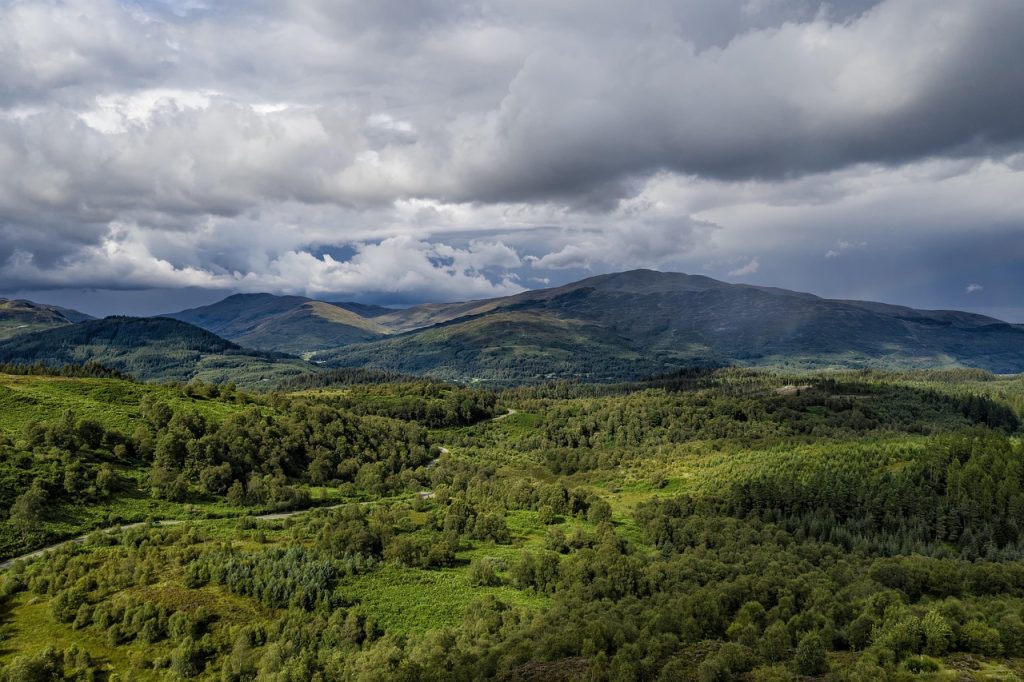
There is a loch in Scotland that, in my view, embodies the enchanted beauty of Scottish landscapes more than any other. And it is precisely an enchantment I want to tell you about today. I invite you to sit somewhere quiet and take your time to imagine what I am about to tell you…
The legend of Katrine
Long, long ago, where the great forest of the Trossachs now stretches, there was a wide valley where many people lived in perfect peace and harmony, thanks to the extraordinarily fertile land they farmed. At the top of the hill overlooking the valley, hidden among rocks and trees, lay the secret of such abundance: a spring of the purest water with wondrous powers. Its power, however, had to be channelled so that it would not become destructive. For this purpose, a maiden named Katrine had been given the task of guarding this sacred spring and, above all, of releasing just the right amount of water, a little at a time. And so every morning young Katrine climbed the hill to open the spring and give the villagers the amount they needed to live in plenty. In the evening she went back to stop the flow and stayed beside the spring all night to protect it from wrongdoers.
One day, just as she was getting ready to spend the night in her shelter, she was approached by a young stranger with dark and particularly striking features. He introduced himself politely, explaining that he had travelled far to see the mysterious spring he had heard so much about. Katrine, reassured by the stranger’s respectful manner, gladly agreed to spend some time with him, telling him about the magical qualities of the waters. Without realising it, the girl found herself completely spellbound by those magnetic eyes, which were making her forget her duty. She did not resist when he offered her a drink, and happily agreed to share the food the young man had in his bag.
Weariness began to take over; Katrine felt weaker and weaker, unable to react… sleep came suddenly, leaving her unconscious on the ground. The stranger, for his part, got up and strode towards the spring, a look of triumph in the very eyes that had bewitched the girl moments before. He began to shove aside the rocks that held back the spring; he seemed possessed by a supernatural fury that gave him unimaginable strength. The dark young man, with his gentle and bewitching charm, was turning into his true self: a terrible demon who lived in a cave inside Ben Venue, the mountain that towered over the valley. This deceitful creature, always jealous of the villagers’ prosperity and happiness, wanted revenge and, above all, to put an end to their idyllic life. He broke the barrier of rock that held back the spring, and the water poured out with all its raging force over the boulders that had witnessed the meeting of the two young people, slid unstoppably down the hillside and crashed violently into the valley, sweeping everything away.
The next morning, when Katrine woke up, the stranger had vanished and in his place was the devastation he had caused. Guessing what might have happened, the girl started running to reach her loved ones. The shocking sight before her eyes struck her so hard that she was left almost paralysed: where only hours before the peaceful valley had stretched and her community had flourished, there now lay a huge, long loch. The waters, muddy with everything they had swept away, had completely erased every trace of what had been: fields, mills, farms, houses, animals, people… Katrine thought of her family, her friends, all those who had been drowned as they slept peacefully. Distraught and overwhelmed by grief, she rushed to the shore with a deep sense of guilt weighing on her heart. She threw herself in, letting herself be swallowed by the very waters she should have guarded, hoping to be united forever with the people she had loved.
This legend, which shows how falling under the spell of a deceptive charm can lead to an irreversible catastrophe, turning a land of plenty and happiness into a place of tragedy and death, tells of the birth of Loch Katrine: one of the most beautiful lochs in Scotland, rich in history and tradition.
The jewel of the Trossachs
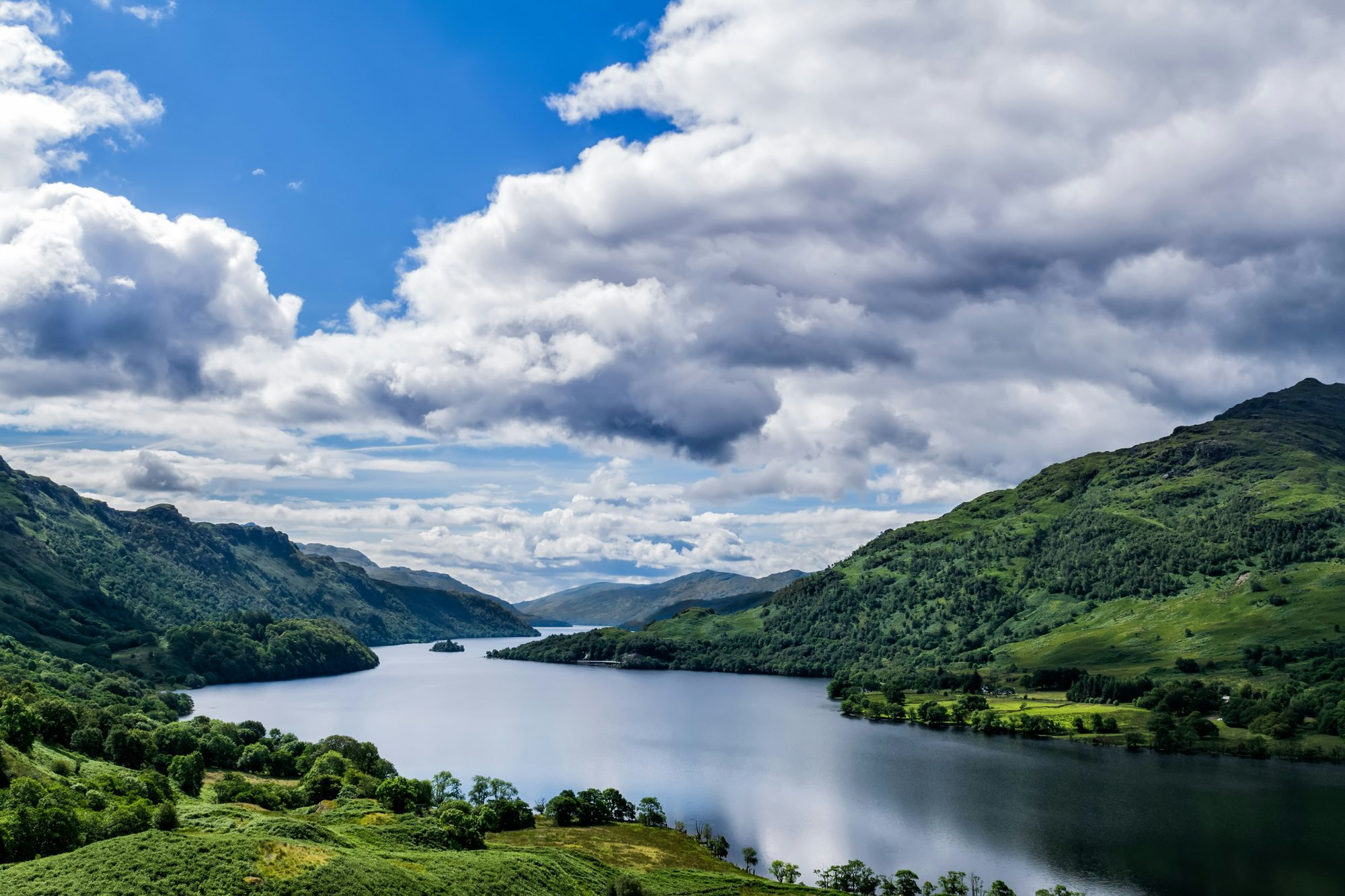
Lying in the heart of the Trossachs, Loch Katrine is just as beautiful and evocative as nearby, larger Loch Lomond. Indeed, compared with the loch that gave the national park its name, it is certainly far quieter and less crowded. The extraordinary beauty of this place has inspired poets, writers and painters, including Sir Walter Scott, Samuel Coleridge, William Wordsworth and Horatio McCulloch, who set their works on these shores. The publication of Scott’s epic poem The Lady of The Lake, in particular, sparked the so-called Highland Revival, as his devoted readers began travelling in droves to the Trossachs to see the places he described. Loch Katrine soon became an extremely popular destination; that is why we can say that Sir Walter Scott helped give birth to Scottish tourism!
In the footsteps of Rob Roy
The picturesque shores of Loch Katrine were the cradle of a legendary figure in Scottish history: Robert MacGregor. On the northern side, at Glengyle House, on 7 March 1671, Rob Roy was born (in Gaelic Raibeart Ruadh, “Red Robert”), the red-haired MacGregor leader who became a national hero, much loved by his people. A cattle dealer, he was ruined and outlawed because of a debt to the Duke of Montrose. He became an outlaw and began stealing cattle and making landowners pay him in return for protecting their herds. Some say the loch’s name, rather than coming from the legend I told you, derives from the Gaelic word ceathairne, meaning, as it happens, ‘cattle thieves’. The term would refer to a band of armed fighters who lived by raiding and terrorising the Highlands. In fact, Rob Roy is said to have been a kind of Scottish Robin Hood who tried to right injustices.
Glasgow’s water
Another element we certainly can’t forget takes us to more modern times: 13 km long, Loch Katrine has for more than 150 years been the main source of fresh water for the city of Glasgow. The building of the aqueduct in 1859, a monumental undertaking designed by the engineer John F. Bateman, was needed to try to stem the devastating cholera epidemics that struck the city in the 19th century. Queen Victoria attended the opening and fell so much in love with the area that she returned several times; in 1869 she treated herself to a boat trip, and her visits, often recorded in her diaries, gave another significant boost to making the Highlands hugely popular.
How to visit Loch Katrine
If you want to relive the legend of Katrine, find some of the scenes of The Lady of the Lake or discover the places admired and lived in by key figures in Scottish history, then you have found another reason to start packing and treat yourself to a holiday in Scotland! Loch Katrine offers plenty of things to do for those who dream of spending time close to nature:
- cruises aboard the historic steamship Sir Walter Scott (launched in 1899) or on a modern cruiser named, in homage to Scott’s poem, The Lady of The Lake;
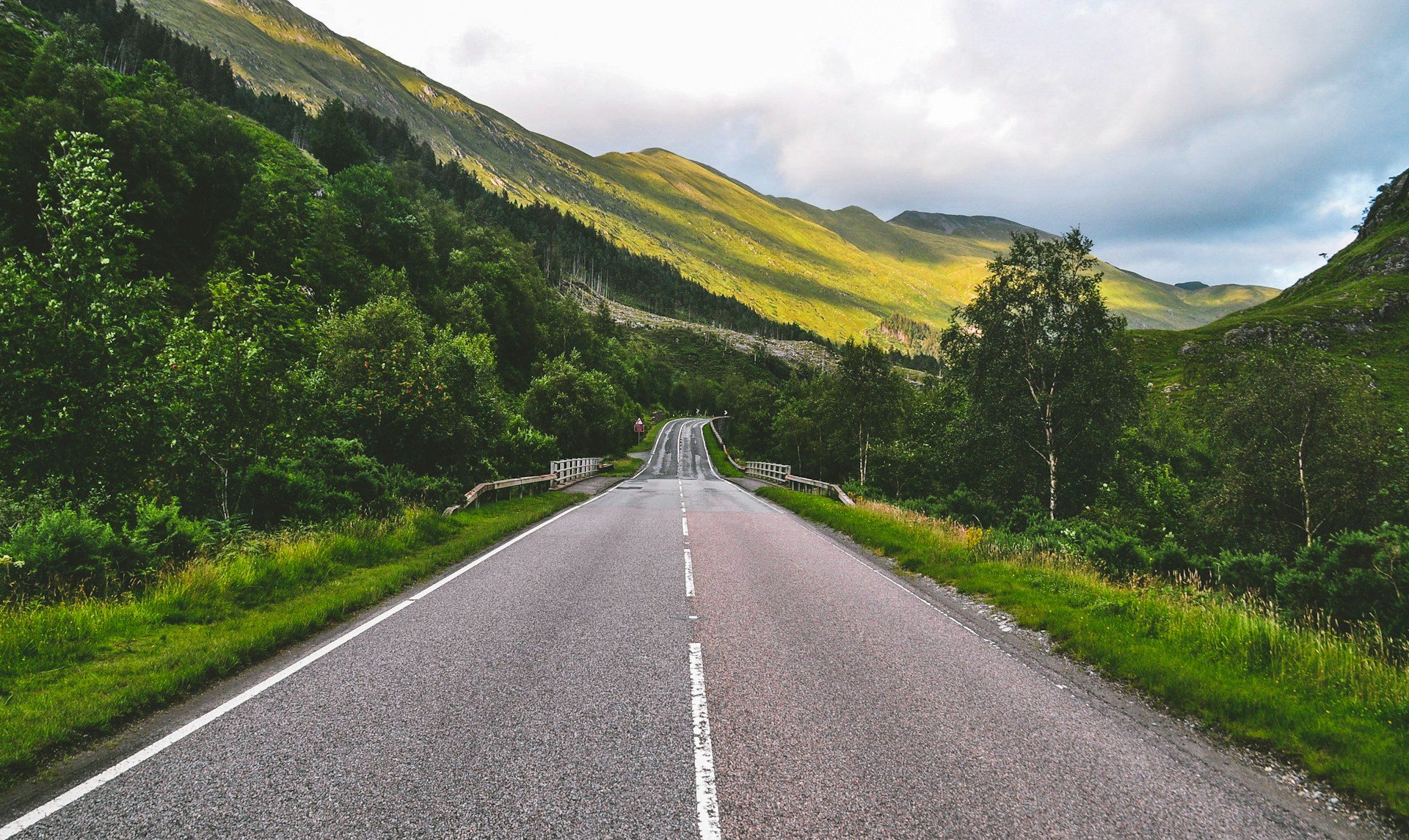
- ‘bike and boat’ trips or cycling only: setting sail from Trossachs Pier (the eastern end), you land at Stronachlachar (the north-western end), then ride back along the scenic north shore for a route of about 21 km. It is a private road, owned by Scottish Water, closed to most vehicles and therefore quite peaceful;
- camping and trout fishing;
- walks of varying difficulty. In my opinion, this last option guarantees a genuine immersion in an extraordinary landscape you will find hard to forget. Examples include the scenic road from Stronachlachar to Trossachs Pier, plunging through pines, oaks, birches and beeches, or the path along the north shore that leads to Rob Roy’s birthplace (Glengyle House). If you love the story of this Scottish hero, I suggest you photograph Factor’s Isle, the islet where MacGregor imprisoned the Duke of Montrose’s factor in retaliation for the eviction of his family, and visit the clan graveyard, with headstones dating from between 1699 and 1800.
Whatever you choose, if you are lucky enough to visit this corner of Scotland, I am sure that as you gaze at the loch’s extraordinary scenery you will easily understand how it has inspired so many artists over the centuries. Loch Katrine is worth a visit at any time of year, but… the warm autumn colours cloaking its shores and the hills that crown it are a sight that will stay in your heart forever!
Silvia Miraglia