
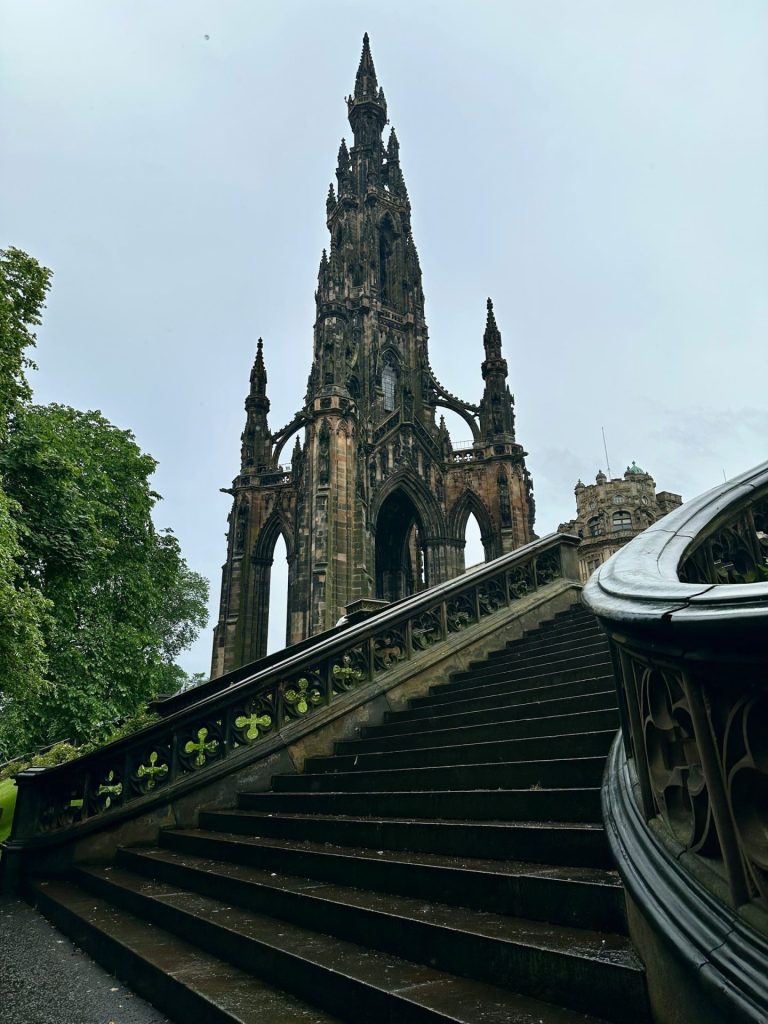
Walking along Princes Street, at the foot of Castle Rock, the rocky crag on which Edinburgh’s famous castle stands, your eye is inevitably caught by a dark spire, as tall and imposing as a Gothic cathedral. Beneath its arches sits a man: an open book on his knees and a faithful dog at his feet. The white marble from which he is carved takes nothing away from the solemnity of his pose. We are in the presence of the man who made the past immortal, Sir Walter Scott, the father of the modern novel. The tower soaring above his head is one of the largest monuments ever dedicated to a writer.
Poet, novelist, lawyer, collector of ballads and legends, Scott took his country’s history and moulded it, turning it from a dusty sequence of dates into a vivid, compelling story. If today we can immerse ourselves in distant ages, hear the sound of horses’ hooves echoing across the Scottish moors or live the dramas and passions of the Middle Ages among knights and rebels, the credit goes largely to one man: Sir Walter Scott.
Who was Sir Walter Scott: a childhood among the Border hills
Born in Edinburgh on 15 August 1771 into a middle-class family (his father was a successful lawyer and his mother a highly cultured woman), little Walter was struck at just eighteen months old by a severe form of polio (or a childhood fever with similar effects) that left him permanently lame in his right leg. To strengthen his frail body, his family sent him to his paternal grandparents at Sandyknowe farm in the Borders, set in a landscape dominated by the ruins of the medieval Smailholm Tower.
That is where it all began. Far from the rigid conventions of the city, Walter grew up close to nature. Outdoor life and traditional remedies allowed him to develop a sturdy build and incredible physical stamina which, as an adult, would carry him on long, gruelling rides to explore the Highlands.
The ruins of the tower became the first real stage for his vivid imagination. Playing among those ancient stones, Walter began to wonder who had lived there, what battles had been fought there and what secrets they held.
Grandmother and the magic of oral folklore
At Sandyknowe, little Walter found not only clean air but a living archive of stories. His paternal grandmother and his aunt Janet Scott became his first and most important “storytelling teachers”.
- Border ballads and legends: For centuries southern Scotland had been the scene of raids between rival clans (the famous Border Reivers) and epic battles against the English. Around the fire in the evenings, the women of the family would tell the boy about legendary heroes, betrayals, ghost stories and accounts of the failed Jacobite rising of 1745 (only twenty-six years before his birth, and so still very much alive in collective memory).
- Steeped in folk poetry: Even before he could properly read the Latin classics, Scott fed on that oral, anonymous poetry celebrating honour, courage, sacrifice and the melancholy of the defeated. This heritage of folk myths would become the lifeblood of all his future writing.
Anne Rutherford Scott: his first muse
Walter Scott’s mother was a key figure not only in the future writer’s personal life but also in the birth of his literary genius. Anne came from a prominent family: her father, John Rutherford, was a renowned professor of medicine at the University of Edinburgh, and the family had important links with the Scottish landed and legal elite. Anne received a refined education; she had a sharp mind, a great talent for conversation, a remarkable passion for genealogy (she knew by heart the family ties and history of almost every noble family in Scotland) and a fondness for old ballads and folk traditions, which she loved to tell.
Her life was marked by grievous losses: no fewer than seven of her children died, and so when Walter fell ill, it was only thanks to her determination and the care of his parents and paternal grandparents that the child’s health was safeguarded. And it was she who encouraged young Walter to read not only for learning but to nourish his imagination, steering him towards poetry and noble sentiments. A very close bond grew between mother and son.
Lawyer by day, ballad hunter by passion
Back in Edinburgh, Scott studied law (mainly to please his family) and showed a remarkable talent for creating characters and building stories with which he enthralled his classmates. In the family home in Edinburgh he devoured every text he could lay his hands on: medieval chronicles, chivalric romances, travel writing, plays and the great literature of Europe (especially epic poetry and the German Romanticism that was beginning to make its way).
He became an advocate in 1792, but his true passion remained the old folk ballads of his childhood; for years he rode through the valleys, noting down verses from the lips of shepherds and elderly farmwives. The result was the collection Minstrelsy of the Scottish Border (1802–1803), a precious treasury of oral poetry saved from oblivion.
In 1799 he was appointed Sheriff of Selkirkshire: a post that gave him a salary and bound him forever to the region he loved.
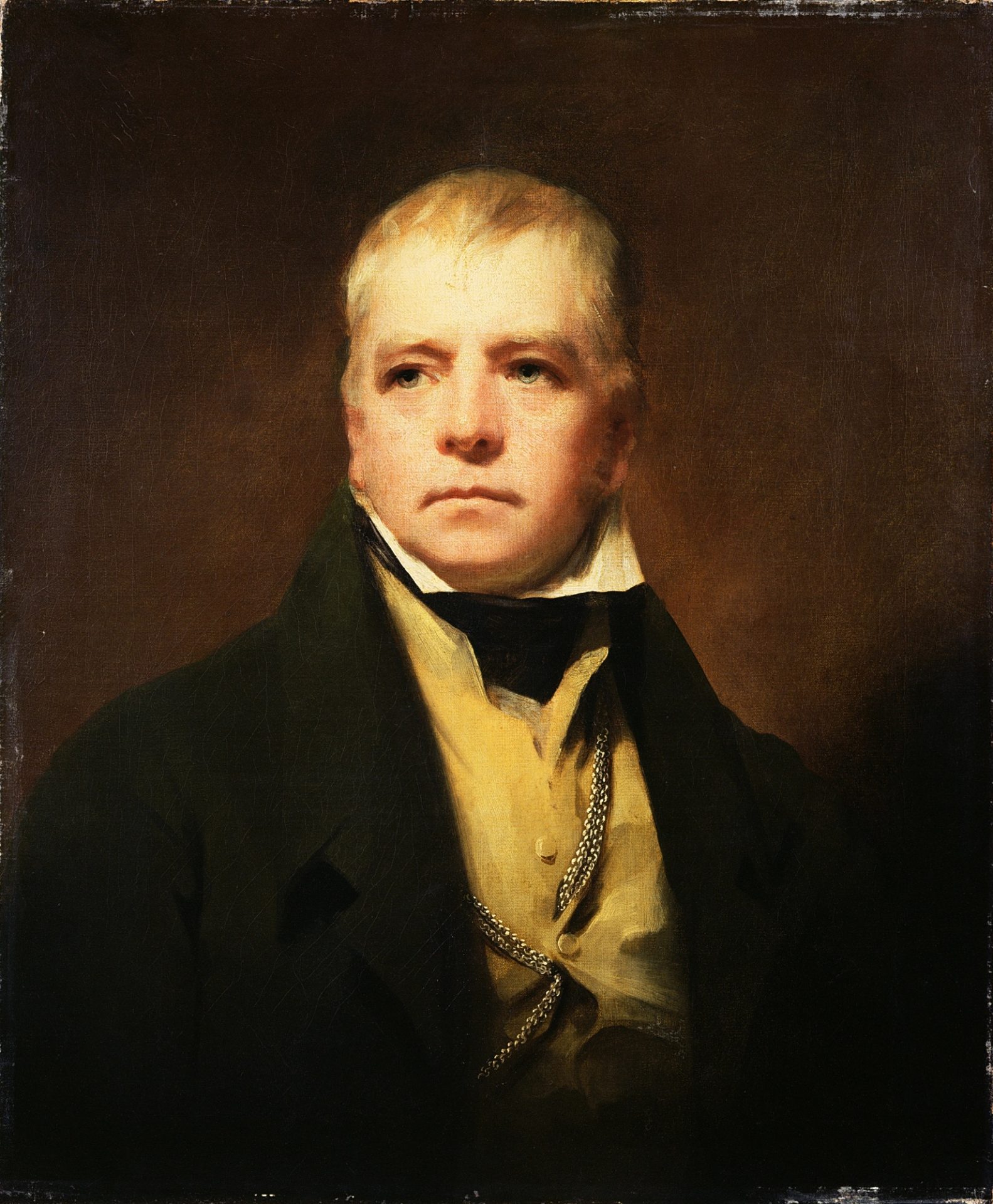
The kingdom’s best-loved poet
Before becoming a novelist, Scott was the most widely read poet of his day. The Lay of the Last Minstrel (1805), Marmion (1808) and above all The Lady of the Lake (1810) were runaway successes.
The Lady of the Lake had an extraordinary effect and gave rise to what we would now call “literary tourism”: after its publication, crowds of visitors set off to see Loch Katrine and the Trossachs, where the poem is set, with their own eyes. It is one of the first cases in history of a book changing a place’s fortunes as a destination. Rossini would base his opera La donna del lago (1819) on the poem.
When a young poet called Lord Byron began to eclipse his fame, Scott very shrewdly made a decision that would change the history of literature forever.
The Great Unknown: Waverley and the birth of the historical novel
In 1814 he published a novel anonymously: Waverley. It tells of a young English officer who, during the Jacobite rising of 1745, finds himself torn between loyalty to the Crown and the allure of the Highland clans loyal to Bonnie Prince Charlie. Its success was immediate and resounding. Until then, so-called “historical novels” had been seen as a teaching tool or as implausible costume romances. Scott, however, did something revolutionary!
For thirteen years Scott published a long series of novels anonymously, signed only “by the author of Waverley”. Everyone suspected who he was, but he would not confirm it: the public called him “the Great Unknown” and, later, “the Wizard of the North”. He only admitted authorship in 1827, at a dinner in Edinburgh.
His formula: history seen through ordinary people
Sir Walter Scott‘s great invention is simple and brilliant:
The human factor in history. In his books he tells of great historical events through the eyes of fictional characters, often ordinary people, who find themselves caught up in them against their will. Kings, rebels and clan chiefs appear alongside farmers, beggars, innkeepers and smugglers, each with their own voice – often in lively Scots. In this way history stops being a list of dates and becomes an experience to live.
The balance between past and present. Scott has an extraordinary ability to bring back to life the mindsets, language and dramas of past ages, capturing their human side.
Scotland as protagonist. Through masterpieces such as Rob Roy and The Heart of Midlothian, Scott celebrates Scottish identity, its struggles and its passage into modernity within the British Empire, saving its cultural heritage from oblivion.
The novels to read (or reread)
- Waverley (1814) – the Jacobite rising and the romantic allure of the clans.
- Rob Roy (1817) – the legendary Highland outlaw, among the lochs and mountains of the Trossachs.
- The Heart of Midlothian (1818) – for many his masterpiece: Jeanie Deans walks across Great Britain to save her sister. A humble, unforgettable heroine.
- The Bride of Lammermoor (1819) – tragic love between feuding families; it would inspire Donizetti’s famous Lucia di Lammermoor (1835).
- Ivanhoe (1819) – a novel set no longer in Scotland but in 12th-century England, inflamed by clashes between Saxons and Normans, against the backdrop of the Crusades and featuring Richard the Lionheart, Robin Hood and the Knights. Ivanhoe shaped the popular image of the Middle Ages for generations to come. Jousting tournaments, besieged castles, duels to the death and codes of honour would inspire countless imitators, films and modern retellings.
The man who invented the image of Scotland
Scott did not just write about Scotland: he quite literally helped redesign its identity.
In 1818 he led the search that brought to light the Honours of Scotland, the Scottish crown jewels, which had lain locked in a chest in Edinburgh Castle for over a century. A few years later, in 1822, he organised King George IV’s visit to Edinburgh, the first by a reigning monarch to Scotland in almost two centuries. Scott turned the event into a grand spectacle: he invited the clan chiefs to appear in kilts and tartan, and even the king appeared in Highland dress. From then on tartan, banned only a few decades earlier, became a national symbol for the whole of Scotland. Much of what we now call “Scottish tradition” was born, or reborn, from this piece of stagecraft.
Ruin and courage
His life suffered a devastating blow in 1826, when the collapse of his publishing and printing business left him with colossal debts. That same year he also lost his wife Charlotte. Refusing the easier path of bankruptcy, Scott performed an act of extraordinary pride: he wrote non-stop, day and night, to repay every last penny to his creditors. This enormous effort irreparably undermined his health, leading to his death on 21 September 1832, aged 61.
Sir Walter Scott’s places in Scotland
For those who want to follow in the footsteps of Sir Walter Scott, Scotland offers a very rich itinerary, between town and countryside.
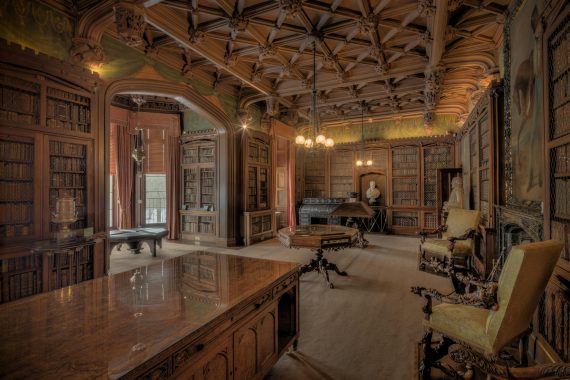
Abbotsford. On the banks of the River Tweed, near Melrose, Scott built his ideal home: a Gothic Revival mansion full of armour, portraits, historical curiosities and a library of thousands of volumes. Abbotsford is now open to the public, with a visitor centre and gardens overlooking the river.
Scott Monument, Edinburgh. Inaugurated in 1846 and designed by George Meikle Kemp, it is over 60 metres tall. A narrow staircase of 287 steps leads to the top, with a spectacular view over the Old Town and the castle. The niches of the tower hold dozens of statues of characters from his novels. It is no coincidence that Edinburgh’s main station is called Waverley, after his first novel.
Dryburgh Abbey and Scott’s View. Scott rests among the romantic ruins of Dryburgh Abbey, in the Borders. Not far away is Scott’s View, his favourite vista over the Eildon Hills and the Tweed valley.
Smailholm Tower and the Trossachs. Smailholm Tower, near the farm where he spent his childhood, is the ideal place to understand where his imagination was born. Further north, Loch Katrine and the Trossachs are the landscape of The Lady of the Lake and Rob Roy: a steamship bearing his name, the Sir Walter Scott, has sailed the loch since the early 1900s.
Scott and Italy
Scott’s influence crossed the whole of Europe and reached Italy too. Alessandro Manzoni read him very closely, and The Betrothed owes a great deal to the historical novel model that Scott had invented. Italian opera is also in his debt: besides Rossini’s La donna del lago and Donizetti’s Lucia di Lammermoor, many 19th-century librettos were inspired by his novels.
Why read Sir Walter Scott today
His prose is rich, descriptive and solemn. Reading Sir Walter Scott means rediscovering the pleasure of the great narrative fresco, understanding the very roots of the modern novel, and travelling to a time when literature had the power to build the identity of entire nations. In his works you will find adventure, vivid characters and a Scotland told with love and irony. Reading him before a trip to these lands means seeing the landscape with different eyes: every ruin, every loch, every Border valley suddenly seems to have a story to tell.
Silvia Miraglia