
Christmas as we know it today is a blend of Christian traditions and pagan customs. Scotland, with its rich Celtic history, is one of the places where this union is most evident. One of the most fascinating and mysterious figures of these ancient traditions is the Yule Father, a truly legendary character who has left a deep mark on Scottish folklore… and beyond, as we shall see.
But who really was the Yule Father, and what is his connection with Christmas? In this article we will explore the origins of the Yule Father in Scotland, how he evolved over time and, above all, his link with the ancient celebrations of the Winter Solstice.
Who is the Yule Father?
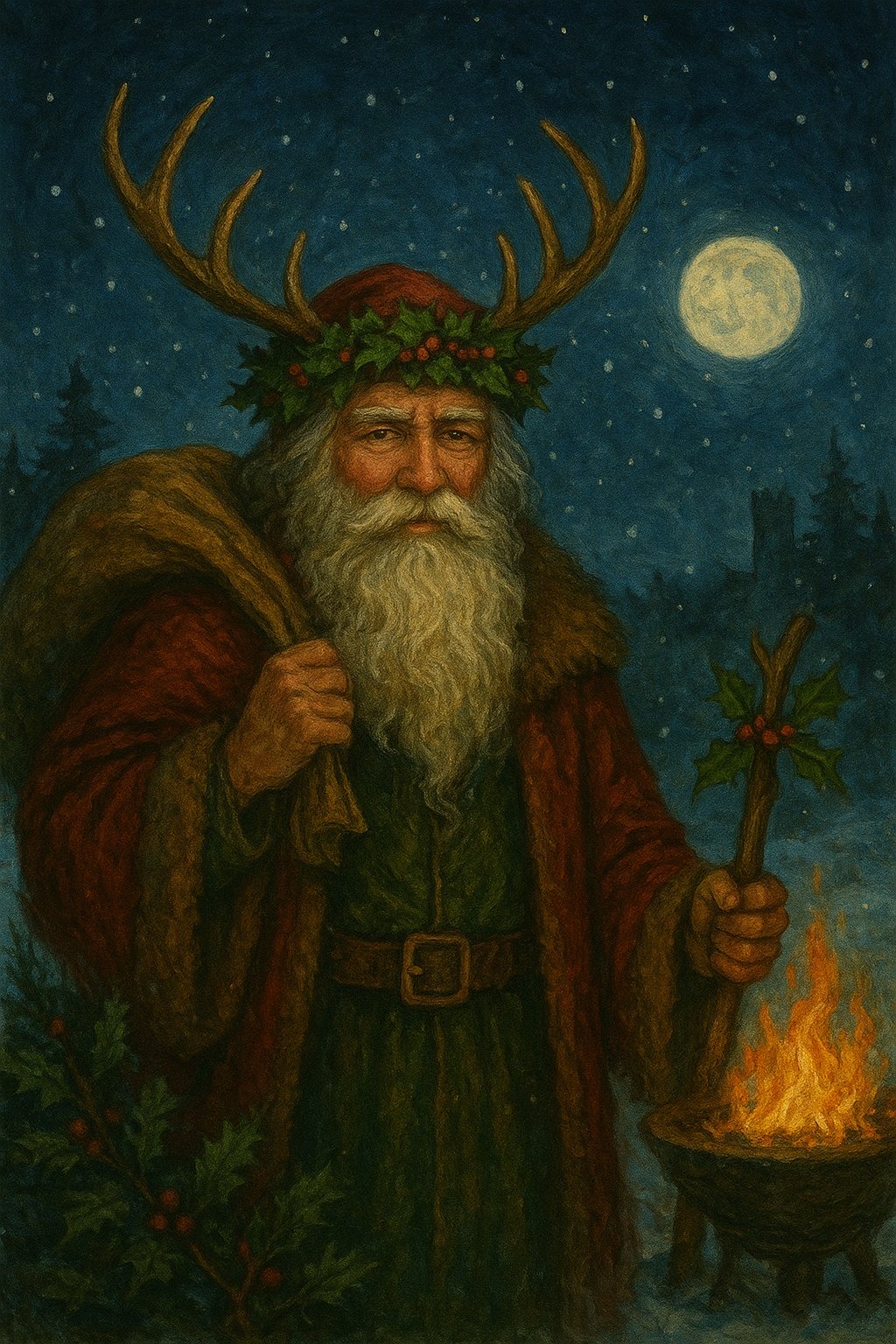
When we talk about Father Christmas, the image that springs to mind is an old man with a white beard, dressed in red and always ready to bring presents to children all over the world. Yet long before Father Christmas arrived, there was another figure, known as the Yule Father.
The figure of the Yule Father is closely tied to the festival of the Winter Solstice, a celebration dating back to very ancient times, long before Christianity and its customs shaped the Western world. In particular, we need to go back to the end of the 8th century, when the Vikings began raiding Scotland and later settled there, bringing their beliefs, legends and traditions with them. Among these was one they called Jól, which in Scotland became ‘Yule’, and it was associated with the Winter Solstice. The Vikings held this time of year in great esteem; they considered it sacred because for them it marked the end of the winter darkness. At Yule, the Vikings honoured their ancestors and celebrated renewal, with festivities lasting at least 12 days, through feasts, sacred fires and rites meant to call back the light and the rebirth of the Sun.
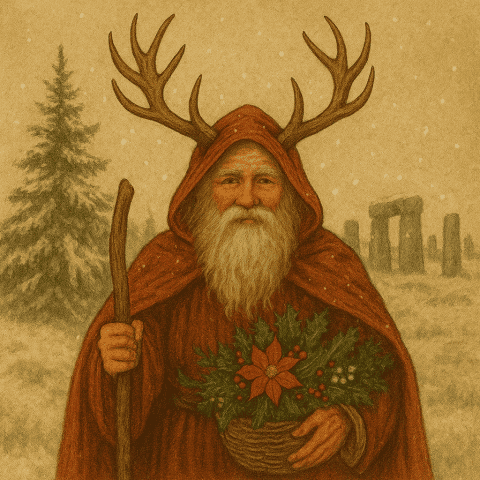
It is from these very customs that the Yule Father was born: a wise old man with a long white beard, bringer of gifts and blessings.
The Yule Father, nature and Celtic magic
However, the Yule Father was not just a giver of gifts.
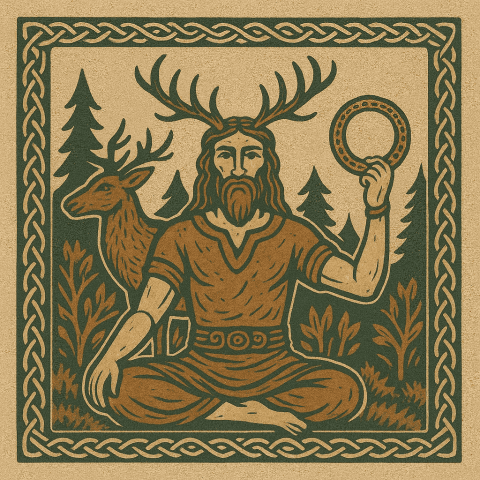
His origins are deeply intertwined with the natural world, its cyclical forces and the magic of the Celtic world. In particular, his figure is linked to the Celtic deity Cernunnos, the horned god of nature, animals and fertility. Often depicted with a long beard and stag’s antlers, symbols of life force and rebirth, Cernunnos shares many symbolic traits with the Yule Father.
Scottish Christmas traditions and the role of the Yule Father
In Scotland, great importance was given to the winter solstice celebrations; they were connected with ideas of renewal, light and protection. Fire, a symbol of life, purification and hope, was used in rites that linked people with ancient traditions and served to:
- celebrate the power of the returning Sun
- drive away evil spirits, a practice that has evolved into today’s use of Christmas lights
- prepare for the arrival of the new year
The Yule Father fitted perfectly into these traditions, representing the passage from the shadows of winter to the light of spring. He was a generous figure who brought gifts and helped protect people from the cold and the darkness, carrying with him a promise of warmth and abundance.
Much of this lives on today in the modern celebrations of Hogmanay, the Scottish version of New Year’s Eve. If you are interested in this topic, I will soon publish an article dedicated to Hogmanay in the blog section.
The link with the myth of Cernunnos
As I mentioned, another fascinating aspect of the Yule Father in Scotland is his link with Cernunnos, one of the most important deities in Celtic mythology. Known as the god of forests, animals and fertility, Cernunnos was often depicted with stag’s antlers and a long beard, features that recall the image of the Yule Father.
This myth represents the cyclical nature of life, death and rebirth, perfectly in tune with the winter solstice celebrations. Cernunnos was seen as a protective figure watching over the land and the animals, and during the solstice he was invoked to make sure nature would flourish again.
In a sense, the Yule Father in Scotland represents the fusion of these ancient traditions, in which the winter solstice, the return of the light and the renewal of nature lie at the heart of the festival. Although the figure of the Yule Father has evolved over time, his link with this deity and with pagan practices is still evident in modern Scottish Christmas traditions.
The Yule Father and the shift to Father Christmas
In Scotland, the Yule Father had a great influence on the development of modern Christmas traditions, especially that of Father Christmas. Although Father Christmas as we know him today was largely shaped by Dutch, German and American traditions, the roots of this character can also be traced to the Yule Father, as well as to other figures linked to the winter solstice and the giving of gifts.
The image of the Yule Father continued to influence Christmas celebrations until the 19th century, when Father Christmas took hold with the rise of popular culture and American influences. Even so, the tradition of gift-giving, like the kind old man who brings warmth in the cold of winter, remains a tangible sign of the Yule Father tradition.
Conclusions
The Yule Father in Scotland is a symbol of the country’s deep bond with its ancient spirituality, the cycle of nature and the powerful rebirth of light in the heart of winter. He is therefore a meeting point between the pagan past and modern Christmas traditions. Scottish Christmas traditions, from the Yule fire to the role of Cernunnos, remain a call to hope and renewal, just like the return of the light after the winter darkness.
If you are fascinated by Scottish Christmas traditions and want to learn more about how they have evolved over time, follow me: in the coming days you will be able to read my article on Hogmanay, the quintessential Scottish celebration welcoming the new year. A rite that unites past and present at the heart of the winter festivities.
Silvia Miraglia