
Scottish natural dyeing is an ancient craft that is enjoying a new lease of life today. Before synthetic dyes arrived in the 19th century, every shade of traditional Scottish textiles – from the famous clan tartans to the sturdy island tweeds – came straight from the land. Today a growing number of craftswomen, designers and natural dyers are rediscovering this botanical and cultural heritage, turning Scotland’s flora into a living, sustainable and deeply poetic palette. Those who practise this craft work with what grows around them: lichens, heather, nettles, bark, berries. Every dye bath is different from the last, because it depends on the season, the water, even the weather.
A history written in the colours of the Highlands
For centuries, in the homes of the Highlands and islands, dyeing wool was a household task like baking bread. Women gathered plants and lichens, prepared dye baths in cauldrons over the peat fire and dyed the yarn that would become blankets, plaids and tweed. From the 18th century onwards the practice became increasingly confined to the Highlands and islands, and that is where much of what we know today comes from.
From root to cloth: the alchemy of Scottish nature
Scotland’s traditional colour palette is never uniform or garish: rather, it reflects the changing light and muted tones of the north. In textile terms, the label “Ancient” refers precisely to tartans dyed with plant pigments that give soft, earthy, delicate shades, born of steeping the wool in traditional cauldrons.
Crotal, the soul of tweed
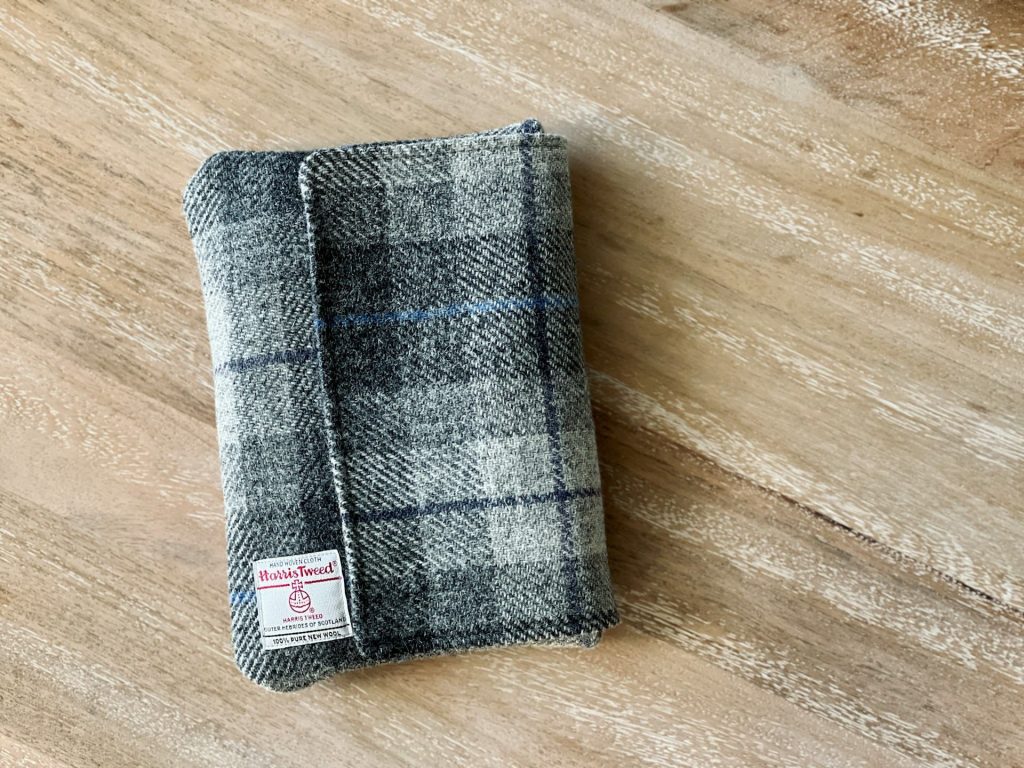
The most characteristic colour of Scottish natural dyeing is crotal (in Gaelic crotal, in Scots crottle): a reddish brown obtained from lichens scraped off rocks, such as Parmelia saxatilis. It was the colour of old homemade Harris Tweed, and the cloth was said to keep its smell even years later. An island belief held that fishermen should not wear clothes dyed with crotal: what comes from the rocks returns to the sea.
Reds, purples and a Glasgow invention
Other lichens gave surprising colours. Corcur, made from Ochrolechia tartarea steeped for a long time in urine, produced crimson and purple. From this very tradition came cudbear, a dye patented in the mid-18th century by Cuthbert Gordon and produced in large quantities in Glasgow.
Yellow and green. Yellow was commonly obtained from birch leaves, heather flowers, broom flowers and tormentil root; for green, on the other hand, dyers combined yellow-producing plants with a second bath in blue pigments, or used gorse bark and privet leaves.
Nature’s palette
Scottish natural dyes could produce extremely rich shades. Moreover, chemical analysis of historic textiles has shown that, since the Middle Ages, Scotland did not limit itself to local plants. For prestigious garments and the wealthiest clans, fine dyes were imported: precious indigo from Asia (for deep blues) and cochineal or madder from central Europe to obtain brilliant scarlet red.
Here are some traditional colours:
| Pianta o lichene | Colore | Curiosità |
|---|---|---|
| Erica (heather) | giallo, oro, verde | per il verde si raccoglieva prima della fioritura, con allume |
| Mirica (bog myrtle) | yellow | profumatissima, cresce nelle torbiere |
| Ginestrone (whin) | green | si usava la corteccia |
| Mirtillo nero (blaeberry) | blu, viola | il colore cambia col mordente |
| Prugnolo e uva ursina | blue-black | bacche dei margini e della brughiera |
| Tormentilla | red | la radice, scavata nei pascoli |
| Caglio zolfino (lady’s bedstraw) | red | parente della robbia |
| Crotal (Parmelia saxatilis) | marrone rossiccio | il colore del tweed antico |
| Alga dulse | brown | il mare entra nella tintura |
| Fuliggine di torba | giallo sporco | niente andava sprecato |
Every colour can change depending on the water, the season and the mordant: that is why two skeins dyed with the same plant could never be identical.
A new generation of “Plant Alchemists”
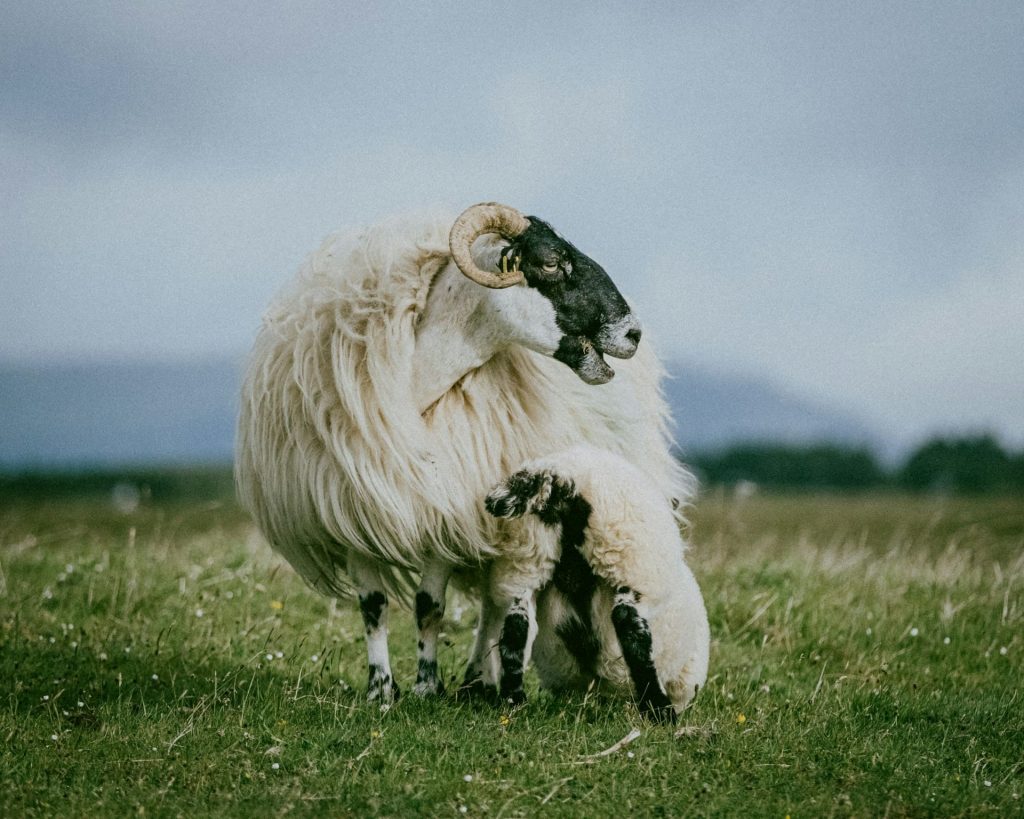
With the Industrial Revolution and the invention of synthetic dyes, the tradition of plant dyeing was at risk of disappearing, surviving only in a few small local workshops. In recent decades, however, this precious craft has seen a strong revival: designers, textile historians and small dye houses are literally rediscovering the old recipe books, going back to gathering plants and working with small farmers to make the most of Scotland’s different sheep breeds (often rejected by mass industry) to create unique collections tied to the history of the Scottish land.
The secrets of natural dyeing
Dyeing raw wool required knowledge handed down from one generation to the next, patience and precision. Today the same techniques are used as back then:
- Gathering. Plants are gathered respectfully: a few from each place, never rare species. Flowers and leaves in late spring or summer, at the height of flowering; roots and bark in autumn and winter, when the plant concentrates its pigments underground or in the stem; lichens are scraped all year round, preferably after days of heavy rain, which make them softer and easier to remove.
- Preparing the wool. Freshly shorn wool is rich in lanolin (the animal’s natural grease) and impurities that stop the colour penetrating the fibres. That is why it is first thoroughly washed: scouring removes the grease, opens the fibre’s microscopic scales and makes it ready to take the mordant and the pigment.
- Mordanting. This is the stage in which the mordant is applied, a substance that helps the colour cling to the fibre. In the past, alum was used to keep colours bright, copper to intensify greens and iron to darken shades.
- The dye bath. Bark, roots and lichens are chopped, pounded and left to steep in water for days or weeks before simmering to extract the colour.
- Dyeing. The wool is immersed in the hot dye bath (the water must not boil too hard, never above 80–90 °C) for one to four hours.
- Rinsing. The wool is washed in cold water to remove excess pigment, wrung out and hung up to dry.
Today’s dyers: where to meet them
Here are a few places to discover Scottish natural dyeing first-hand.
Shilasdair Yarns, Isle of Skye. Shilasdair is the Gaelic name for the yellow iris, an ancient dye plant. The dye house was founded more than forty years ago by Eva and Tony Lambert: Eva wove rugs and experimented with plants and lichens until her yarns became famous. Since 2018 the business has been run by Kirsty Faulds and Simon Wallwark.
Today the workshop is at Culnacnoc, near Staffin, on the Trotternish peninsula, next to the Glenview B&B. Kirsty gathers birch, alder, meadowsweet and bog myrtle, and also works with madder, indigo and tansy. She also sells undyed yarns, spun from the wool of Skye sheep.
Woollenflower, Glasgow. A small natural dye studio in the city. It dyes lightly processed local wool, alpaca, linen and mohair with plants gathered around Glasgow, kitchen scraps and sustainably sourced dyes. Proof that the colours of the earth can be found even on the edge of a city.
Learning with your own hands. If you want to try, look for natural dyeing workshops: the National Museum of Rural Life in East Kilbride, near Glasgow, runs days with expert dyers, suitable for beginners too. Many craft centres in the Highlands offer seasonal courses, especially in summer, when the plants are at their best.
For little explorers: dyeing with onion skins
Want to try the magic of natural dyeing at home? Brown onion skins are perfect to start with: on wool they give a lovely warm yellow-orange, like autumn heather, and no mordant is needed.
What you need: a small skein of white wool (100% wool), the dry skins of 6–8 brown onions, an old saucepan, a sieve and an adult to help children at the stove.
- Soak the wool in lukewarm water for an hour.
- Simmer the skins in water for about 40 minutes: the water will turn amber.
- Strain out the skins and immerse the wet wool in the liquid.
- Keep the pan on the lowest heat for an hour, without boiling, then let the wool cool in the bath.
- Rinse in lukewarm water and leave to dry in the shade.
A real dyer’s tip: never move the wool from hot water to cold, or it will felt. And if you add a rusty nail to the bath, the colour will turn darker, almost olive green. At the end, write everything down: every dyer keeps a colour diary!
Scottish natural dyeing: a craft that looks ahead
In an age dominated by digital technology and ultra-fast (and often highly polluting) industrial textile production, plant dyes offer a powerful antidote.
A garment dyed with Highland plants is never identical to another: it carries the variations of the season, the type of soil, the sunlight that nourished the plant and the hand of the craftsperson. It is a piece of authentic Scotland to wear, able to tell an age-old story through the universal language of colour.
Silvia Miraglia