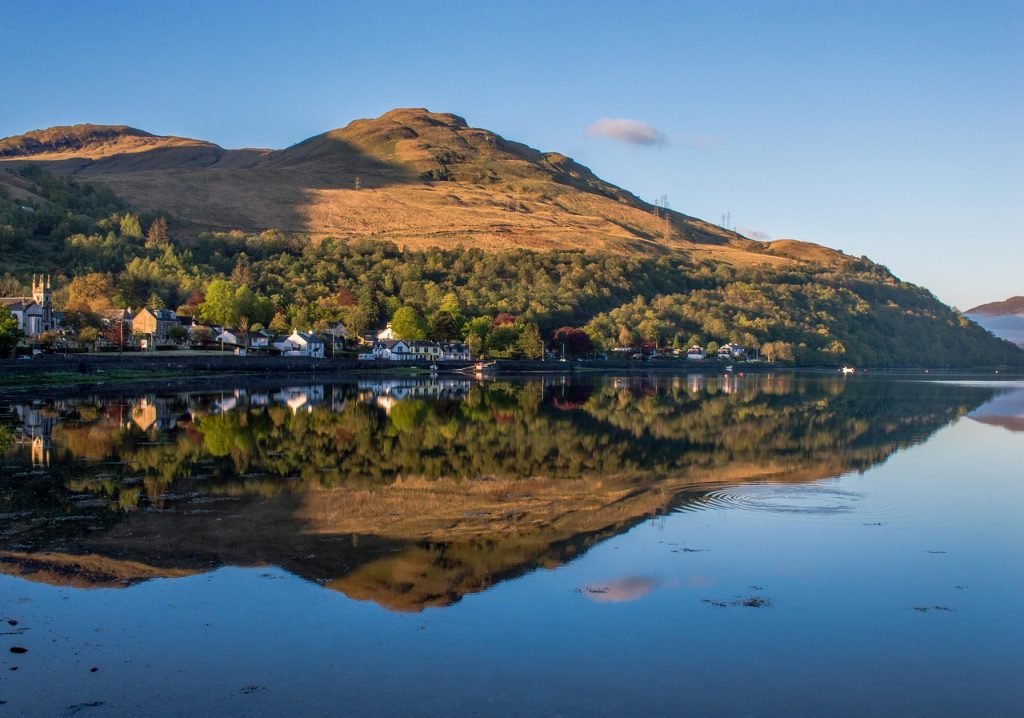
If you close your eyes and picture Scotland, what do you see? Probably castles perched on rocky headlands, green hills wrapped in a golden haze and stretches of deep, dark water that seem to guard age-old secrets. The lochs of Scotland are among the most fascinating and most visited landscapes in Europe, and they embody the most authentic, wild and captivating soul of this northern land.
In Gaelic they are called loch, and the word carries something that the English “lake” cannot quite contain. A loch has a character, a mood that changes with the light: it can be gentle and bright on a June morning, gloomy and almost threatening under an October sky. They say there are more than thirty thousand of them in Scotland if you count the smallest ones too, those lochans hidden in the heather that appear on no tourist map. Between freshwater lochs and sea fjords carved by glaciers, a journey to discover the Scottish lochs is an experience that can reconnect you with nature and with the most ancient folklore.
Let’s imagine putting on comfortable shoes and a waterproof jacket and set off together to discover Scotland, letting ourselves be captivated by landscapes that go far beyond our imagination.
The nature of Scottish lochs
To understand the lochs of Scotland you have to go back ten thousand years, when the last glaciers slowly retreated northwards, gouging long, narrow valleys like wounds in the rock. When the ice melted, water filled those furrows, creating very deep basins set between mountains that still seem to want to hold them in an embrace thousands of years long.
Loch, lochan and sea loch
Travelling around, you soon realise that not all lochs are alike. There are the large freshwater lakes (lochs), the ones everyone pictures when thinking of Scotland; there are lochans, small and solitary, which you only discover walking in the hills; and there are sea lochs, arms of the sea that wind between the mountains like fjords, where the water is salty, the tide rises and falls and it is not unusual to see a seal surface or an otter slip through the seaweed. Curiously, in the whole of Scotland only one body of water officially bears the English name lake: the Lake of Menteith, in the Trossachs. All the others are strictly ‘lochs’.
The great Scottish lochs and their stories
Loch Ness, where mystery lives in the depths
It would be impossible to start anywhere else. The Scottish loch par excellence is without doubt Loch Ness, which stretches for about thirty-seven kilometres along the Great Glen, offering scenery of rare visual power, and plunges to over two hundred metres, holding more water than all the lakes of England and Wales put together. Its waters are dark and gloomy, coloured by the peat the hills have poured into them for millennia, and below the surface visibility drops to a few metres. Perhaps it is this very darkness that has left so much room for the imagination.
The legend of Nessie, the famous monster resembling a prehistoric plesiosaur, exploded in the 1930s, fuelled by the 1934 “Surgeon’s Photograph”, which only decades later turned out to be a fake. But the roots of the myth go much further back: medieval chronicles already tell of Saint Columba driving a beast out of the waters of the River Ness. Those who love these stories will find in our blog a feature on kelpies and water spirits.
From Inverness it takes about thirty minutes along the A82 to reach its shores. Urquhart Castle, whose ruins jut out on the headland as if keeping watch over the loch, offers a unique view of the valley. Continuing south you reach Fort Augustus, where the locks of the Caledonian Canal, Thomas Telford’s 19th-century masterpiece, slowly raise the boats in what feels almost like an ancient rite.
Loch Lomond, the shores sung by tradition
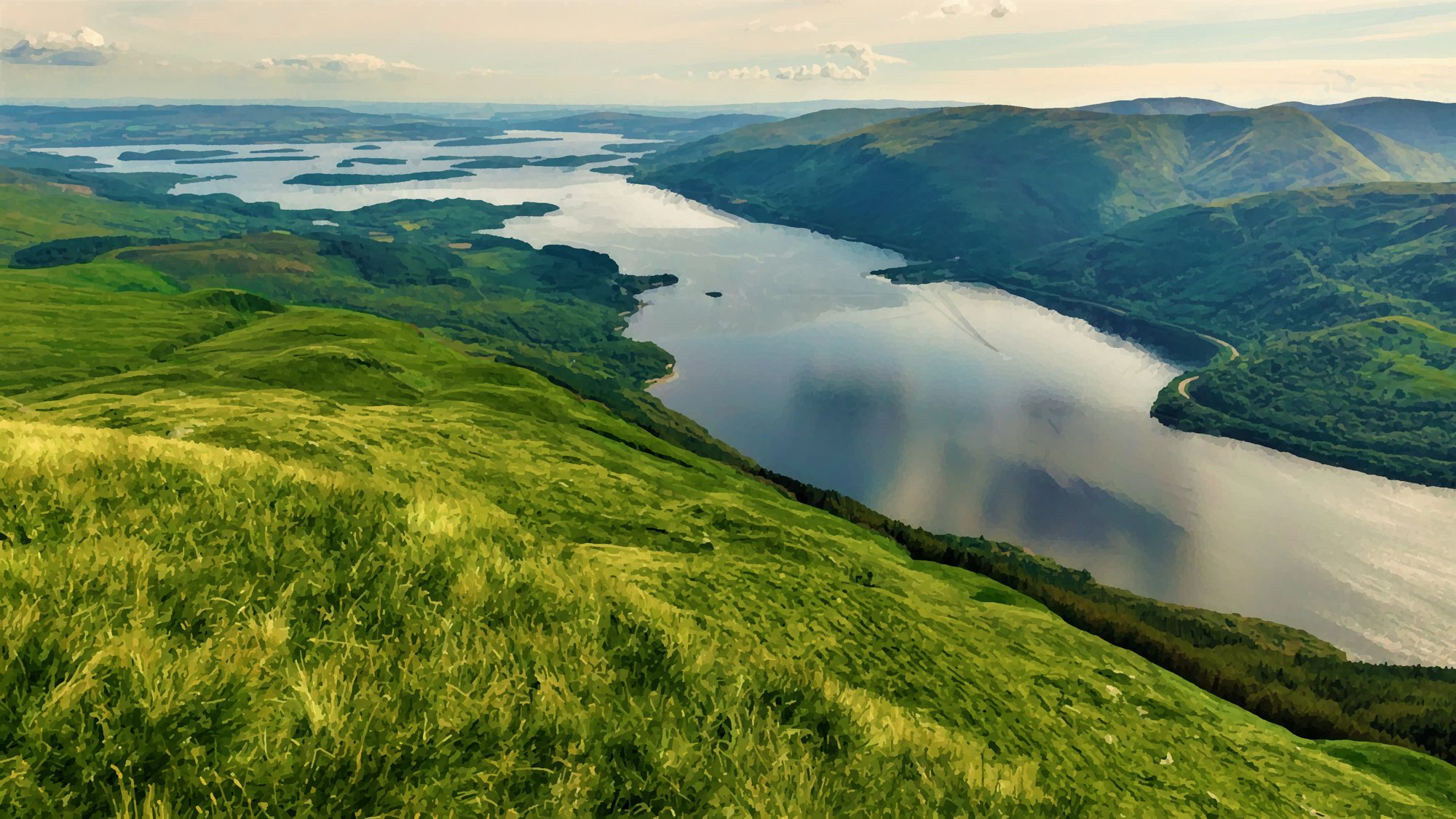
If Loch Ness stands for mystery, Loch Lomond is the poignant beauty that also forms the backdrop to the song ‘The Bonnie Banks o’ Loch Lomond’. It is the lake with the largest surface area in Great Britain and lies less than an hour from Glasgow. It keeps a surprisingly unspoilt charm: in the south it is dotted with wooded islands that seem almost to glide on the water; to the north, it narrows into a tight corridor between ever more rugged mountains. It was here that Scotland’s first national park was created, Loch Lomond & The Trossachs National Park.
Luss is worth a visit: a village of stone cottages covered in colourful flowers, from which loch cruises depart. If you feel like walking, you can climb Conic Hill, above Balmaha: the climb is short, but from the top you can see the islands lined up along the great fault that separates the Lowlands from the Highlands. And all along the eastern shore runs the famous West Highland Way, the trail that every year carries thousands of walkers north.
Loch Morar, Loch Awe and Loch Katrine
Further west, almost looking out onto the ocean, lies hidden Loch Morar, the deepest in Great Britain at over three hundred metres. It too has its secret guardian: Morag, less famous than Nessie, is described as a creature swimming in its dark waters. Between the 18th and 19th centuries the area was at the centre of the Highland Clearances and the clashes linked to the Jacobite risings.
Loch Awe, on the other hand, holds the record for length among freshwater lochs, at over forty kilometres. At its northern tip stand the ruins of Kilchurn Castle, once a Campbell stronghold: on misty mornings the castle’s silhouette slowly emerges from the grey waters of the loch, so much so that it seems almost suspended.
Finally, in the heart of the Trossachs lies Loch Katrine, the loch of poets. It was Sir Walter Scott who made it famous by setting The Lady of the Lake there, and a steamship from 1899 bearing his name still crosses it today. Since the mid-19th century its crystal-clear waters have supplied the city of Glasgow.
Scottish lochs between history and legend
Some lochs are remembered not for their shape or depth, but for what happened there. On an island in Loch Leven, in a castle reachable today by ferry in summer, Mary, Queen of Scots was held prisoner between 1567 and 1568, before an escape worthy of a novel. On the shores of Loch Tay, more than two and a half thousand years ago, stood crannogs, round houses built on stilts: the Scottish Crannog Centre has reconstructed one, and it is a perfect stop for those travelling with children who want to show them everyday life in the Iron Age.
And then there are the legendary creatures. Every Scottish loch, they say, has its own. The kelpie is a water horse that suddenly appears on the shore and invites travellers to climb on its back, only to drag them to the bottom; the each-uisge is its fiercer version, linked to sea lochs. Stories perhaps born to keep children away from the icy waters of the Scottish lochs, but which still survive in village tales today and make excellent company on cold evenings by a roaring fire.
Hidden lochs and sea lochs
Among the woods of the Cairngorms and the Glenfinnan valley
Away from the best-known destinations there are lochs that seem to come straight out of a fairy tale. In the Cairngorms, among the Caledonian pines of Rothiemurchus forest, Loch an Eilein guards a ruined castle on a tiny islet, and the path around it is so flat that the whole family can walk it; if you are planning a trip with little ones, you will find more ideas in our Kids Corner. Not far away, Loch Morlich surprises visitors with a real sandy beach at the foot of the mountains; in summer it is a favourite with kayak, canoe and paddleboard lovers. Further west, the long, narrow waters of Loch Shiel form the backdrop to the Glenfinnan Monument, erected where the Jacobite standard was raised in 1745, while behind it the twenty-one-arch viaduct sees the Jacobite steam train go by, famous as Harry Potter’s Hogwarts Express.
Where the sea enters the mountains
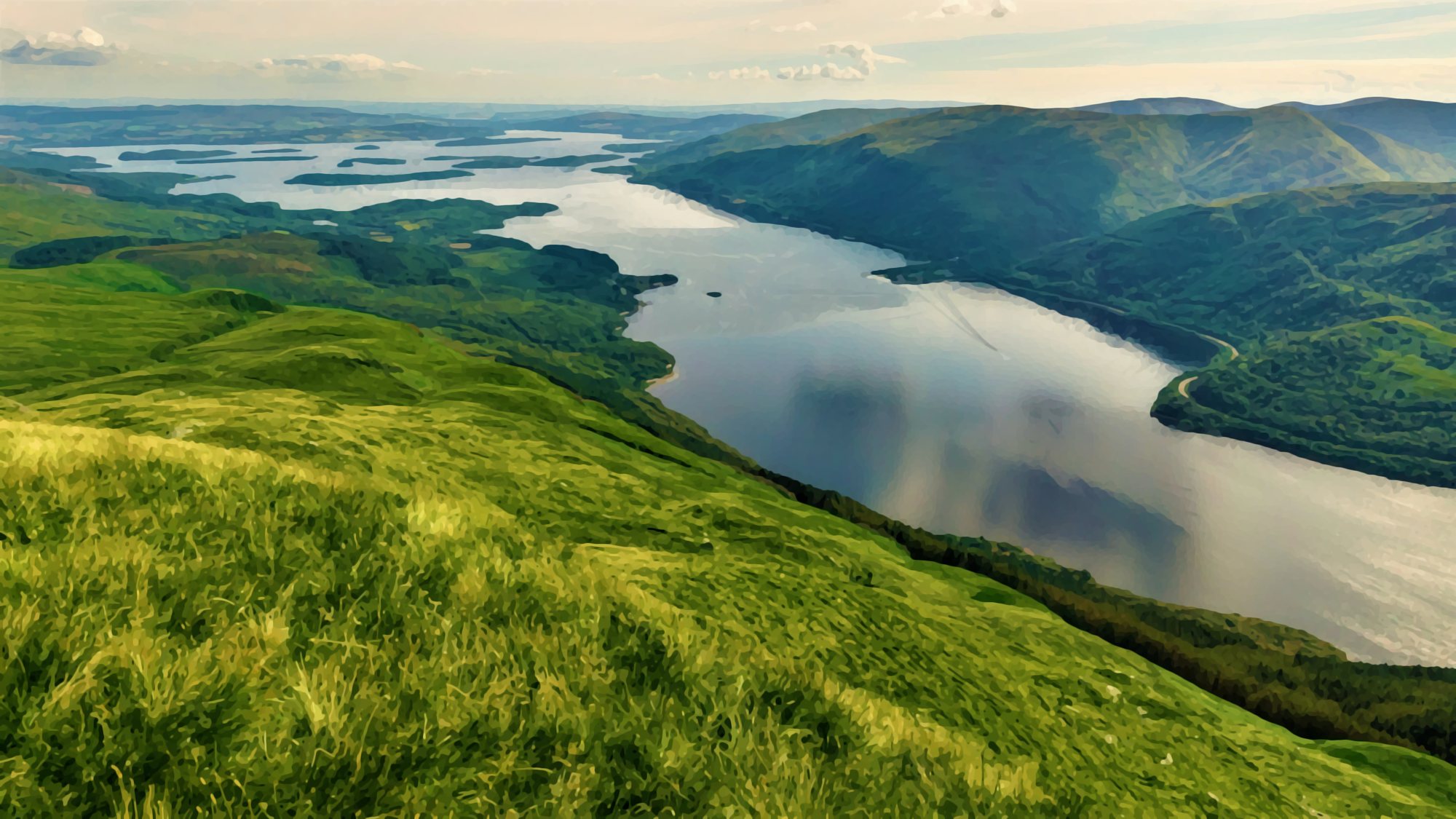
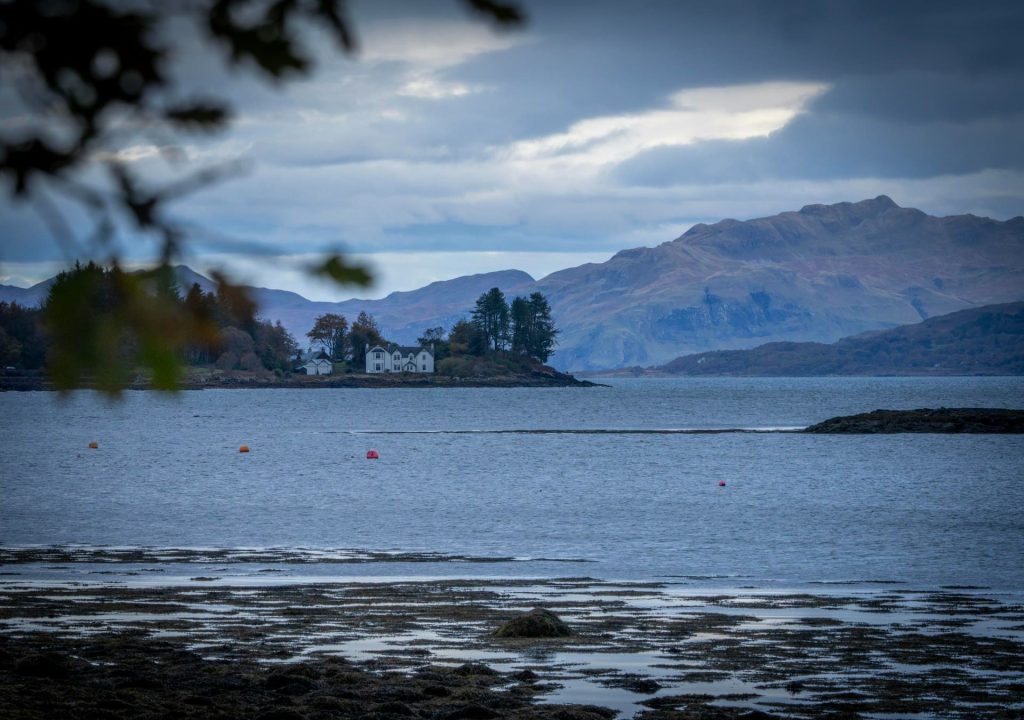
Sea lochs have a different, wilder charm. At the meeting of three of them stands Eilean Donan, perhaps the most iconic castle in all of Scotland, joined to the mainland by a stone bridge and overlooking the road to the Isle of Skye. Further south, Loch Fyne, the country’s longest sea loch, is famous for its oysters, mussels and kippers; on its shores stands Inveraray, a Georgian town of black-and-white houses with its fairy-tale castle.
How to experience the lochs
Every season gives the Scottish lochs a different face. May and June offer very long days, the first heather in bloom and still few midges; July and August are the warmest months, but also the busiest and those of the notorious midges, tiny insects against which a good repellent is essential. September and October are perhaps the most poetic time, with autumn colours and mists lingering over the water until mid-morning, while winter offers intense atmospheres but means coping with ferries and attractions on reduced hours.
To get around, a car remains the most flexible choice, especially in the western Highlands, where many roads are single-track and you get by thanks to passing places. If you prefer the train, you can rely on the West Highland Line, which skirts Loch Lomond, Loch Shiel and Morar with unforgettable views.
Whatever time of year you choose, the advice is to dress in layers and never forget a waterproof jacket. The Scottish Outdoor Access Code lets you walk and camp freely over much of the country, as long as you respect nature and property. In summer it is always best to book cruises on Loch Ness, Loch Lomond and Loch Katrine in advance.
Your journey through Scotland continues with us in the Wild Alba section.
Silvia Miraglia