
If I were asked what first comes to mind when I think of Scotland’s nature parks, I certainly wouldn’t answer with a description of a view. Even today, when I close my eyes, the first memory that comes flooding back is a very strong smell. My memory smells of forest: of pines, moss, grass, damp earth and… freedom!
Today I want to walk with you along a path that will take us through a land that still keeps an authentic soul: from south to north, from the enchanted lochs that inspired poets and composers to the mountains where snow lingers even in high summer. Follow me on a journey to places where nature is the undisputed star. Scotland is rich in history, legends and breathtaking scenery that will not leave you indifferent.
Loch Lomond and the Trossachs: where it all began
Scotland’s first national park
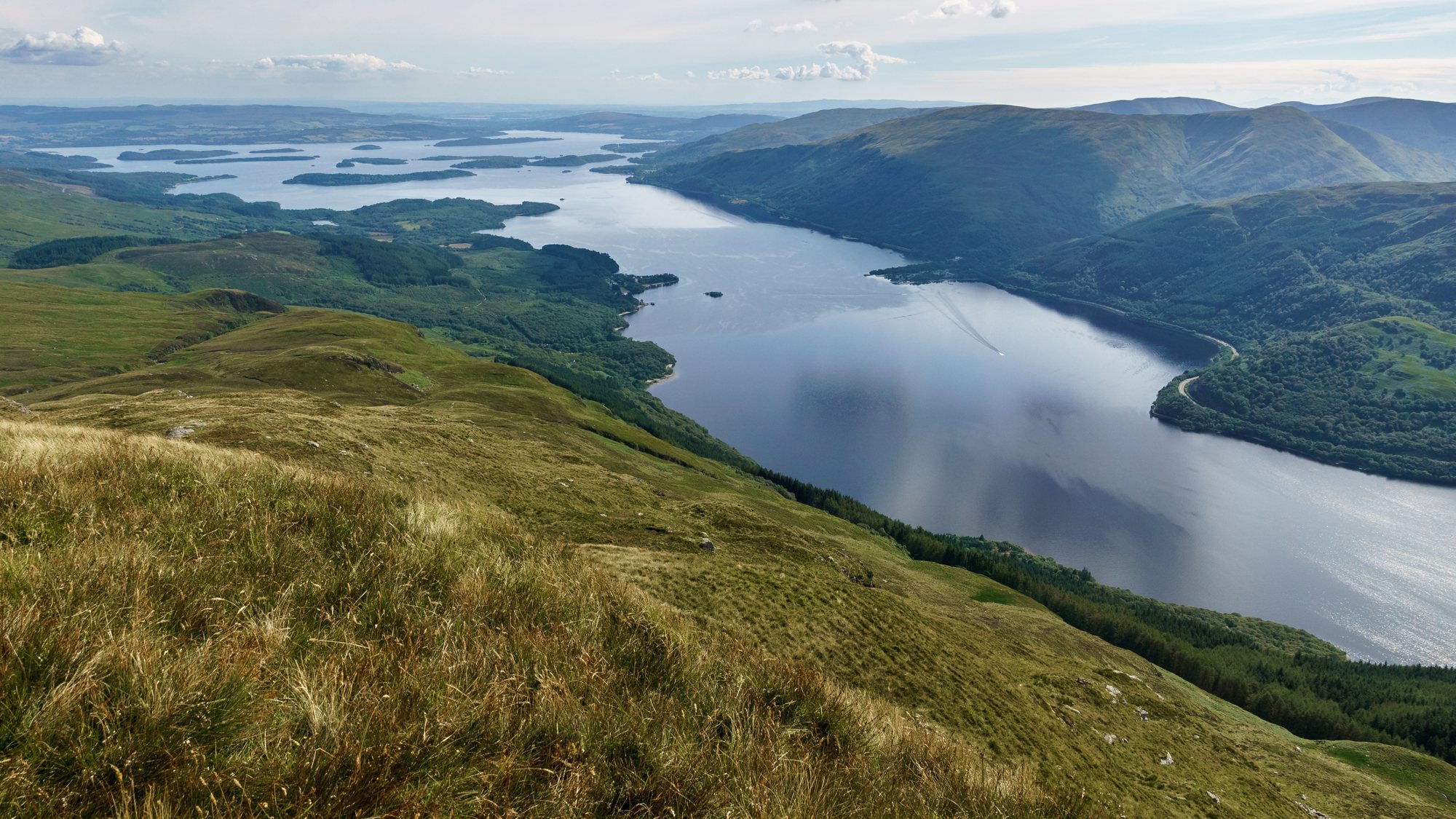
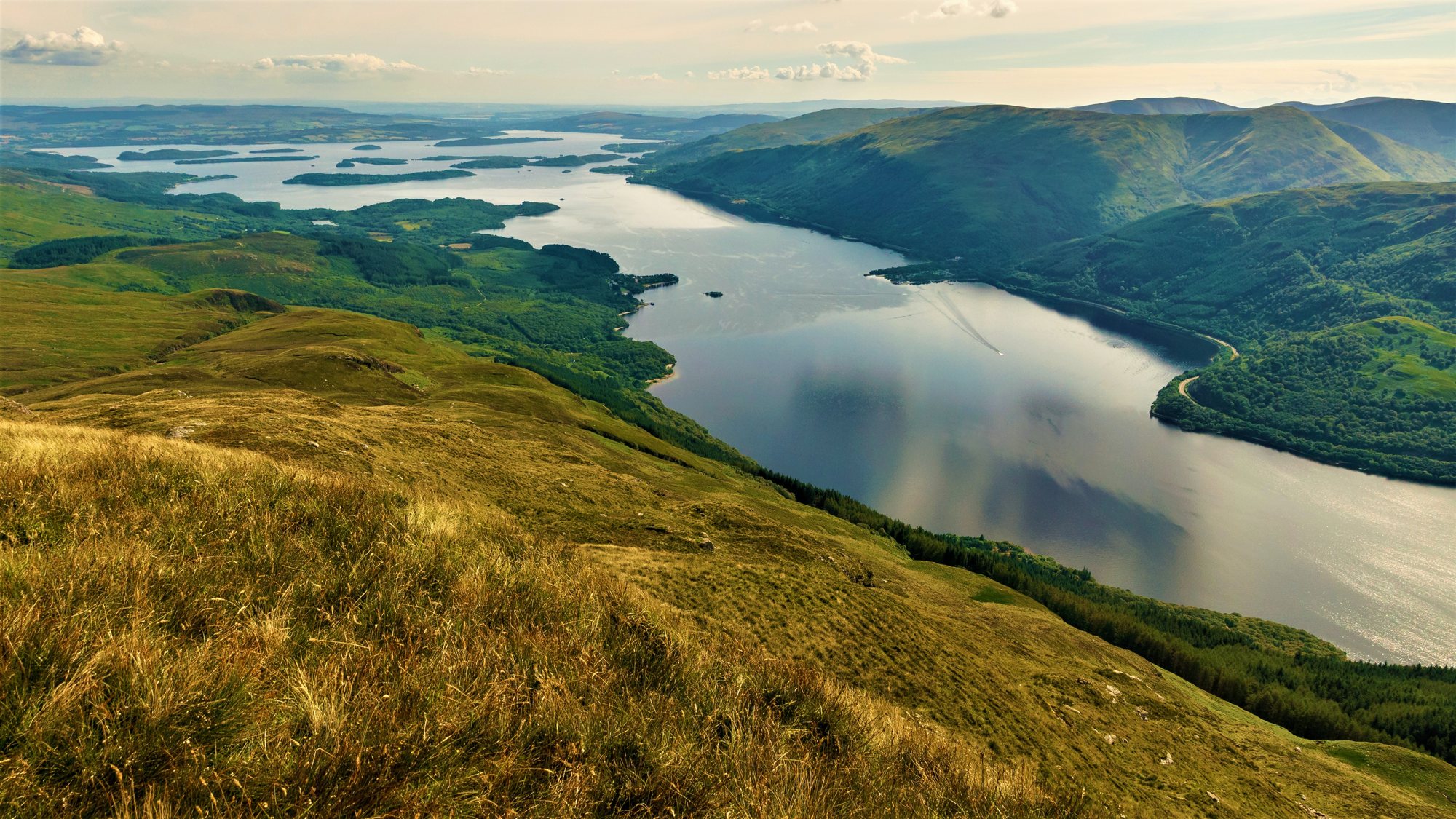
Our journey begins less than an hour from Glasgow, on the southern shore of Loch Lomond, the largest freshwater lake in Great Britain, dotted with some thirty islands that sometimes seem to float in the morning haze.
Loch Lomond & The Trossachs National Park, created in 2002, is Scotland’s first national park and captures the very essence of the Scottish landscape: lochs, wooded glens and imposing bens. We are standing, then, on what can be considered a true threshold: to the south the gentle hills of the Lowlands, to the north the Highlands. Two worlds meeting along an ancient geological line, the Highland Boundary Fault, which cuts both Loch Lomond and the country in two.
Inchcailloch, Saint Kentigerna’s island
From Balmaha, on the eastern shore, a small ferry takes us in a few minutes to Inchcailloch. The name comes from the Scottish Gaelic Innis Cailleach, meaning ‘island of the old woman’ or ‘island of the nun’, and refers to Saint Kentigerna, an Irish princess and missionary who withdrew to live as a hermit on this island and died here in 734. Today the island is a nature reserve: a path climbs through oaks and bluebells to a viewpoint, then descends to a burial ground where members of Clan MacGregor rest. It is one of those places where clan history and nature blend, and where silence comes naturally.
Back in Balmaha, we look up: the hill above us is Conic Hill. A short but steep climb along the West Highland Way leads to the top, from where you can see the islands of the loch lined up perfectly along the fault.
Ben Lomond and the northern mountains
Ben Lomond, one of Europe’s best-loved peaks, towers over the loch from its 974 metres. It is Scotland’s most southerly Munro, the southernmost of the Scottish mountains over 3,000 feet. The classic ascent starts from Rowardennan and takes a full day, but the reward is a view that on clear days stretches all the way to the Isle of Arran.
Further west, around the village of Arrochar, rise the Arrochar Alps. Among them is Ben Arthur, known as ‘The Cobbler’, because its jagged summit is said to resemble a shoemaker bent over his work!
The Trossachs and Walter Scott’s loch
Heading east, the landscape becomes more intimate: birch woods, sheltered lochs, hills covered in heather that turn a characteristic purple at the end of summer. These are the Trossachs, often called “the Highlands in miniature”, home of the legendary outlaw Rob Roy MacGregor.
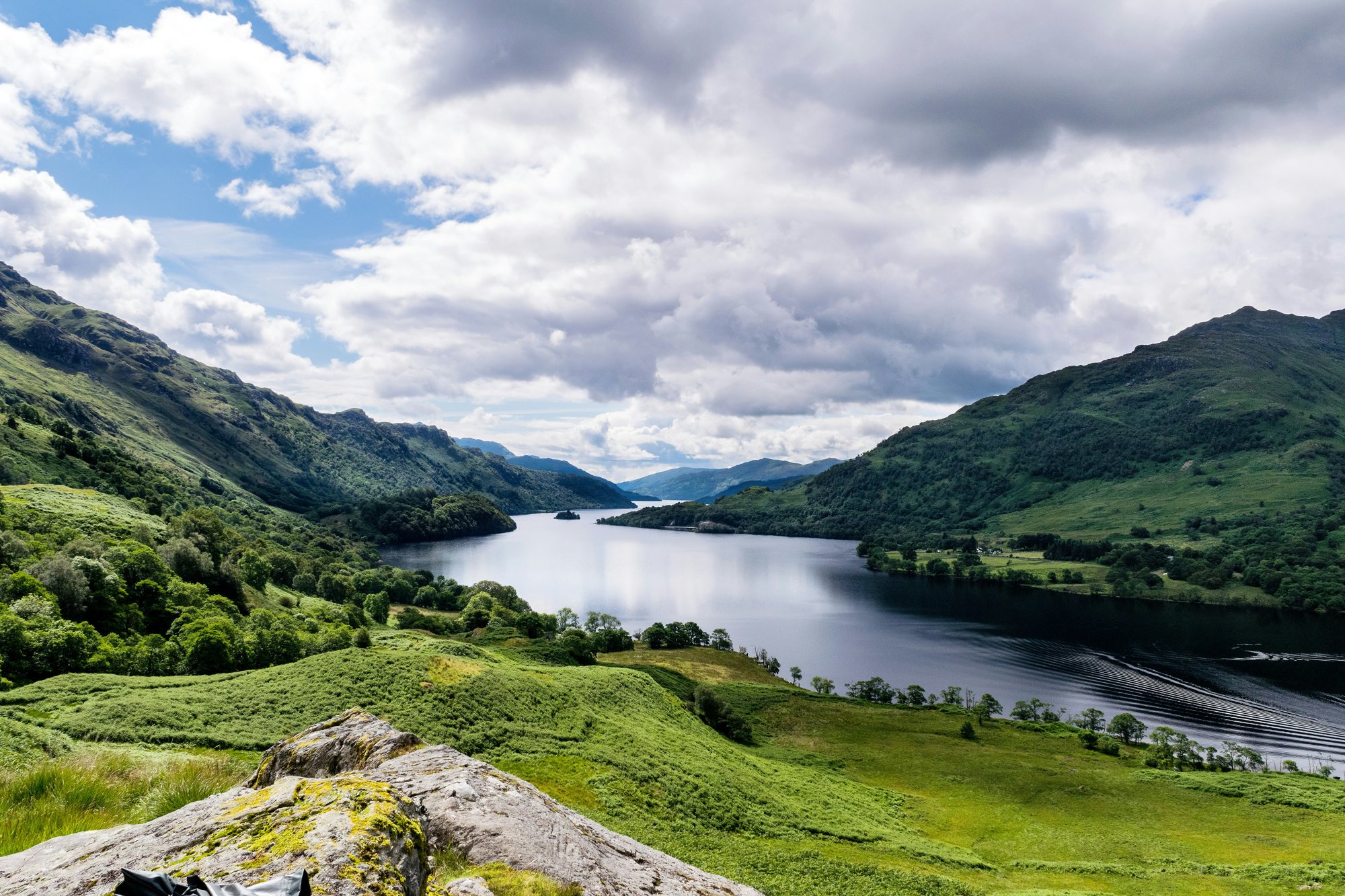
The heart of this area is Loch Katrine. It was here, in 1810, that Walter Scott set his poem The Lady of the Lake, which was so successful that it drew visitors from all over Europe. A few years later, Gioachino Rossini based his two-act opera of the same name on it. You can still sail the loch today aboard the Sir Walter Scott, a steamship that has plied these waters since 1900, and catch sight of Ellen’s Isle, named after the poem’s heroine.
In Aberfoyle, The Lodge Forest Visitor Centre is the gateway to the Queen Elizabeth Forest Park. From here, trails lead past waterfalls and lochans, suitable for little ones too: a great idea for a day out with the children.
The Cairngorms: Scotland’s wild rooftop
The largest park in the UK
Continuing north, the landscape changes character. The hills become mountains, the woods thin out and the horizon opens up enormously. Here is the Cairngorms National Park! Established in 2003 and covering more than 4,500 square kilometres, it is the largest national park in the whole of the United Kingdom.
Of all Scotland’s nature parks, this is the one that most gives you the impression of having arrived in another country. Here you will find five of the six highest mountains in the British Isles and, most extraordinary of all, the climate on the plateau is almost arctic: snow can be found at any time of year, snow patches last well into summer and the vegetation is similar to tundra. Gaelic speakers call these mountains Am Monadh Ruadh, “the red hills”, for the colour of the granite that glows at sunset. In the Cairngorms the Caledonian Forest survives, the last remnant of the great primeval woodlands that once covered the whole nation.
Aviemore, Loch Morlich and the beach among the mountains
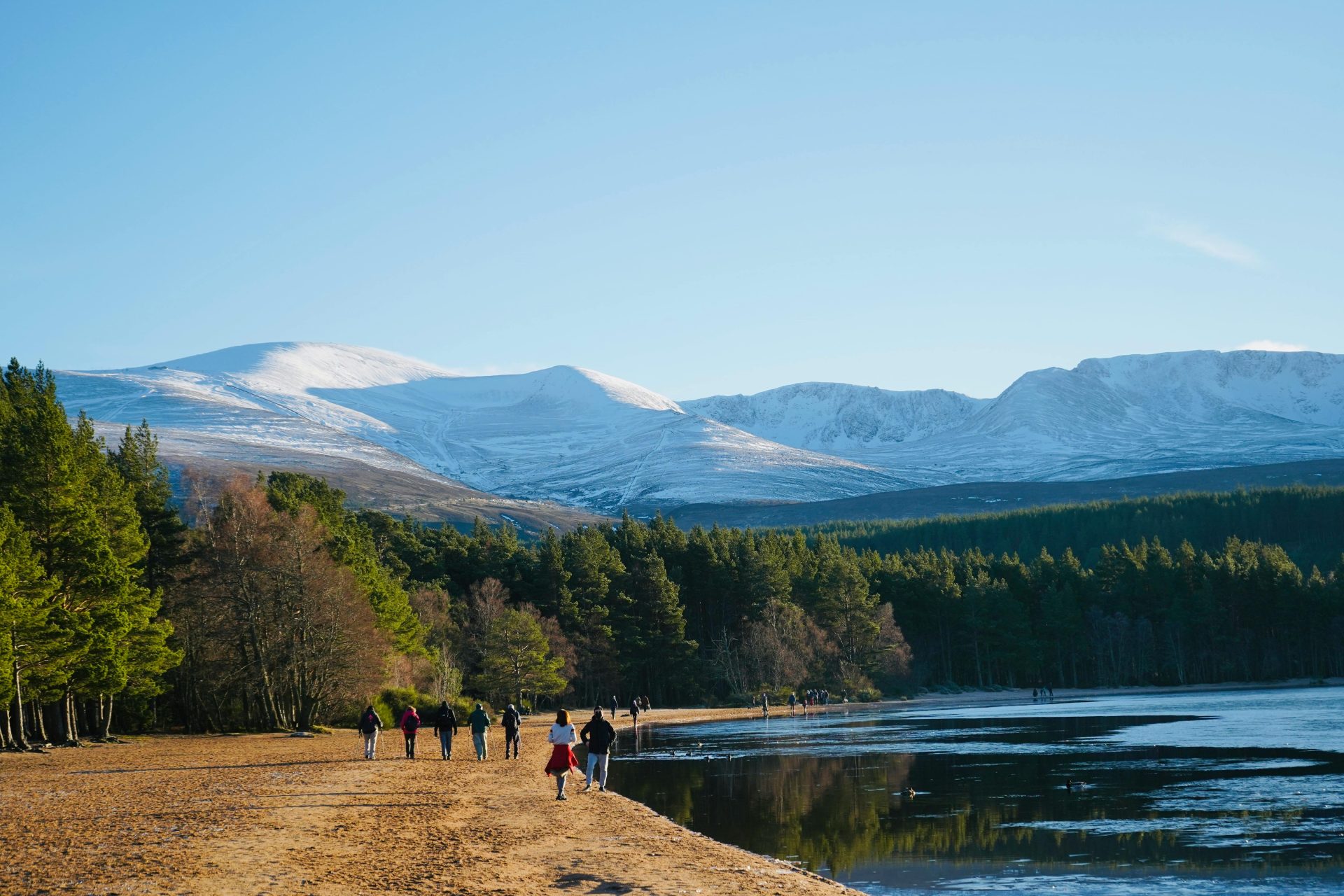
The ideal starting point for visiting the park is Aviemore, which can also be reached by train from Edinburgh or Glasgow on a line that climbs the Spey valley along one of the most beautiful rail journeys in the country. From here, a short road leads up to Loch Morlich, a loch surrounded by beautiful pines that holds a surprise no visitor would expect: a real beach of golden sand!
Not far away, in Rothiemurchus Forest, lies hidden Loch an Eilein. In the middle of the loch, on a small island, stand the ruins of a castle that, according to an old legend, was the stronghold of the Wolf of Badenoch, a medieval nobleman with a fearsome reputation. The path around the loch is flat and enchanting in every season.
The Cairngorm reindeer
The most surprising encounter awaiting us is with a herd of reindeer. They were reintroduced in 1952 by a Sámi herder, Mikel Utsi, and since then a small herd has lived free on the slopes of the Cairngorms. On a guided visit (starting from the Glenmore centre), once you reach the hill you can walk among them while they curiously sniff your pockets in search of food.
The park’s secret residents
The Cairngorms are also the realm of creatures that have almost disappeared elsewhere: the Scots pine woods are home to the capercaillie and the crested tit, the Scottish crossbill (the only bird species found nowhere but the UK), the golden eagle, the red squirrel, the mountain hare and the elusive Scottish wildcat.
Deeside, castles and whisky
On the eastern side of the park, along the River Dee, lies Royal Deeside, the valley so loved by Queen Victoria, home to Balmoral Castle, the royal family’s summer residence. To the north, towards Speyside, distilleries seem to spring up like mushrooms among the hills! One of the most famous, Glenlivet, lies right within the park’s boundaries: a chance to discover whisky culture where it is born.
Beyond the national parks: forest parks and the darkest skies in Europe
Galloway Forest Park: where the night still has stars
South-west Scotland offers a further gift to those who venture there: Galloway Forest Park, the largest forest park in the UK. A mosaic of forests, lochs, moors and hills culminating in the Merrick, the highest peak in southern Scotland.
However, you have to wait for night to fully enjoy the show this park has to offer: on clear evenings the Milky Way stretches over the hills like a veil of luminous dust, and thousands of stars can be seen with the naked eye. In 2009 Galloway was recognised as the UK’s first Dark Sky Park, one of the darkest places in Europe.
And there are more reasons to discover this beautiful park together: the path around Loch Trool leads to Bruce’s Stone, the boulder commemorating Robert the Bruce’s victory over the English in 1307. And near New Galloway, the Red Deer Range and the Wild Goat Park let you see red deer and wild goats up close.
Galloway Forest Park had been proposed as Scotland’s third national park! Unfortunately, after a long consultation, the Scottish Government decided not to go ahead, partly because most local residents were against it.
Argyll Forest Park: the oldest of them all
On the Cowal peninsula, west of Glasgow, stretches Argyll Forest Park. Created in 1935, it is the oldest forest park in Britain. Here Puck’s Glen awaits us, a spectacular narrow, moss-covered gorge crossed by a burn and small waterfalls, where little wooden bridges climb among giant ferns that shade the path. The glen takes its name from the sprite in Shakespeare’s A Midsummer Night’s Dream. Puck’s Glen: a place inhabited by the fairy creatures of Scottish legend!
Close by is Benmore Botanic Garden, with its spectacular avenue of giant redwoods.
The Pentland Hills: nature on Edinburgh’s doorstep
Our itinerary ends south of Edinburgh, where the Pentland Hills stretch out: a regional park of soft grassy hills and heather moorland, reservoirs and scenic paths. Reachable by bus from the city centre, this enchanting place is proof that in Scotland, wherever you are, wild nature is never far away!
When to visit Scotland’s nature parks
Season by season
Every season shows a different face. Spring brings carpets of bluebells in the woods and the return of migrating birds. Summer offers very long days, with light that never seems to end. But it is autumn, in September and October, that offers the most beautiful colours: the heather blooms, the woods glow copper and gold and the roar of rutting stags echoes through the glens. Winter, finally, turns the Cairngorms into a true arctic landscape.
A few tips for respectful explorers
Exploring these lands calls for respect for the environment and good planning. Scotland’s Land Reform Act provides a right of responsible access that lets you walk almost anywhere, as long as you do so with respect. Around Loch Lomond, however, wild camping in the busiest areas from March to September requires a permit, to be booked in advance. In the Cairngorms the weather can change in minutes: always set off with a good waterproof jacket, sturdy boots and layered clothing.
An experience to carry in your heart
Scotland’s nature parks are not just tourist destinations: they are places of the spirit, where you can reconnect with primeval nature and let yourself be enchanted by dreamlike scenery. A dream you would rather not wake from. You take away the scent of the pines, the reflection of a loch at sunset, the silence of a starry night in Galloway. And, above all, one certainty: we will be back. Because Scotland is never visited just once.
And if, after the parks, you want to continue the journey, the islands, the ancient forests and the protected areas that safeguard the wonder of this land are waiting for you.
Subscribe to our newsletter and never stop dreaming!
Silvia Miraglia