
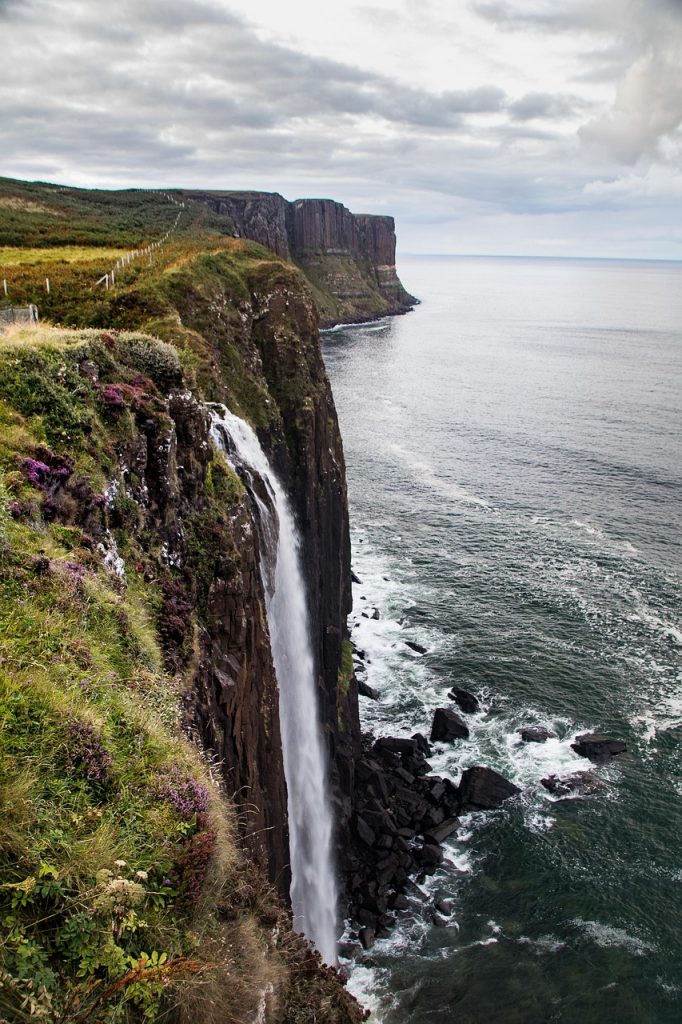
If you feel like leaving the frenzy of everyday life behind and immersing yourself in Scottish nature instead, then I invite you to follow me on a fascinating journey to explore some of Scotland’s nature reserves. In this first stage we will head inland: awaiting us are ancient forests, dizzying gorges, mountains covered in arctic flowers and rocks that tell the story of the birth of the world. Coasts and islands will be the stars of the second chapter of this wonderful adventure.
What nature reserves are
Scotland has more than forty National Nature Reserves (NNRs) managed by NatureScot together with other bodies such as the National Trust for Scotland, the RSPB and the Scottish Wildlife Trust. Alongside these NNRs there are dozens of smaller ones, looked after by associations and local communities; private individuals, families and groups of friends are on the front line in safeguarding the environment they live in.
Every reserve protects something unique: a fragment of primeval forest, a peat bog, a bird colony, a rock face. And almost all of them are open to anyone who wants to enter with respect, thanks to one of the freest rights of access to nature in Europe. In Scotland, in fact, you can walk almost anywhere, provided you follow the Scottish Outdoor Access Code, which requires you to leave no trace, respect wildlife and livestock, and keep dogs under control (and on a lead during the nesting season). It is a pact of trust between visitors and the land that welcomes them, and it’s worth knowing before you set off.
Beinn Eighe: where it all began
In 1951 Beinn Eighe, in Wester Ross, became the first National Nature Reserve in the whole of Britain. Then, as now, the aim was to protect its Caledonian pinewood, one of the last fragments of the great forest that once covered the Highlands.
The reserve stretches above the shores of Loch Maree, near the village of Kinlochewe. Among the animals you can see are golden eagles circling above the ridges of the massif of the same name, and pine martens and red deer at the edge of the woods. The small Aultroy visitor centre, open in the warmer months, helps you discover the reserve’s flora and fauna.
Two trails start from the car park by the loch:
- Woodland Trail: a short loop of about an hour among pines, birches and little waterfalls, suitable for everyone, although it has some narrow, uneven stretches and a few short, steep rocky steps. The advice is to always wear comfortable, sturdy shoes with good grip.
- Mountain Trail: a demanding route that climbs above 500 metres, among quartzite rocks and views that take in the whole loch. Those who have walked it report fairly steep climbs and recommend sturdy footwear and care, as the path can become slippery in the rain.
Glen Affric: the most beautiful glen in the Highlands
Many consider it the most beautiful glen in Scotland, and it’s not hard to see why! Glen Affric combines water, forest and mountain in a balance worthy of a painting: clear lochs reflecting moorland and peaks (among the most imposing, Càrn Eige), islets covered in pines, waterfalls… all less than 30 kilometres from the far more touristy Loch Ness!
It is reached from the village of Cannich, and the must-sees include the Dog Falls, where the River Affric plunges into a narrow gorge, and Coire Loch, a little pool beside which you can also have a picnic. In 2025 some beavers were released near Loch Beinn a’ Mheadhoin with the aim of improving the ecosystem.
For tartan lovers, a truly extraordinary fact: in the early 1980s, in a peat bog near Glen Affric, a fragment was discovered of what has been declared the oldest known tartan, thought to date from between 1500 and 1600!
Corrieshalloch Gorge: the void beneath your feet
On the road to Ullapool, the land splits open in one of the most spectacular gorges of its kind: Corrieshalloch is a deep cut in the rock, proof of how glacial meltwater can carve deep chasms, where the Falls of Measach plunge some forty metres.
Above the gorge sways a Victorian suspension bridge, designed in 1874 by John Fowler, the same engineer behind the famous Forth railway bridge. Only a few people can cross at a time and, of course, it’s not recommended for anyone afraid of heights (it hangs about 25 metres up). The walk to the bridge is short but fairly steep; however, the effort is certainly rewarded by the magnificent view.
Knockan Crag: reading the history of the Earth
Knockan Crag, in Assynt, is one of the most important places in the world for the history of geology. Here, at the end of the 19th century, a heated debate began, sparked by observation of the rock layers at the site. The geologists Charles Lapworth, Benjamin Peach and John Horne showed that older rocks had been pushed on top of younger ones by immense pressures. This was the Moine Thrust (the Moine fault which, during the Caledonian orogeny, had formed mountain ranges as high as the Himalayas), a discovery that changed geology worldwide.
A circular path takes visitors along the rock face. The small shelter called the Rock Room is open all year round. From the top, the view of Assynt’s isolated mountains, such as Stac Pollaidh and Cul Mor, looks like something out of a legend. We are inside the North West Highlands Geopark, which is even recognised by UNESCO.
Creag Meagaidh: the woodland that returns
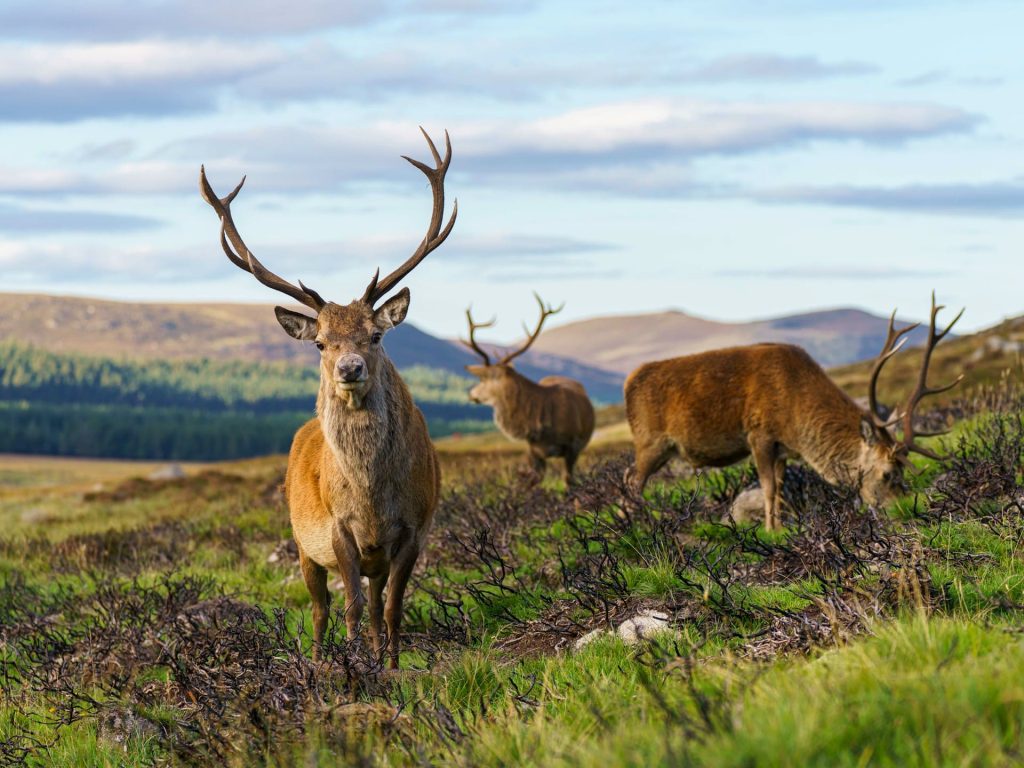
Along Loch Laggan, between Spean Bridge and Newtonmore, lies a reserve that tells a story of rebirth instead. At Creag Meagaidh it was decided to keep the red deer population under control so that the native forest and typical local vegetation could regenerate naturally; the result is that today birches, rowans and willows grow in abundance where once there was only close-cropped grass.
The path to Coire Ardair follows the burn up to an amphitheatre of rock walls that attracts ice climbers in winter. It is a long walk but with no technical difficulties, perfect for anyone who wants to experience the wild nature of the Highlands without having to tackle a summit.
Ben Lawers: an arctic garden above Loch Tay
Above the shores of Loch Tay, in Perthshire, stands a true natural monument: the Ben Lawers reserve, home to a very rare arctic-alpine flora that developed here during the last Ice Age. These are plants (alpine gentians, purple saxifrages, woolly willows) that survive on the highest summits, literally clinging to the rocks. In fact, it is precisely these types of rock that allow them to survive: as they break down, they form a fertile soil that retains moisture. In addition, the high altitude and lingering snow create climatic conditions very similar to those of the arctic tundra and alpine peaks.
The best time to enjoy these beautiful flowers is from June to August. Those who don’t want to climb to the top can follow the lower paths, which cross meadows and bogs with wide views over the loch.
Mar Lodge Estate: the heart of the Cairngorms
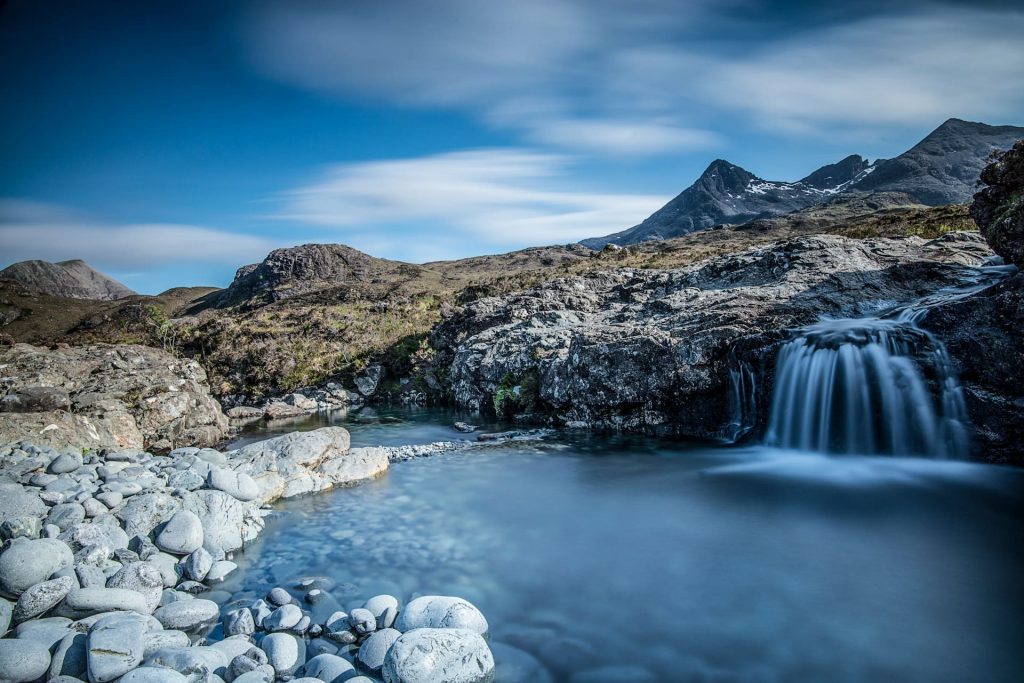
Near Braemar, Mar Lodge Estate is one of the largest reserves in the United Kingdom, in the heart of the Cairngorms National Park. Its management by the National Trust for Scotland aims to bring the Caledonian forest back where it had disappeared; the landscape alternates ancient pinewoods, moorland and clear rivers.
The easiest starting point is the Linn of Dee, a narrow gorge where the River Dee flows between the rocks. From there, paths lead off towards the most remote glens. If you want to connect even more deeply with this ancient country, the Braemar area is also an excellent place to start discovering Scotland’s history.
How to visit Scotland’s nature reserves: practical tips
Before setting off to discover Scotland’s nature reserves, here are a few tips to pack in your rucksack:
- Layered, waterproof clothing, always, even in summer.
- Walking boots: paths are often muddy or rocky.
- Check the weather: in the mountains, conditions change in minutes.
The call of the wild
Nature reserves should be crossed slowly, listened to and respected. Every path is an invitation to discover what we call the wild soul of this land: a nature that is not a backdrop but the protagonist.
And if the journey has only just begun, in the blog you’ll find more stories to keep dreaming of Scotland!
Silvia Miraglia