
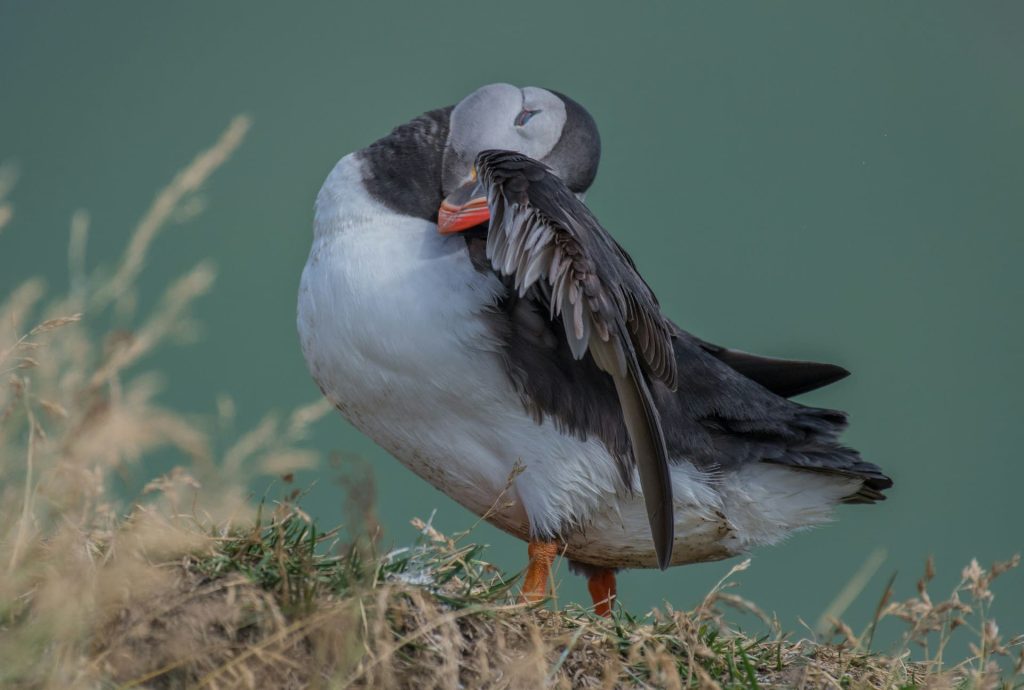
Scotland’s coastal reserves are home to some of the largest seabird colonies in Europe. Puffins, gannets, guillemots, razorbills, skuas: for a few months each year, cliffs and islands turn into a spectacle that no documentary can truly capture.
If in the first chapter we explored forests and mountains, now we follow the line of the sea.
Why Scotland’s coastal reserves are so special
Scotland has thousands of kilometres of coastline and hundreds of islands, washed by cold waters rich in fish. It is this abundance that every spring draws millions of seabirds, arriving from the open ocean to breed.
Many of these areas are protected as national nature reserves or entrusted to organisations such as the Scottish Wildlife Trust and the National Trust for Scotland, with the aim of protecting unique habitats, sand dunes, volcanic cliffs and thousands of bird colonies. The golden season runs from April to early August: after that, the colonies empty and the birds return to the sea.
Isle of May: the puffin island
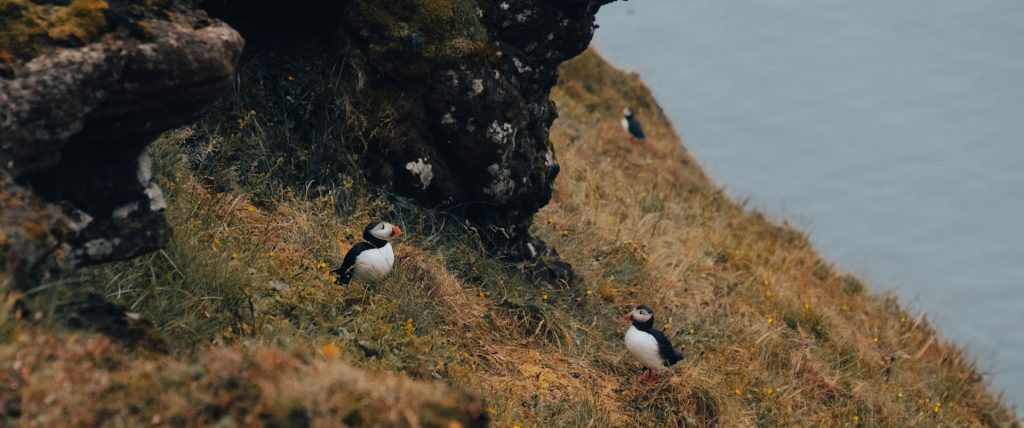
At the mouth of the Firth of Forth, a few hours from Edinburgh, the Isle of May is the easiest way to meet puffins. In spring and summer, tens of thousands of these little birds with colourful beaks nest in burrows dug into the grass. The island also has the remains of an ancient priory and Scotland’s first lighthouse, lit in the 17th century with a coal fire. In autumn, when the visitors leave, the beaches fill with grey seal pups.
Boats leave from Anstruther harbour, in Fife, between April and September. The crossing takes less than an hour and allows a few hours on the island. Book in advance and bear in mind that rough seas can lead to cancellations.
St Abb’s Head: cliffs a stone’s throw from the border
In Berwickshire, near the border with England, St Abb’s Head is a reserve of dizzying cliffs that in summer host thousands of guillemots and kittiwakes. A circular path starts from the visitor centre and follows the clifftops to the lighthouse.
The little village of St Abbs, with its fishing harbour, is worth a stop. The waters off the coast are among the clearest in the North Sea and also attract divers.
Forvie: dunes, eiders and seals
North of Aberdeen, the Forvie reserve is a landscape of shifting dunes, one of the largest in the United Kingdom. Eiders nest here – the ducks whose down has always been the most precious – along with several species of tern.
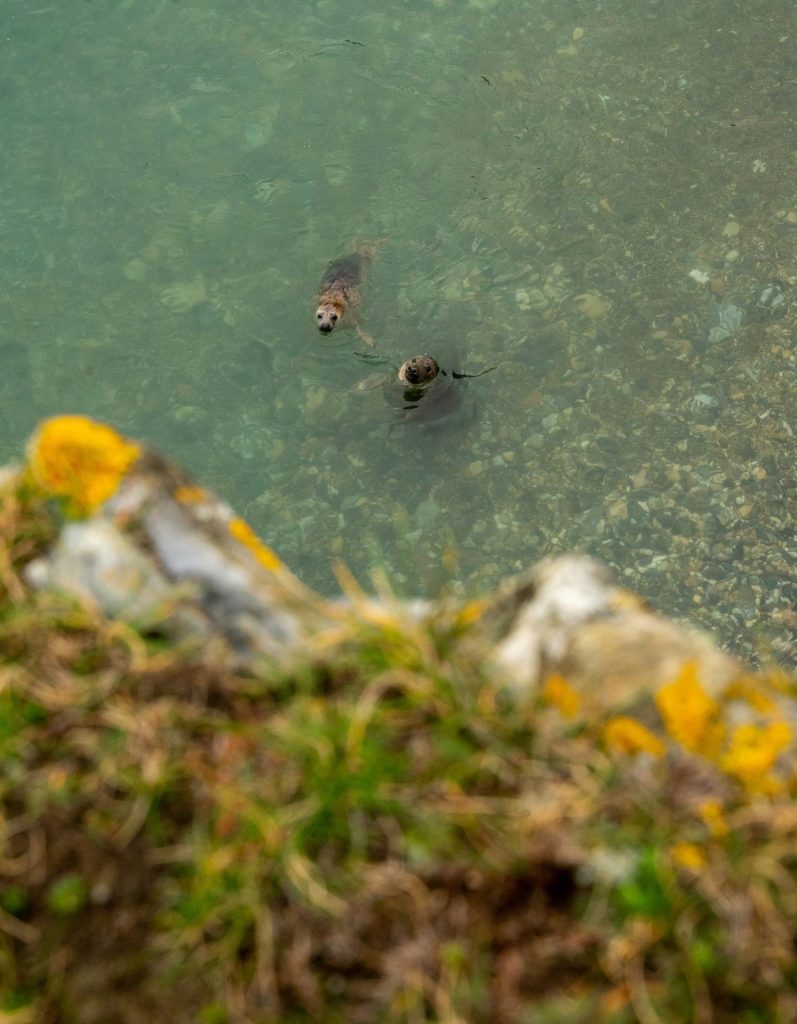
On the other side of the Ythan estuary, near Newburgh, you can watch a beach where hundreds of seals haul out to rest.
Handa Island: the little island of great spectacles
Off the coast of Sutherland, Handa is an uninhabited island managed by the Scottish Wildlife Trust. In the summer season a small boat reaches it in a few minutes from the jetty at Tarbet.
A circular path crosses the island to the Great Stack, a pillar of rock detached from the cliff and covered in birds. Along the way you will meet great skuas, which defend their nests vigorously: stay on the path as you walk.
Shetland: Hermaness and Noss, at the edge of the world
For those who want to go really far, Shetland offers two of the most spectacular coastal reserves in Scotland.
On the island of Unst, the most northerly in the United Kingdom, Hermaness looks out over wind-battered cliffs and the Muckle Flugga lighthouse, which seems to float on the ocean. Gannets, puffins and a great many great skuas breed here – the locals call them bonxies.
Off Bressay, the island of Noss has a cliff that turns white in summer with the sheer number of gannets. It can be visited on foot in season, or seen from the sea on boat trips from Lerwick that let you view the colony from below.
Rum: the wild island of the Small Isles
The Isle of Rum, reached by ferry from Mallaig, is almost entirely a nature reserve. Its mountains host one of the largest colonies in the world of Manx shearwaters, seabirds that nest in burrows on the summits and return only at night.
It was here, in the 1970s, that the reintroduction of the white-tailed sea eagle began, after it had disappeared from Scotland at the start of the 20th century. Rum is also famous for its red deer research and for the eccentric Kinloch Castle, witness to an era of Edwardian luxury in a very remote place. If you love lands surrounded by the sea, we also recommend our story of the most silent islands.
St Kilda: the journey of a lifetime
Off the Outer Hebrides, St Kilda is an archipelago that seems to come from a dream. It is one of the very few places in the world recognised by UNESCO for both its natural and its cultural value. The last inhabitants left the island of Hirta in 1930, after centuries of isolated life.
Today St Kilda hosts one of the largest gannet colonies on the planet, on the islands of Boreray and the nearby sea stacks, as well as Soay sheep, an ancient breed. It is reached by boat trips from Harris or Skye: the crossing is long and entirely weather-dependent, but those who make it never forget it.
Visiting Scotland’s coastal reserves with respect
Seabird colonies are fragile. To admire them without disturbing them – and without risking getting hurt – there are a few rules to keep in mind:
- Stay on the paths and away from the cliff edges: the ground can give way.
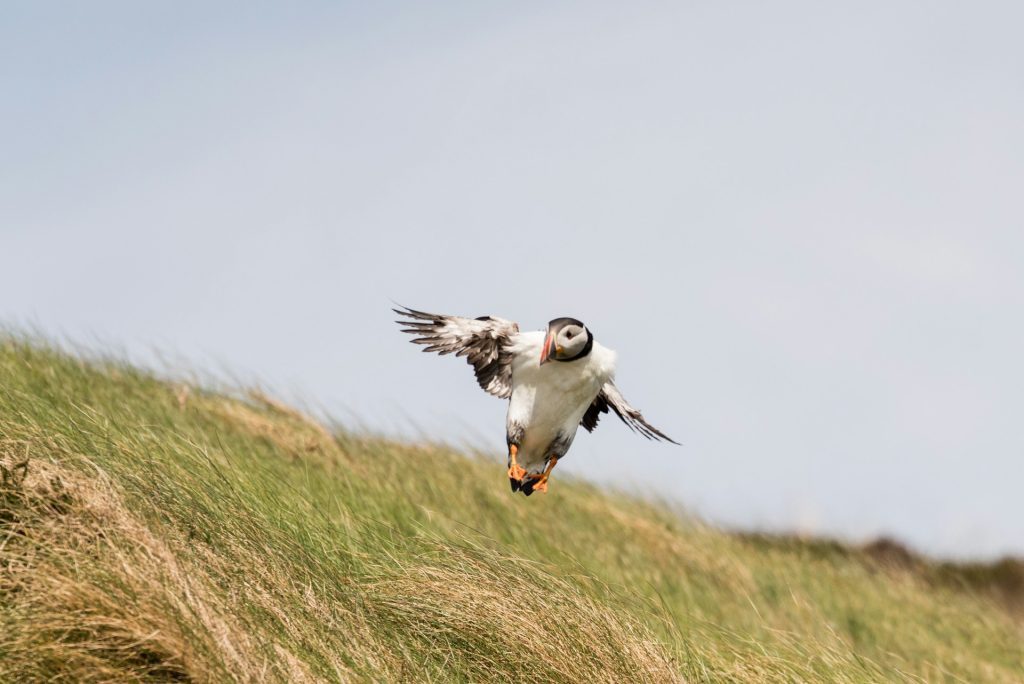
- Don’t approach puffin burrows, which lie just beneath the grass.
- Leave the dog at home (dogs are not allowed on many islands).
- Bring binoculars: they let you see up close without getting close.
- Book boats in advance and… keep a plan B ready for rough-sea days!
A date for your calendar
By mid-August, the cliffs that in June were a din of wings fall silent again, the puffin burrows stand empty and the ocean takes back its residents until the following spring. This is what makes Scotland’s coastal reserves so precious: the spectacle lasts only a few weeks and repeats every year, always the same and always new.
So there is only one piece of advice: choose an island, book the boat and let the sea decide the rest. Perhaps the wind will force you to postpone, perhaps the mist will hide the cliffs until the very last moment. But when the first puffin lands a few metres from you, you’ll understand that it was worth every hour of waiting.
And if the call of the North has won you over, continue the journey among the wild stories of this land, where every coast hides a legend.
Silvia Miraglia