The Scottish islands are a vast and varied collection of over 790 islands: of these, only 93 are inhabited. Each with its own unique character, they offer an incredible range of experiences: from Neolithic treasures to wildlife watching. They are usually grouped into three main archipelagos.
- Hebrides:
- Inner Hebrides: Known for their imposing mountains and rich wildlife.
- Skye. You will surely have seen countless photos of its spectacular, at times almost unreal, landscapes. Mountains that seem to merge with the ocean, ruined castles, wild moorland, lochs in which the sky is reflected as in a magic mirror, high cliffs against which the waves crash in foam, and unique rock formations such as the Old Man of Storr and the Quiraing, which look like the perfect setting for a tale of fairies and sprites. Access is via the famous Skye Bridge.
- Iona. Small and peaceful, it is the sacred island where Saint Columba founded a monastery in 563 AD, effectively making it a key crossroads for the spread of Christianity in Scotland. It became a place of pilgrimage, partly thanks to the graves of several Scottish, Norwegian and Irish kings. Despite its latitude, it has beaches of the whitest sand and clear waters that look very much like those of far milder places.
- Islay. It is the home of peated whisky: it hosts many world-famous distilleries, such as Laphroaig, Ardbeg and Lagavulin. The Loch Gruinart nature reserve attracts many species of birds.
- Staffa. This uninhabited island holds a place that bears witness to an extraordinary geological history: Fingal’s Cave, a sea cave formed of imposing, mysterious basalt columns that closely resemble the Giant’s Causeway in Ireland.
- Outer Hebrides: More remote and wild; known for their stunning beaches and for being a true stronghold of Gaelic culture.
- Lewis and Harris. An island with a split personality, where Scottish Gaelic is still widely spoken. Harris has rugged mountains and spectacular white beaches; Lewis, flatter, is dominated by ancient stone circles.
- Barra. It owes its uniqueness to its airport, whose runway stretches across the beach of Traigh Mhòr and whose flights depend on the tides!
- North Uist. The northernmost of the Uists, it is largely flat and dotted with countless lochans and wide stretches of machair. It is home to iconic Neolithic archaeological sites.
- South Uist. It is the second-largest island in the Outer Hebrides. The east coast is mostly mountainous and rugged, while the west is characterised by machair and white sandy beaches.
- Benbecula. It is linked to North and South Uist by causeways; in the past the islands could be reached on foot at low tide. Rich in history and traces of its ancient past, it is also linked to Bonnie Prince Charlie, who in 1746, caught in a storm, was forced to land right here. The islanders, fervent supporters of the Jacobite cause, helped him escape to safety.
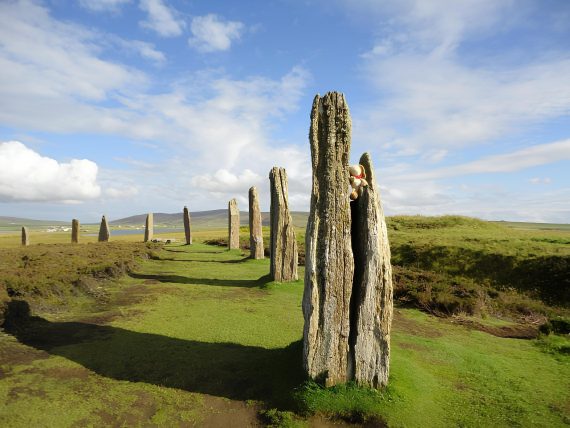
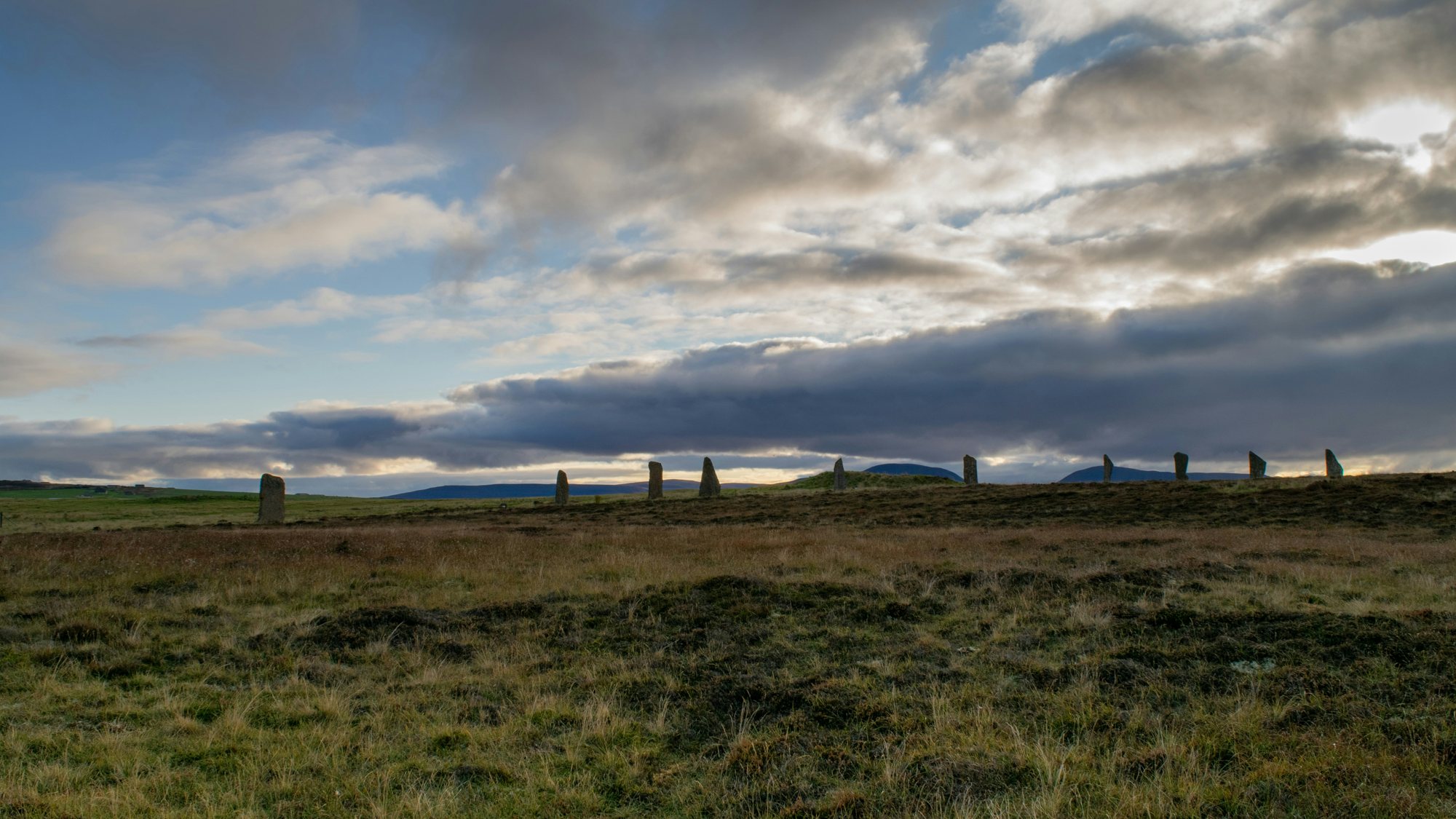
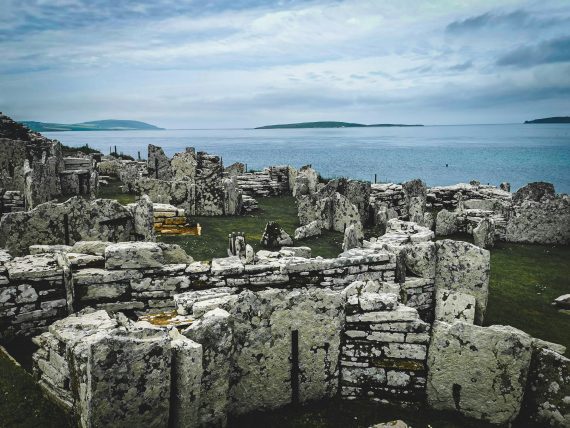
- Orkney: Lying off the north coast of Scotland, these islands have a history thousands of years old whose traces are still visible and hold an enigmatic fascination. The prehistoric sites of Skara Brae, the Ring of Brodgar and the Stones of Stenness are among the Neolithic settlements that hold secrets archaeologists have yet to uncover. Their historical wealth also extends to the Viking era, which left a strong mark on the architecture; Kirkwall’s cathedral is one example.
- Shetland: Almost halfway between Scotland and Norway, Shetland retains a Norse influence still deeply rooted in its language, traditions and folklore. On clear winter nights you can see the northern lights (the Mirrie Dancers), while in summer the sky never gets completely dark (the simmer dim). Its many archaeological sites date from various periods, from the Mesolithic to the Iron Age. The landscape is one of rolling hills, fjords and sheer sea cliffs.
The Scottish islands are places where time flows at a different pace. Let yourself be enchanted by their charm and you will find yourself in a world with no clear line between present and past, immersed in wild nature that will give you unique emotions.
Silvia Miraglia