
Can you imagine being able to see, in a single holiday, wildlife so varied that it would normally take two or three trips to see all the animals Scotland has to offer? That, in my view, is certainly a great reason to set off for the land of the ancient Picts!
Scotland is in fact home to an incredibly rich and diverse ecosystem. Far from being a place dominated only by sheep and Highland cattle, as some still-common preconceptions would have us believe, Scottish wildlife teems with unique and fascinating species living in the most varied habitats: from the icy waters of the Atlantic to the endless skies of Orkney, and on to the Caledonian pine forests that grew up after the last Ice Age.
But let’s take things in order and try to give a fairly thorough overview.
Giants and acrobats of the sea
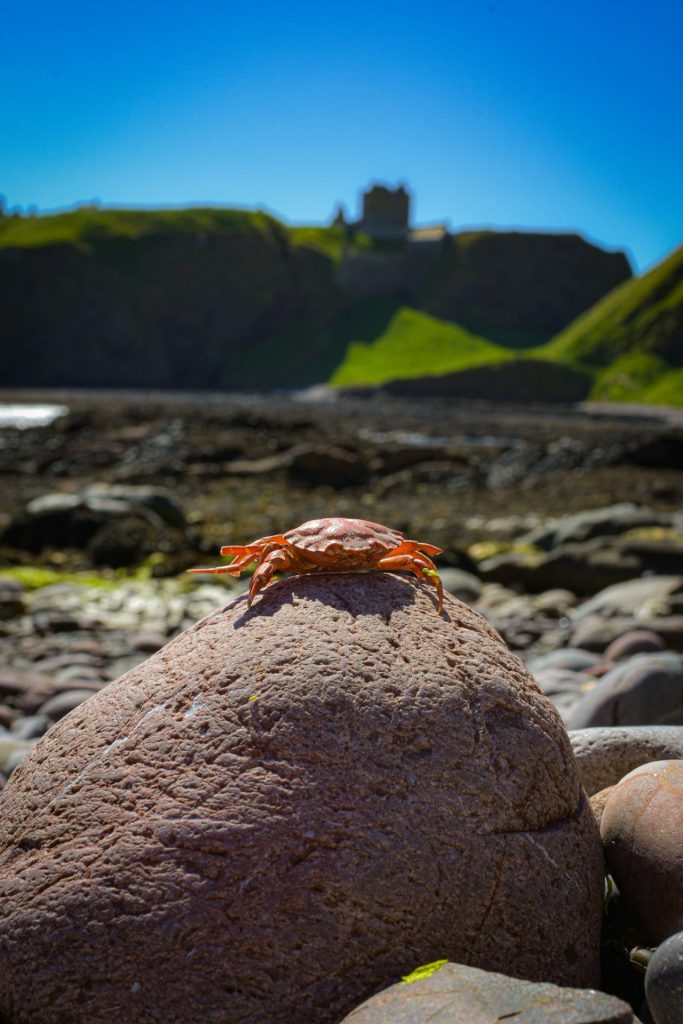
The waters around Scotland’s coasts are among the richest in Europe for marine life.
You may spot the basking shark, the second-largest fish in the world; a plankton-eating giant often seen swimming near the surface, especially off the west coast and around the Hebrides.
However, the undisputed stars are the marine mammals. Two species of seal live here all year round: the common (harbour) seal and the larger grey seal. Their colonies dot bays and remote inlets, and it is quite common to see them basking in the warm sunshine.
With a bit of luck you can also spot orcas in the waters around Shetland and Orkney, and bottlenose dolphins, especially in the Moray Firth, home to one of the most northerly dolphin populations in the world.
The kingdom of birds: from puffins to eagles
Scotland’s cliffs can be considered true open-air aviaries.
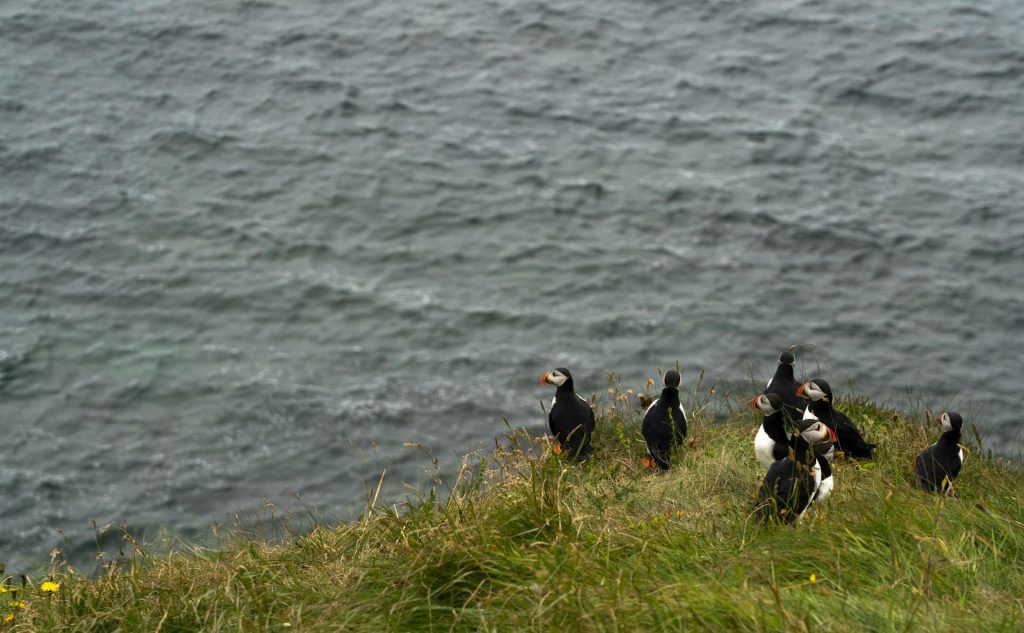
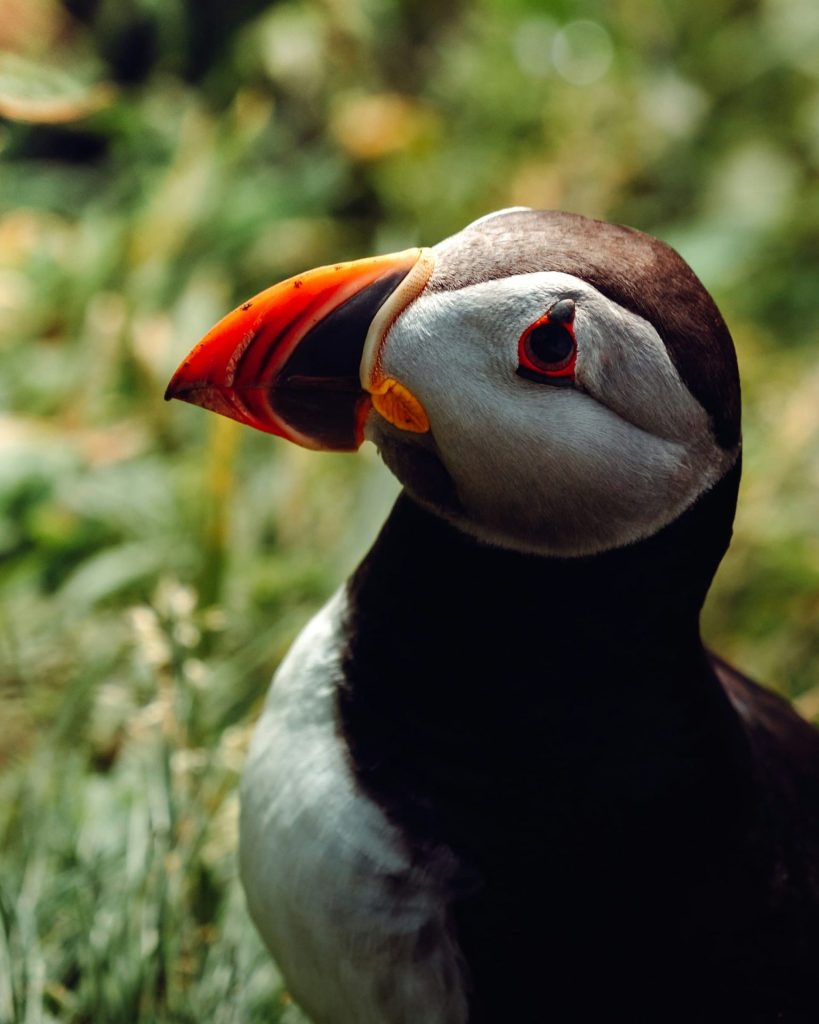
With their colourful beaks and slightly clumsy gait, puffins nest in large numbers in summer on islands such as Lunga, Staffa and Shetland, offering really close… and noisy encounters to visitors who venture into these areas.
Bass Rock, in the Firth of Forth, is home to the world’s largest colony of northern gannets, a seabird that can grow to the size of a goose. It usually nests on high, sheer cliffs above fish-rich seas.
Scotland is one of the few places in Europe where you can see two majestic eagles. The white-tailed (sea) eagle, which died out and was then successfully reintroduced, has a wingspan of over 2 metres and is the largest in the UK; it rules the skies of the Inner Hebrides. The golden eagle, on the other hand, is the symbol of the Highlands. A powerful, solitary hunter, it soars undisturbed over the so-called ‘high lands’. It takes a lot of patience and a good dose of luck to spot one in the most remote mountain areas.
Land rarities: the elusive and the majestic
Moving inland and onto the inner islands, Scottish wildlife keeps on amazing us with fascinating species, some of which are found nowhere else in the British Isles!
Scotland’s largest land mammal is everywhere in the Highlands. We are talking, of course, about the red deer, the king of Scottish wildlife! Large herds graze freely on the moors, offering unforgettable sights. It is not unusual for this majestic, legendary animal to appear out of nowhere at the roadside and linger elegantly, sniffing the air, while cars stop to take souvenir photos.
In Scotland the red squirrel, unlike in the rest of the UK where it is threatened by the grey squirrel, finds refuge in the ancient Caledonian pine forests, surviving in areas the invasive species has not yet reached. Spotting one as it climbs nimbly and leaps from branch to branch is a rare treat… and perhaps that is exactly why it is such an exciting experience.
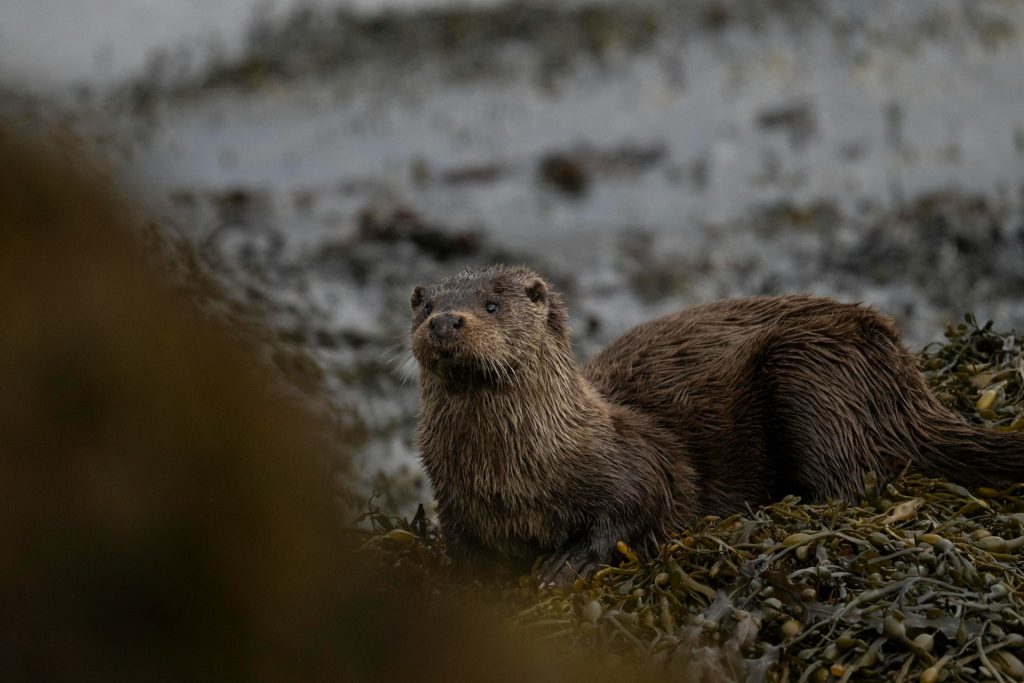
The pine marten, a nimble member of the weasel family that has almost disappeared from other parts of Britain, is relatively common in the forests of northern Scotland. Sometimes it even comes close to houses in search of food.
Although it is a domestic animal, we certainly can’t forget the Highland cow, the unmistakable cow with long reddish hair and impressive horns that grazes just about everywhere in Scotland.
Nicknamed the “Highland tiger”, the Scottish wildcat is one of the most endangered felines in Europe. Pure-bred animals, that is, those that have not interbred with domestic cats, are extremely few in the wild, perhaps only a few dozen. It is a solitary and aggressive predator, but caring towards its young; it has a thick coat with stripes like a tiger’s (hence its nickname) and a bushy tail with black rings. Having arrived here at the end of the last Ice Age, it is now at the centre of several conservation and reintroduction projects fighting for its survival.
So, are you convinced that a trip to Scotland really offers a unique opportunity to observe nature in a setting of primeval beauty, where every sighting is a thrill that reconnects us with a world almost lost elsewhere?
Silvia Miraglia