
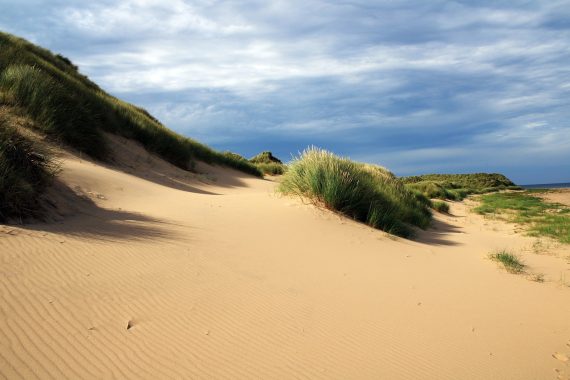
Scotland’s beaches, though not a traditional seaside destination, are a natural treasure of rare beauty and variety that defies all expectations: from unspoilt coves of pink sand to shores pounded by mighty waves, visitors find themselves in an unexpected landscape they will not easily forget.
Most Scottish beaches, especially the more remote ones in the Highlands and islands, offer an unrivalled sense of peace and calm. Reaching them often takes long, solitary walks that add to the feeling of isolation. Get ready to discover a side of Scotland that never stops surprising with its wild charm!
White sand and colour contrasts
A distinctive feature of many Scottish beaches, especially in the Outer Hebrides, is their silky white sand. This sand is neither volcanic nor coral in origin: it often comes from crushed shells, a process that, combined with the clear water of the Atlantic, creates striking visual effects. Luskentyre, on Harris, is the most famous example: here the blue of the sea and the white of the sand create a spectacular contrast with the dark mountains and moorland inland.
The richness of the machair
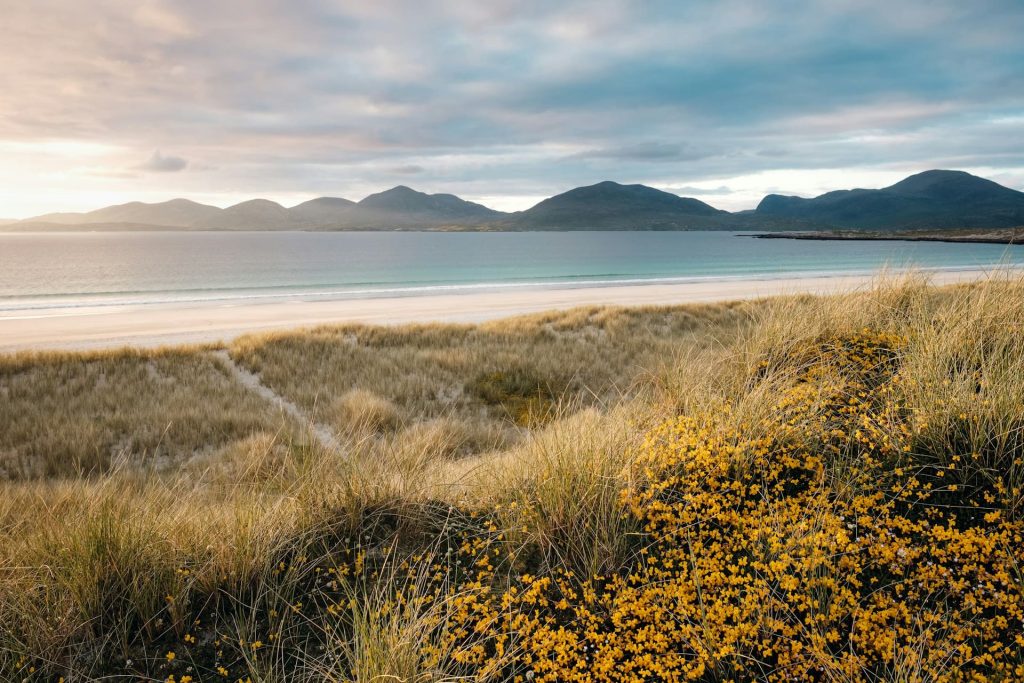
One feature that often amazes visitors is the coastal land known as machair: strips of fertile ground that develop on ancient sand dunes, rich in an incredible variety of wild flowers in both spring and summer. This rare and fragile habitat, important for many bird species, adds a further touch of charm and biodiversity to the coastal landscape.
Geology and rock formations
As well as sandy beaches, you can find stretches of coast with unique rock formations that remind us of Scotland’s geological complexity. An extraordinary example are the hexagonal basalt columns, the result of ancient volcanic eruptions, that form Fingal’s Cave on the island of Staffa. The spectacular Smoo Cave, at Durness in Sutherland, which boasts one of the largest sea-cave entrances in Britain, is one of the many coastal caves hidden along the jagged limestone cliffs that plunge into the sea.
Climate and landscapes
Finally, climate certainly plays a crucial part in shaping the atmosphere of Scottish beaches. Wind, mist and sunshine alternating rapidly, together with the power of Atlantic waves crashing violently on the rocks, help create an unforgettable experience, far from the classic idea of a beach holiday. Remember that temperatures can be cool even in summer, but the wild, ever-changing beauty of the landscape more than rewards those who choose to explore it!
Here is a list of the most unusual beaches worth exploring:
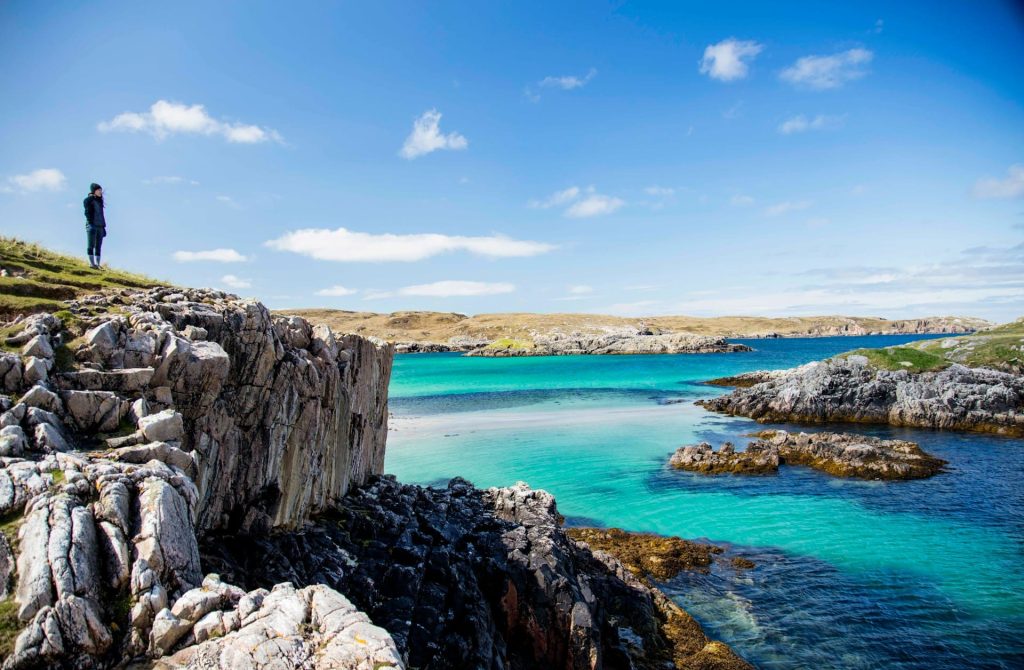
1. Traigh Mhòr, Isle of Barra (Outer Hebrides). It is the only beach in the world used as a scheduled commercial airport. Planes land directly on the sand and timetables depend on the tides, since high tide covers the runway completely twice a day!
2. Luskentyre Beach, Isle of Harris (Outer Hebrides). Considered one of the most beautiful beaches in the UK and in Europe, Luskentyre enchants with its incredible colour contrasts. It boasts endless stretches of pure white sand and crystal-clear waters with turquoise hues reminiscent of the Caribbean, despite its northern setting, as well as its characteristic machair dunes. The Isle of Harris is the heart of production of the renowned Harris Tweed that bears its name, a fabric whose handcrafted production is deeply rooted in the history and identity of the area.
3. Camusdarach Beach, Morar (Highlands). Located on the mainland, it offers spectacular views of the islands of Eigg, Rum and Skye. Its white sand and clear waters make it one of the most photographed places in Scotland.
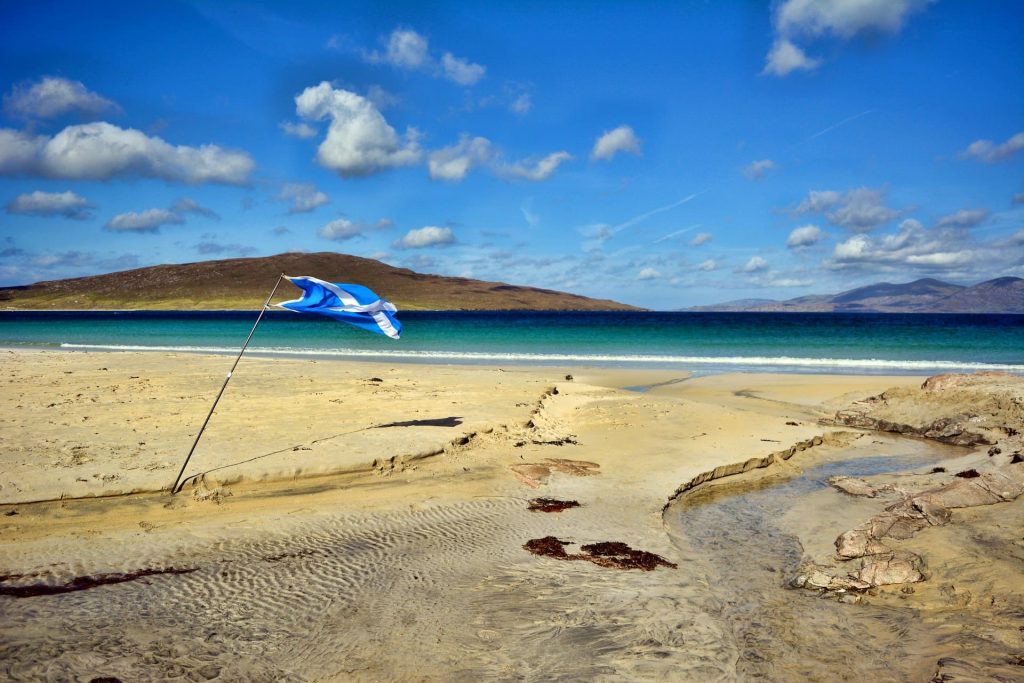
4. Sandwood Bay, Sutherland (Highlands). One of the most remote and unspoilt beaches in Scotland, it takes a walk of about 6 km to reach. It features a long stretch of pinkish-golden sand, towering dunes and the spectacular sea stack of Am Buachaille. It is a place shrouded in mystery and in legends of sailors, shipwrecks and mermaids.
5. Staffa beach, Isle of Staffa (Inner Hebrides). Here you won’t find a traditional beach to stretch out on in the sun, but a true page of geological history. The uninhabited island is famous for the mysterious Fingal’s Cave, a natural sea cave made entirely of perfectly geometric basalt columns that look as if they were carved by hand. In fact, the whole landing area around the cave is made of these rock formations, creating an almost otherworldly landscape.
6. Durness Beach (Sango Sands), Sutherland (Highlands). Located in the most north-westerly village on the Scottish mainland, this beach, precisely because of its remote position, offers breathtaking views over the Atlantic and vast skies where you can often spot wildlife. Its golden sand dunes, rocky inlets and spectacular sea caves, especially nearby Smoo Cave, are popular with nature lovers.
Although they are not the first thing that comes to mind when you think of Scotland, I promise you its beaches are worth a visit. Whether you choose a solitary walk, try your hand at wildlife spotting or enjoy a refreshing summer swim, Scottish beaches will give you a unique experience!
Silvia Miraglia