
When the fine weather arrives in the Highlands, the sun begins to warm the moorland, temperatures become milder and the slopes take on the typical colours of summer: purple, indigo, red, deep green. The hours of daylight grow and the days lengthen noticeably. Then the shepherds leave the farms in the valley and take their sheep up to the hills to the north, moving into the so-called shielings, simple stone huts that serve more as shelters than as summer homes.
The shepherd Donald MacGregor
This story is about a shepherd called Donald MacGregor, who lived a long time ago and had decided to build his hut in a spot everyone considered too dangerous to live in even for a few months a year. The place MacGregor had chosen, however, was truly enchanting: a lonely slope where the grass was greener and lusher, thanks also to a large loch of dark water nearby. The land was crossed by a stream where the sheep often went to drink, finding relief on the hottest days. The landscape was magical: the purple of the heather, the many shades of green, the white of the sheep blending with the stones scattered along the hillside and the sparkling white foam of the burn running down to the valley.
“Donald, how could you build your shelter in such an ill-fated place? Have you forgotten that a monstrous creature lives in the loch?!” The words of an old shepherd who for years had taken his flock to a nearby pasture had made MacGregor smile. “Leave while you still can! You won’t escape the water horse!”
The Each-Uisge, the water horse
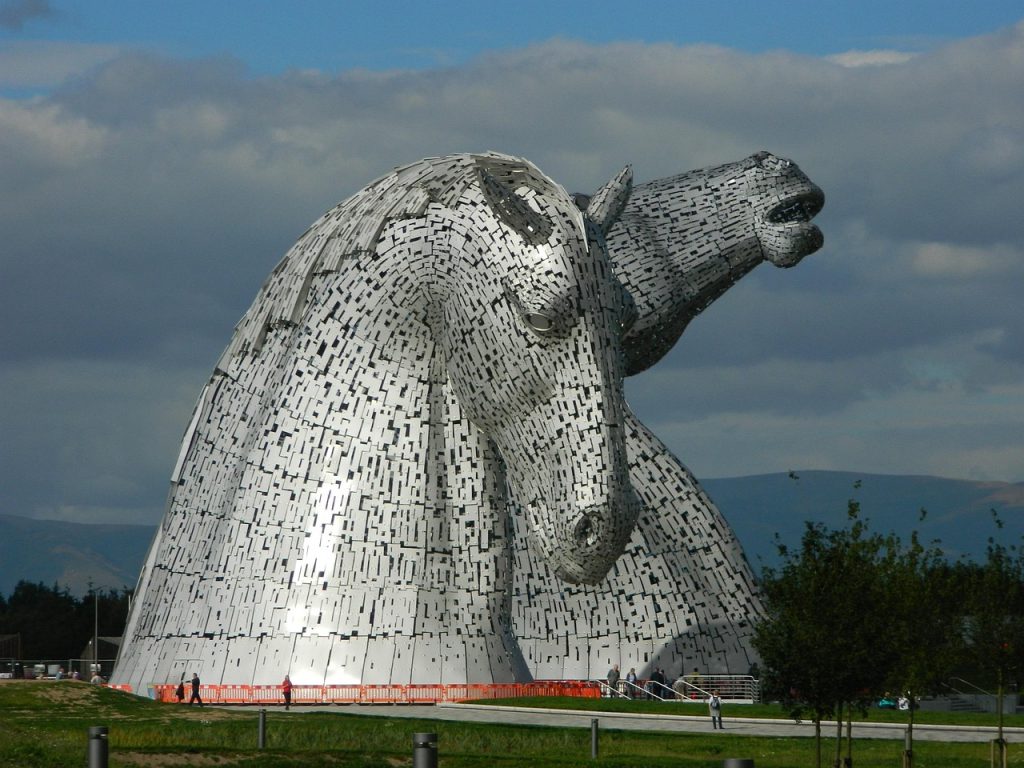
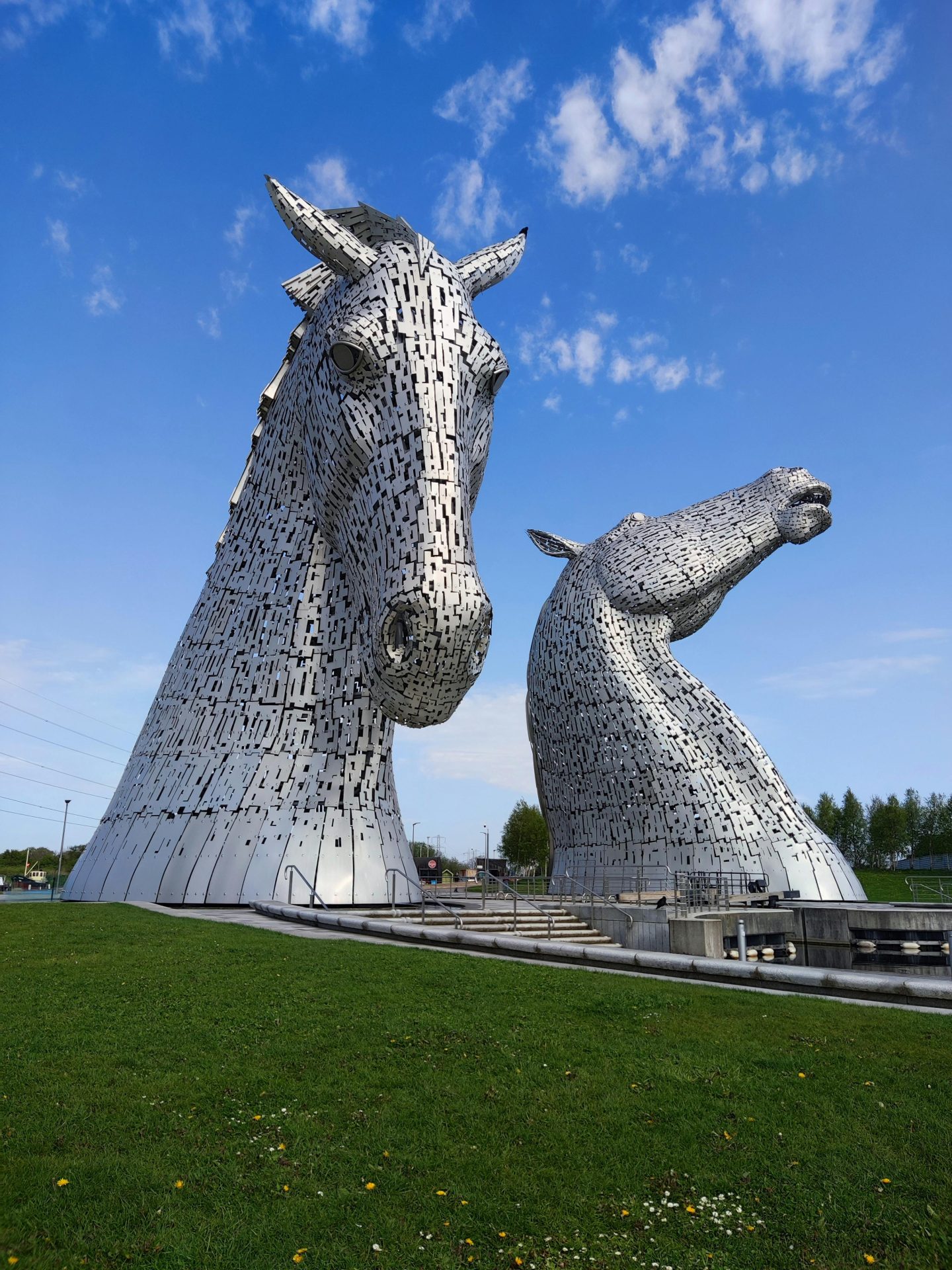
The water horse, known to Highlanders by its Gaelic name, Each-Uisge, was an evil spirit able to change shape to lure its prey, catch it and devour it savagely; no one knew its true appearance, because anyone who had met it had not lived long enough to tell what they had seen. The Each-Uisge would come out of the loch where it lived and roam the hills in search of its victims. The stories told by the fireside on long winter nights spoke of a huge, dark monster that turned into a raven with glossy wings as black as pitch, or a gentle old lady, or a cunning fox, or… anything that might persuade its prey to trust it and follow it.
Donald MacGregor had heard these tales many times, but he refused to believe such creatures really existed. His sheep had to eat the best grass on the whole hill, which grew right on the shores of the loch, to produce the tastiest milk and the softest wool in all the Highlands! He had been advised at least to move his hut to the other side of the burn: everyone knew, in fact, that these evil beings could not cross running fresh water. There he would be safe! But Donald had not been persuaded; on the contrary, he had replied, rather boastfully, that he would believe in the Each-Uisge only if he saw it with his own eyes! And so, every year, he packed his few belongings, gathered his sheep and set off for the high pastures with his beloved daughter.
Morag and the mysterious stranger
Morag, for that was the girl’s name, did all she could to help her father: while he was out with the flock, she made the most of the long hours of summer daylight, working at her spinning wheel on the doorstep of the hut until sunset. Then, putting the wool aside, she would go down to the loch and busy herself gathering the sheep that were still grazing on the tender tufts of grass. Like all Highlanders, Morag knew the stories about these terrible monsters that had been told for generations, but she trusted her father and, although a shiver of fear ran down her spine every now and then, she would go so close that her bare toes almost touched the cool waters of the loch, to urge the most stubborn animals back to the fold. She felt safe and firmly set aside the doubts that gripped her when the dark shadows of the bushes stretched menacingly across the ground near her. She wanted with all her heart to make her father proud, and this, more than anything else, spurred her on to overcome her moments of hesitation and to sing aloud the sweet melodies she had known since she was little! By day, when the warm sunshine lit up the hillside, Morag would smile happily and tell herself how lucky she was to be in that enchanted corner of Scotland. Her happiness was especially clear when, eyes closed, she spun the spindle in time with the music and smiled contentedly, basking in the warmth that filtered through the branches of the great tree growing beside the door of the little hut.
It was a warm, sunny morning when Morag, completely absorbed in her work, suddenly realised she was no longer alone: a dark shadow blocked out the golden sunlight and, alarmed, she cried out and stopped. Before her stood a handsome, tall and powerfully built young man, gazing at her with sweet, persuasive eyes. The girl was struck by something very strange: his clothes and hair were soaked and had formed a puddle at his feet that seemed to sparkle.
“I didn’t mean to frighten you!” He smiled at her as silvery trickles ran down his face and rolled off, joining the other drops that kept on falling.
His deep, caressing voice sent a foreboding shiver through her. “There isn’t a single cloud in the sky. How come you’re so wet?”
“I slipped into a puddle while I was walking nearby, but I’ll soon dry off in the sun.” He sat down on the ground at Morag’s feet, and she went back to her work. Despite his gentle manner and kind words, though, something about him didn’t convince her. Soon her doubts turned to certainty, and the girl had to fight not to be overwhelmed by terror.
Seeing that his hair would not dry and, in fact, kept on dripping, she told him to rest his head on her lap, thinking that perhaps brushing it would help. The young man did as he was told and Morag set to work at once, combing his tangled hair; to her great surprise, caught in the teeth of the comb appeared strands of weed and grains of sand exactly like those she often found in the nets her father used to fish in the loch nearby. Her hands began to tremble and she wondered what to do so as not to arouse suspicion.
Morag’s escape
The moment the stranger raised his head and met her gaze, Morag knew she had no choice: she had to leave everything and run faster than the wind! She had understood, in fact, that the only way to be able to tell her father what had happened was to escape! So the girl pushed away the head of black curls, still soaking wet, and leapt to her feet, knocking her chair over backwards. She knew her chances were slim, but instinct and the will to live were stronger than fear.
The Each-Uisge, the legendary water horse, let out a kind of howl of rage: it had seen the terror in her eyes, and its craving to catch its prey was almost driving it mad. It hurled itself after her, stamping and pawing, desperate to end its wait. Every day, from the murky depths of the loch, it had watched her closely, carefully choosing the best way to approach her. Now, just a few steps away, it had no intention of letting her escape! As Morag ran breathlessly down the steep hillside, the monster galloped wildly behind, the sinister thunder of its hooves echoing all around. Morag headed for the burn and, a moment before the black shadow of the Each-Uisge fell over her, leapt across it. The terrible creature vanished at once and the girl, trembling, sank to her knees beside the stream. When her father came back with the flock that evening, he found her still there, staring into space.
From that day on…
From that day on, Donald MacGregor understood that he must trust the tales handed down for generations in the Highlands, and he never again denied the existence of the Each-Uisge. He never returned to the hut by the loch, which soon fell into ruin and became a heap of rubble. If you ever happen to be in those parts, you might glimpse among the heather and the tufts of green grass the stones of the abandoned shieling.
Silvia Miraglia