
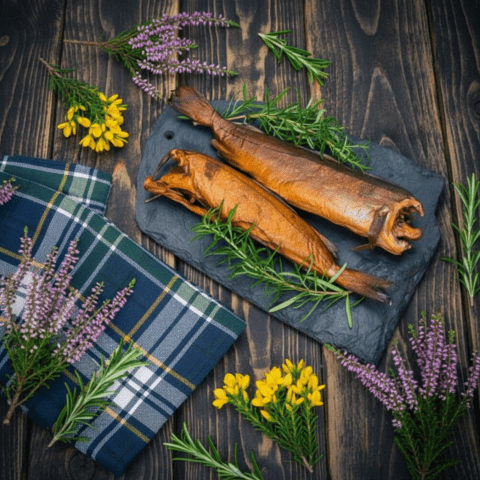
Here is one of the most renowned soups in Scottish cuisine: a thick, velvety, creamy speciality made with smoked haddock, potatoes and onions. Hearty, full-flavoured Cullen Skink can warm up even the coldest day! Hailing from the fishing village of Cullen, on the north-east coast of the Moray Firth, this dish has become a symbol of Scottish comfort food, ideal for warming up after a day outdoors. It is served both as an elegant starter at formal dinners (such as Burns Night) and as an everyday meal. Although there are modern versions using cream or different herbs, the authentic recipe stays true to its three pillars: smoked fish, potatoes and milk. In this article we will travel back in time together to discover how a small town managed to give its name to a world-famous dish, and we will try our hand at the traditional recipe to bring a little of the Highlands straight to our tables!
Origins: from Cullen to the world
As I mentioned, its story begins in Cullen, a picturesque village on the Moray Firth. “Skink” is a Scots word that originally meant the shin of beef used to make stock; in fact, most soups made with this ingredient were called “skink”. At the end of the 19th century meat became a luxury few could afford, so people began using what was most readily available in coastal communities, turning beef stews into fish soups while keeping the original name. And so, after becoming a thriving herring-fishing centre and specialising in smoking haddock by the Finnan Haddie method, Cullen soon became famous for the tasty soup that is now one of Scotland’s best-loved traditional dishes.
The original Cullen Skink recipe
- Finnan Haddie: The traditional recipe calls for Finnan haddie, a haddock cold-smoked over oak, originally from the area near Cullen, which gives the soup that deep, savoury note that makes it unmistakable. Smoked cod can be used instead, although the flavour is less intense.
- Milk and butter: They form the base of the soup.
- Potatoes: Essential for the texture; floury varieties are usually used. Whether in chunks or mashed, they thicken the soup naturally without flour, making it a great gluten-free option.
- Flavourings: As well as leeks or onions softened in butter, fresh parsley (often used as a final garnish), bay leaf and black pepper.
Ingredients (serves 4)
- 500 g smoked haddock (or good-quality smoked cod)
- 500 g floury potatoes
- 1 medium onion (or a leek for a milder flavour)
- 500 ml whole milk
- 250 ml water
- 30 g butter
- Freshly ground black pepper and chopped parsley
- (Optional) A splash of single cream for an extra-creamy texture
Timings and cooking
- Preparation: 15 minutes
- Cooking: 25–30 minutes
Traditional method
- Infusing the fish: Place the fish in a large pan and cover it with the water (or stock) and milk to draw out its smoky flavour. Bring to a gentle simmer and cook for about 5 minutes (until it flakes). When it is ready, lift out the fish and remove the skin and bones. Strain the milk to use as the base of the soup.
- The base: In another pan, melt the butter and gently soften the finely chopped onion (or leek) until translucent, without letting it brown.
- The potatoes: Add the potatoes, peeled and diced. Pour the strained fish cooking liquid over the potatoes and simmer for about 15–20 minutes, until tender.
- The velvety magic: To get the typical texture, mash some of the potatoes directly in the pan with a fork. This will thicken the soup naturally with no need for flour.
- Bringing it together: Add the fish and, if you like, a splash of cream. Heat everything through for another 2–3 minutes. Taste before adding salt (smoked fish is already very salty) and finish with a generous grinding of black pepper.
Tips and pairings
Serve your Cullen Skink steaming hot, garnished with a sprig of fresh parsley or chives.
- Bread: Don’t forget some rustic oat bread toasts or well-buttered dark rye bread.
- What to drink: The ideal match is a still, mineral white wine or, to stay true to the land, a small sip of peated island whisky, which echoes the smoky notes of the fish.
A Scottish experience
One of the earliest mentions of the soup is found in writing on British cookery, such as F. Marian McNeill‘s famous book “The Scots Kitchen” (1929), where Cullen Skink is celebrated as one of the main dishes of the coastal diet.
Today the dish is so loved that every year Cullen hosts the Cullen Skink World Championships, where chefs and enthusiasts compete to crown the ‘best soup’ in the land!
For more British cooking inspiration, don’t forget to check out our guide to the traditional Scotch Egg.
All that remains is to wish you a hearty appetite — or, as they say in Scotland… Enjoy your meal!
Silvia Miraglia