
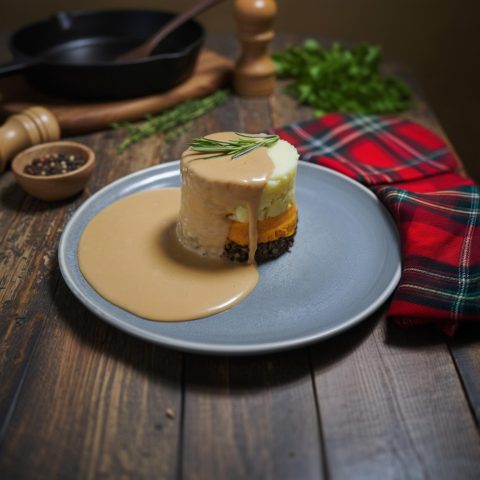
If you have eaten in a Scottish pub or been lucky enough to attend a Burns Night, you will certainly have found them on your plate: two soft little mounds, one orange and one white, next to the inevitable haggis. They are neeps and tatties, the simple, rustic Scottish side dish that can warm even the coldest evenings!
In this article we will discover together what they are, where their name comes from and which traditions go with them and, of course, we will go step by step through the traditional neeps and tatties recipe, with a few tips for making them wherever you live.
What are neeps and tatties
Behind this almost musical name hide two very humble ingredients: neeps, that is swede (also called rutabaga or yellow turnip), and tatties, potatoes. They are boiled separately and then mashed, each with butter, salt and pepper, into two velvety purées.
Don’t be confused: in Scotland the word turnip (or neep) means the swede, with its yellow flesh and sweet, slightly earthy flavour, and not the small white turnip.
The origins of neeps and tatties
Where the names come from
Both words belong to Scots, the vernacular language of Scotland. Neep comes from the Old English næp, itself linked to the Latin napus, turnip; tattie is the affectionate Scottish form of potato. Together they make an expression that sounds as familiar to a Scot as “bread and butter”.
Two ingredients from far away
Although today they seem the very symbol of tradition, neither potatoes nor swedes are native to Scotland. Potatoes, brought from the Americas, spread through the Scottish countryside during the 18th century, quickly becoming a staple for farming families. The swede, as its name suggests, came from northern Europe and began to be grown in Scotland towards the end of the 18th century, valued because it coped well with the cool, damp climate and kept for a long time through the winter.
Cheap, nourishing and easy to grow, neeps and tatties soon became the daily meal of the poorest families, from the farms of the Highlands to the working-class districts of the cities. As with haggis, their strength lies in turning simple ingredients into a tasty dish.
Neeps, tatties and haggis: a legendary trio
Burns Night on 25 January
The moment when neeps and tatties truly take centre stage is Burns Night, the supper held every 25 January to celebrate the birth of the national poet Robert Burns. The menu is a ritual: the haggis is brought to the table to the sound of the bagpipes, greeted with a reading of the Address to a Haggis and served with its inseparable side dish, often with a whisky sauce. The formula “haggis, neeps and tatties” is now a classic pairing of Scottish cuisine.
Turnip lanterns at Halloween
There is also a curiosity linking neeps to Scottish folklore. Long before American pumpkins arrived, at Halloween Scottish children hollowed out turnips and carved frightening faces into them, lighting them from inside with a candle: these were neep lanterns, also called tumshie lanterns, believed to keep evil spirits away. No easy task, given how hard the flesh is! And of course the scooped-out flesh was not wasted, but went straight into the pot.
The neeps and tatties recipe, step by step
And now let’s get cooking! Following the neeps and tatties recipe is really simple: the secret lies in choosing the ingredients and having the patience to cook them separately. Here is how to make two perfect purées, velvety, tasty and clearly distinct.
Ingredients for 4 people
For the neeps:
- 500 g swede
- 30 g butter
- 1 pinch of nutmeg (optional)
- salt and black pepper to taste
For the tatties:
- 600 g floury potatoes
- 30 g butter
- 3–4 tablespoons hot milk
- salt and white pepper to taste
- fresh chives to garnish (optional)
Making the neeps
- Peel the swede with a sturdy knife, removing all the outer skin, and cut it into cubes of about 2 cm: the more even they are, the more evenly they will cook.
- Put the cubes in a pan, cover with cold salted water and bring to the boil. Cook for 20–25 minutes, until tender.
- Drain them very well and let them dry for a few minutes in the hot pan, off the heat: neeps hold a lot of water, and this step prevents a watery mash.
- Mash them with a potato masher or a fork, then add the butter, nutmeg, salt and a generous grinding of black pepper. Remember, the traditional texture is rustic, not perfectly smooth!
Making the tatties
- Peel the potatoes and cut them into pieces of similar size. Put them in cold salted water, bring to the boil and cook for 15–20 minutes.
- Drain them and, as with the neeps, let them dry for a couple of minutes in the pan.
- Mash them while still hot, then work in the butter and hot milk a little at a time until you have a soft, creamy mash. Season with salt and white pepper.
How to serve them
Arrange the neeps and tatties side by side, without mixing them, perhaps using a pastry ring for a more elegant look. Finish with a knob of butter and some chives and serve straight away, piping hot.
Tips for perfect neeps and tatties
Here are a few little secrets for making the most of the neeps and tatties recipe, even far from Scotland.
- Where to find swede: outside the UK it is mostly found at markets and in well-stocked supermarkets in autumn and winter. If you really can’t find it, you can get a similar result with white turnip and a little carrot, to recreate the colour and the sweet note.
- Choose floury potatoes: they give the fluffiest mash; avoid new potatoes, which are too waxy.
- Cook them separately: swede and potatoes have different cooking times, and cooking them together risks one turning to mush or the other staying hard.
- Don’t use a stick blender on the potatoes: it would make them gluey. A potato masher is better.
- Make them ahead: they keep in the fridge for a couple of days and reheat easily in a pan with a knob of butter.
Regional variations and pairings
Orkney clapshot
In Orkney neeps and tatties are mashed together, with butter and chives and, in some versions, a little onion. The result is clapshot, a single golden mash, perfect with sausages, meat or oatcakes.
Rumbledethumps from the Scottish Borders
In the south of Scotland, on the other hand, mashed potatoes are combined with cabbage and onion softened in butter, topped with cheese and baked: these are rumbledethumps, a one-dish meal ideal for using up leftovers.
What to serve them with
The pairing par excellence is still haggis, vegetarian haggis included, but neeps and tatties are also delicious with roasts, sausages, beef stews or a hot Scotch Pie. And if you are preparing a Scottish buffet, serve them alongside a few Scotch Eggs! To drink, try them with a Scottish ale or, for Burns Night, with a dram of whisky.
Frequently asked questions about neeps and tatties
What does neeps and tatties mean?
In Scots neeps means (swede) turnips and tatties potatoes: so, literally, “turnips and potatoes”.
Are neeps and tatties mixed together?
Not in the classic version: they are served side by side. The mixed version with chives is Orkney clapshot.
How long does the neeps and tatties recipe take?
About 40 minutes in all, including preparation and cooking: the swede and potatoes can cook at the same time in two different pans.
Can they be made dairy-free?
Yes: just replace the butter with extra virgin olive oil or plant-based margarine and the milk with hot vegetable stock.
A simple side dish that tells the story of Scotland
Neeps and tatties are proof that Scottish cuisine can tell its own story even through the humblest ingredients: the land, the cold, the long winter evenings and the warmth of good company. Now you too know the neeps and tatties recipe: make them for the next Burns Night, or simply for an autumn dinner, and let yourself be carried off to Scotland, at least for a mouthful. For more Scottish stories and flavours, keep exploring our blog.
All that remains is to wish you a hearty appetite!
Silvia Miraglia