
Picture a hall with a wooden floor, a band tuning fiddle and accordion, and cheerful chatter filling the air. Someone announces the next dance, couples look for each other, lines form. Then the music starts and, in an instant, the hall becomes a whirl of kilts, laughter and feet stamping in time. Welcome to the Scottish ceilidh, an explosion of joy, live music and movement where nobody sits on the sidelines.
If you have read our article on Scottish music, you have already met the ceilidh. Today we take you inside the party: where it comes from, what music is played, which are the most famous dances and how to get by on your first night.
What is a Scottish ceilidh?
The word ceilidh (pronounced KAY-lee) comes from Gaelic and simply means “visit” or “gathering”. Originally, in fact, it was not a dance at all but a get-together of neighbours. On long winter evenings in the Highlands and islands, people gathered in homes around the fire to tell stories, sing, recite poems and play music. No invitation was needed: the door was open and everyone brought something.
Ceilidh houses and storytellers. Every village had a favourite house for these evenings, often that of a good storyteller or a fine musician, or simply the home best suited to hosting a good number of people. Ceilidh houses served as school, court of public opinion and meeting hall for the whole community. The elders told stories and legends handed down through the generations; Gaelic songs were sung and local news shared. People never sat idle: they sewed, wove and mended things; children sat and listened, absorbing their culture and the genealogy of their clan quite naturally. For centuries, then, the ceilidh preserved Scotland’s folklore, especially in the Hebrides.
Decline and modern transformation. During the twentieth century, with the depopulation of the Highlands and the arrival of new media, the ceilidh changed. Once stories and music began to come into homes in other ways, the need to gather every evening and chat around the fire faded. Today ceilidhs have moved to pubs and dance halls.
The music of the Scottish ceilidh
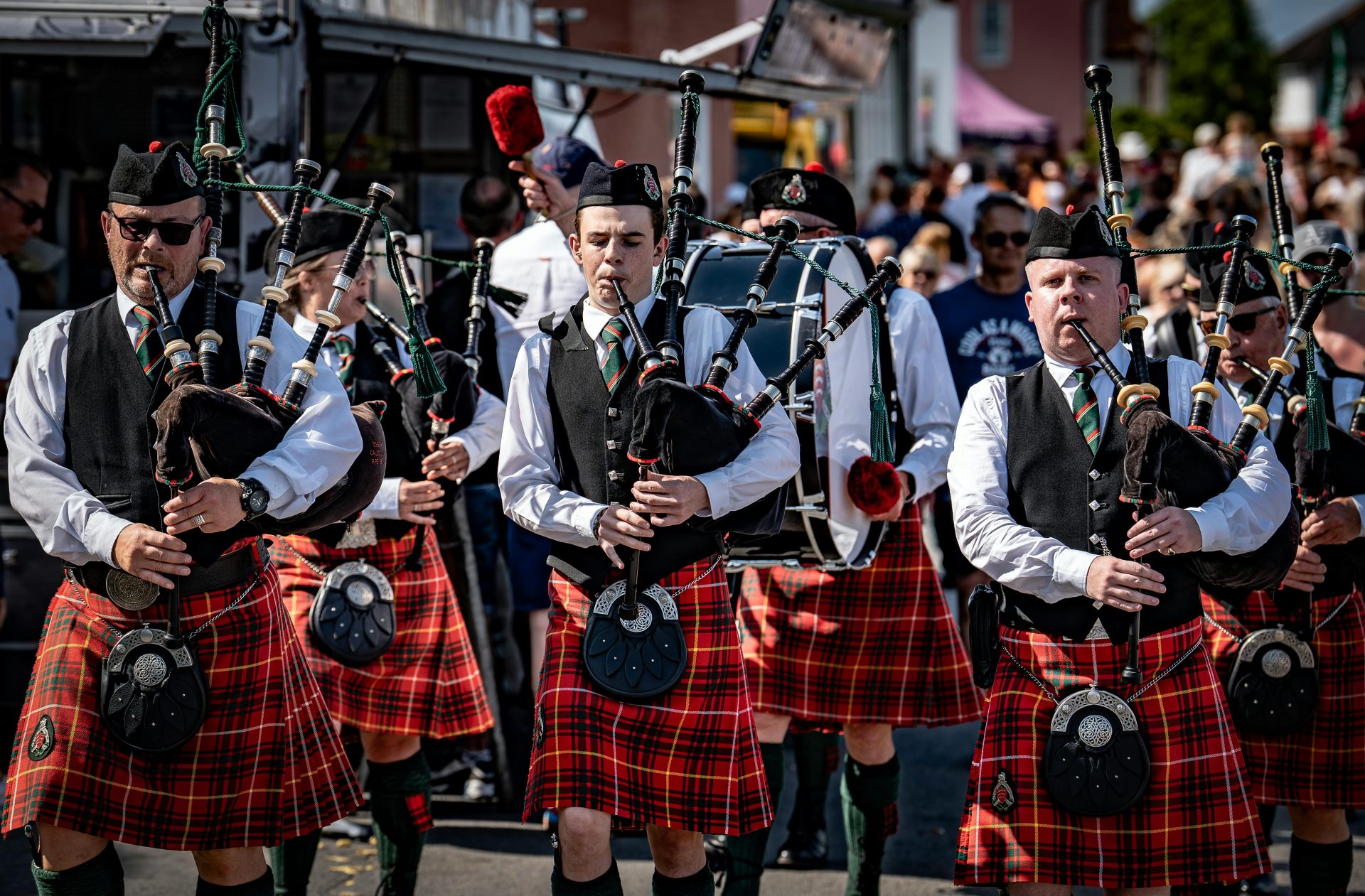
The ceilidh band is the heart of every self-respecting ceilidh. The line-up varies, but there is usually an accordion (queen of the evening, with its rhythmic sound), a fiddle (carrying the traditional tunes and making the reels fly), drums, plus guitar, keyboard or bass. Sometimes bagpipes join in too, perhaps to open the evening or for a special moment. The music alternates traditional Scottish rhythms: fast reels, bouncy jigs, marches and the odd waltz to catch your breath.
The caller: the guide of the evening. The key figure is the caller, often a member of the band. Before each dance they explain the steps, have everyone try them slowly and then, while the music plays, keep calling out the figures. Thanks to them, even people who have never danced before can throw themselves onto the floor from the very first tune.
The most famous ceilidh dances
Every ceilidh has its own programme, but some dances are never missing. What is certain is that you change partners often and form circles, lines and chains. Among the best-known dances found at every party are:
Gay Gordons. Often the opening dance, perfect for warming up. It is danced in couples, moving round the hall in a circle: a few steps forward, a few steps back, a twirl and a polka. The name recalls the Gordon Highlanders regiment.
Strip the Willow. The wildest and, for many, the most fun! Couples stand in long lines; in turn one couple works its way down the line, spinning with each dancer arm in arm. The pace is dizzying, and you reach the end of the line breathless and red-cheeked.
Dashing White Sergeant. Danced in groups of three, a man with two women or a woman with two men, facing another trio and moving round the hall. At each round the groups move on and meet new partners: the ideal dance for getting to know people!
Canadian Barn Dance and Military Two-Step. Two simple, cheerful couple dances, great for beginners. Their repetitive steps are learned in no time and let you catch your breath between reels.
Eightsome Reel. The most traditional and also the most demanding: eight dancers in a circle perform complex figures, with moments when each dances alone in the middle. It often appears at more formal evenings and weddings.
Scottish ceilidh, country dancing and Highland dancing: the differences
It is easy to get confused, because in Scotland people dance in many different ways.
- A ceilidh is informal and open to all: you learn on the spot, the atmosphere is relaxed and mistakes are part of the fun.
- Scottish country dancing is more structured: it is learned in classes, has precise rules and an almost drawing-room elegance. The Royal Scottish Country Dance Society, founded in 1923, keeps the tradition alive.
- Highland dancing is a solo, athletic dance performed on the balls of the feet, which you will see in competitions at the Highland Games. The most famous is the sword dance, in which the dancer leaps between two swords crossed on the ground without ever touching them.
When ceilidhs happen
A Scottish ceilidh can spring from almost any occasion, but some are unmissable:
- Weddings: in Scotland it is almost impossible to imagine a wedding without a ceilidh. Bride and groom, grandparents and children dance together late into the night.
- Hogmanay: New Year’s Eve often ends with a ceilidh before everyone sings Auld Lang Syne together.
- Burns Night: on 25 January, after the supper in honour of Robert Burns with haggis and poetry, the tables are cleared and the dancing begins.
- Village events, fundraisers and university nights: village halls all over Scotland host ceilidhs throughout the year.
Tips for your first ceilidh
If you get the chance, don’t miss it. Here are a few tips to make the most of it.
- Don’t worry if you don’t know the steps: nobody expects you to. The caller explains everything and Scots are delighted to help.
- Comfortable shoes: there’s a lot of jumping, spinning and running. Leave the heels at home!
- A kilt is welcome but not compulsory: at formal events many men wear one in their clan tartan, but you can go in ordinary clothes.
- Always say yes: if someone asks you to dance, accept. That’s the spirit of the ceilidh!
Where to go to a ceilidh in Scotland
In Edinburgh and Glasgow ceilidh nights are held regularly and are open to visitors too, especially at weekends and in summer. In the Highlands and islands, keep an eye on village noticeboards and flyers in pubs: often the most authentic evenings are those announced on a sheet of paper pinned to the village hall door.
A ceilidh at home
The beauty of the ceilidh is that it can happen anywhere there is a little music and a wish to be together. Put on a playlist of traditional music, move the sofa and try a Gay Gordons in the living room with friends and children. For little ones, dancing is a wonderful way to discover Scottish culture: in our Kids Corner you will find lots of themed games and activities.
At the end of a Scottish ceilidh you go home tired, sweaty and happy, with the feeling of having been part, if only for one evening, of a big family. And perhaps this is Scotland’s truest secret: a place where people still love to come together and dance. If you want to continue the journey, you will find many more stories on our blog.
Silvia Miraglia