
In the heart of the North Atlantic, a small group of Scottish islands gave birth to one of the most precious textile traditions in the world: Shetland lace. Shetland’s knitters are not mere craftspeople; they are the guardians of a centuries-old culture in which knitting went from a necessity for survival to a refined art. From delicate lace to colourful Fair Isle, the Shetland Islands are a paradise for wool lovers!
On this journey through the stitches of history, we will discover how the tireless hands of local knitters turned raw wool into a work of art fit for queens.
The roots of the tradition: wool and survival
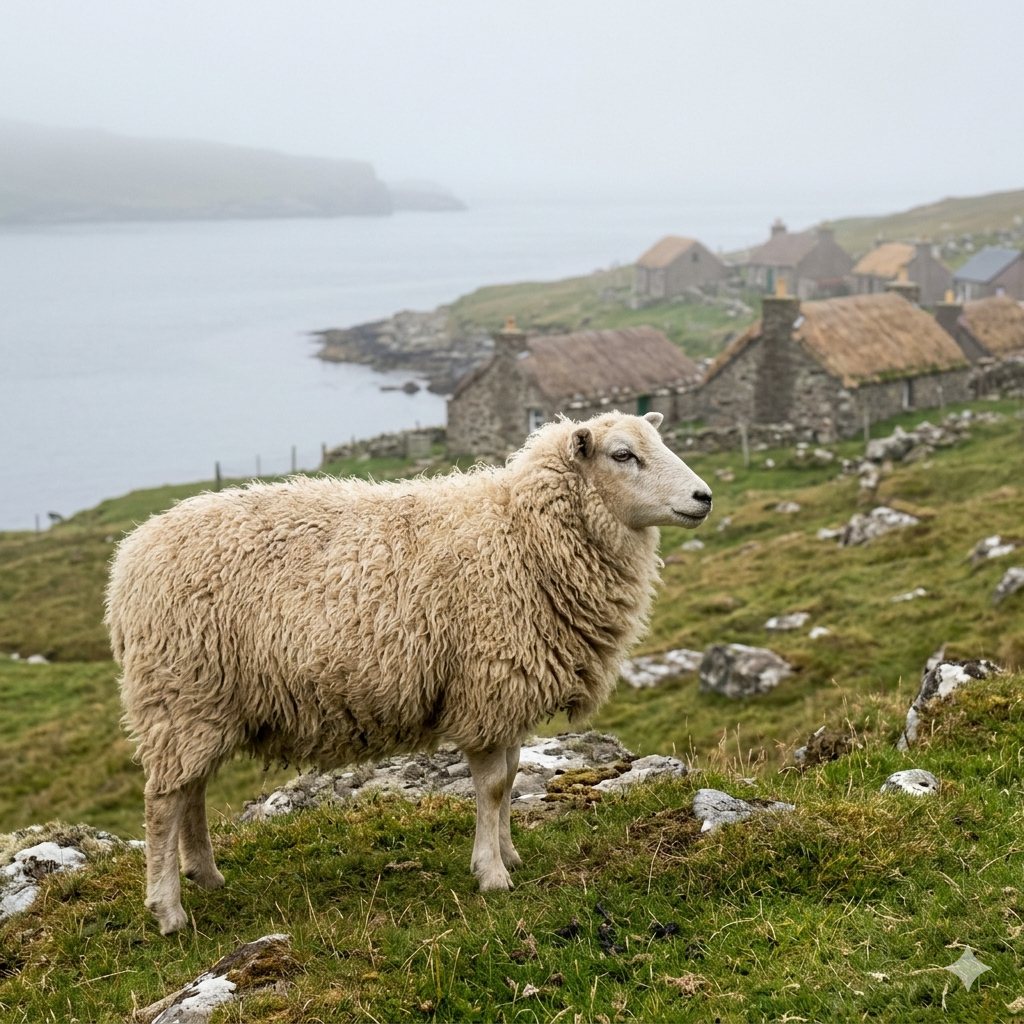
The history of knitting in Shetland is deeply bound to the land and its harsh climate. For centuries the islanders raised Shetland sheep, a native breed able to survive extreme weather and famous for its soft, warm, light wool. The fleece was not washed before working, to preserve the natural lanolin, which made the yarn water-resistant and made it easier to spin extremely fine threads.
For centuries knitting was mainly women’s work: they knitted tirelessly while looking after the children or the croft, making warm garments for the whole family. Shetland wool products began to be recognised and admired around the world when, in the 1920s, the Prince of Wales was photographed playing golf in a Fair Isle jumper. From then on came the great change: from a simple fisherman’s garment to an item coveted by the whole aristocracy.
Secrets of the craft: two unmistakable styles
Shetland fine lace: This is an extremely fine woollen lace, made with “gossamer” yarn, that is, extraordinarily thin, light and delicate. According to tradition, women selected only the finest part of the fleece, the wool that grows on the sheep’s neck. Skilfully spun by hand, this fibre produced a thread so fine it was compared to silk. The pieces made with this technique were almost always shawls known as “wedding ring shawls”, because they were so fine that, despite their large size, they could be drawn through a wedding ring! These shawls became the favourite christening gift for the British royal family, helping to spread the fame of these remote islands around the world.
The openwork patterns were inspired by nature and had evocative names such as Fern Acre, Old Shell, Cat’s Paw, Horseshoe and Print o’ the Wave.
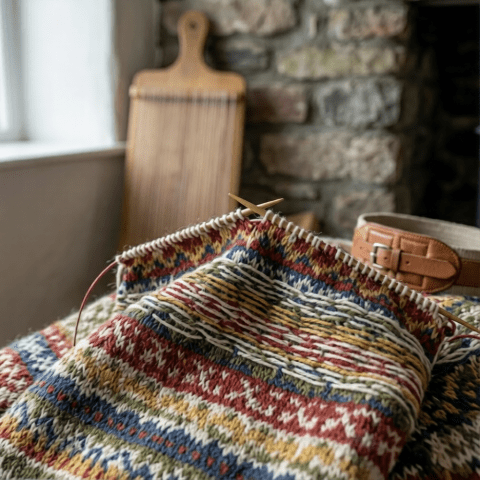
Fair Isle knitting: This colourwork technique (stranding) takes its name from the remote island of Fair Isle. It is characterised by repeating geometric patterns using two colours per row. Thanks partly to the strands carried across the back of the work (floats), the jumpers are exceptionally warm, light and hard-wearing.
A true “secret of the craft” is the knitting belt: a padded leather belt with a series of small holes. The right needle is inserted into the belt to give firm support and let the knitter work very fast and, above all, without ever stopping, even while doing other tasks.
How to recognise genuine Shetland lace: 3 precious secrets
Let’s look together at the features that set authentic Shetland craftsmanship apart from an industrial product.
The garter stitch test: Traditional lace is almost always worked in garter stitch (knit on both sides). Garter stitch makes the lace attractive on both sides and gives it a softness and elasticity that machine knitting can never replicate. If the back is flat and smooth, it was probably made by machine.
The “frame” construction: A real Shetland shawl is not sewn together at the end. The borders are knitted directly onto the stitches of the centre. The join should be invisible.
Irregular yarn – the charm of imperfection: Wool is a living fibre. Holding the yarn up to the light, you will notice tiny variations in thickness. What’s more, real lace has a slightly “hairy” surface that creates the insulating cushion that makes the shawl so warm despite weighing just a few grams!
A contemporary revival
Today the art of Shetland lace is enjoying a new revival. Organisations such as the Shetland Guild of Spinners, Knitters and Weavers protect this centuries-old knowledge. Every year Shetland Wool Week draws enthusiasts from all over the world for workshops and meetings with local makers.
If you are planning a trip to discover the roots of the real Scotland, don’t forget the legacy of these women who, with two simple wooden needles and a strand of wool, turned what was never a pastime but a real necessity into a pillar of local culture and economy!
Silvia Miraglia